Showing posts with label gay cinema. Show all posts

Monday, January 31, 2022

Review: Truly, Madly

Text © Robert Barry Francos / Indie Horror Films, 2022
Images from the Internet

Truly, Madly
Directed by Brian Dorton (aka Katrina Lizhope)
reel EPIC entertainment
75 minutes, 2020 / 2022
https://www.facebook.com/Reel.EPIC.entertainment/

Louisville, Kentucky, where this film was shot, is solid “Red” state territory, deep in the Bible belt, with Trump signs on every corner during the last election and a cross nailed on multiple walls of every house. It is a center of the New Republic of Christ, where the religious are self-righteous, unvaccinated, and full of love for themselves and everyone else, if’n yer not a heathen, or gay. Or vaccinated.

In this environment, lives Anthony (Adam Freeman), who is both non-religious and openly gay. He shares his home with his uber-righteous mother, buxom Barbara (the appropriately named Sondra Carver), who has recently lost her husband and is a bit bitter. She’s also willing to go to any extreme to keep her son (and others) away from the “lifestyle.” Even if it involves knives. Y’see, Barbara is a bit like Kathleen Turner’s character in Serial Mom (1994) in that she has a tendency to take what she considers sin into her own hands, but without Turner’s ‘50s sit-com-like charm. (“God and I have an understanding,” posits Barbara in a moment of delusion).

Sondra Carver
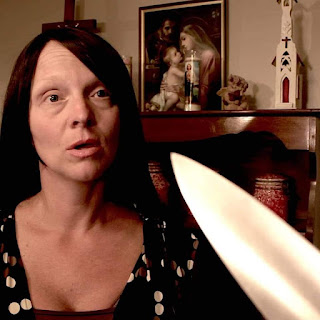
Be it her son’s lovers or the pedophilic guy in the church, Bob (Douglas Connor), who has been found out, Barbara is not going to stand for this outrage to her Lord. And in full hypocrite mode, she is often at full ire and willing to judge others, including her neighbors. No cheeks turned with this woman, it’s blades and burial.

There are other interesting characters filling the story, such as Fran (Dixie Gers, the titular Crazy Fat Ethel in 2016, by the same director), who is a member of Barbara’s church and is actually closer to what Barbara is deluded to believe she is, which makes her angry, and Anthony’s trans friend Geena (director Brian Dorton), whose life is possibly in peril due to his association with Anthony (though just friends) thanks to mommy. And there is a nice kill ratio here.

Adam Freeman
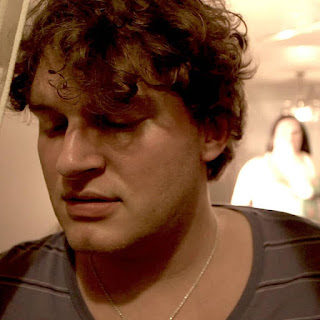
There are a few minimalist levels to the film. First, and I am making an assumption here, is the budget. This looks like a threadbare story despite the nice sized cast, and the production looks like it cost about as much as the catering. I actually respect that, seeing how much can be done with the bare minutest. The other minimalism is the film’s presentation. There is no fancy editing, and even the acting reminds me of the early films of John Waters and David Cronenberg, if you get what I mean. And, again, I’m fine with it. The most common SFX in the film is added scratches and the program to make the film look like it was printed off a time- damaged negative.

Considering the overlapping genres in this film, it should come as no surprise that there is nudity, but nearly all male (except for a woman in a bathtub in a definitely non-sexual moment). As an ally, I have no problem with man-on-man sex scenes, though I’m not turned on by it (same with women-on-women, but I digress…). That being said, the male lead (Freeman) and his partner in the scene are handsome men, I know a lot of my friends who would happily raise an – er – eyebrow at seeing the bods, especially if you are into bears.

Brian Dorton
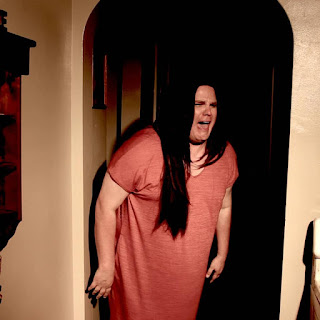
This is a very dark comedy geared toward the LGBTQ community, but not exclusively. There were lots of little things that made me laugh, such as Barbara calling someone named Sloan (Athena Prychodko) as “Sah-lone.”

The third act feels like it is going to be a bit anti-climactic, but instead, there is a really nice twist at the end that I didn’t see coming. Well done! It’s a bit convoluted and left me with a big question, but still so worth it.

When you decide to see this film, and you should, I recommend making it a double feature with Death Drop Gorgeous (2020; reviewed HERE

The extras on the Blu-ray include Deleted/Extra Scenes, Writer/Director interview, a Blooper reel, a Photo Gallery, and Trailer, which can be purchased HERE

IMBD Listing HERE 


Wednesday, March 10, 2021

Review: X

 Text © Richard Gary / Indie Horror Films, 2021
Images from the Internet

X
Directed by Scott J. Ramsey
Cinedigm; The Foundation
127 minutes, 2021
www.everybodylovesx.com/
www.cinedigm.com/
www.imdb.com/title/tt8151450/?ref_=nm_knf_i1

Once a month, a charitable organization called The Foundation invites a group of people for some care-free debauchery. The “King” of the Party is 26-year-old Christian (Hope Raymond), known as X, and who also handed out the invitations to the guests. One unexpected one, though, is ex-school mate Stella (Eliza Bolvin), dubbed E7 for the party. Everyone wears masks (no, not the pandemic type) and goes by a letter and number, as on a chess board.

As X is the King, her associate, Danny (Brian Smick), is known as The Queen. He and Christian run the monthly sex parties under the title of a Masked Charity Ball that entrances the rich to come and spend their inheritance on a good “cause.” While they are indulging in their passions, The Foundation makes money and Christian gets off on her own by doing a Chuck Berry and viewing videos she has hidden in the bathroom. She is not interested in the coupling route, but rather indulging in onanism (sometimes with batteries).

Hope Raymond

One of the strong points of the story, which is broken up into five chapters, is that the two people who run the ball, The King and the Queen, are not presented as necessarily evil and authoritarian, but rather as people trying to work their way through life. We see Christian in some very weak moments (between balls), drinking too much, and trying to get over insecurities she earned in a Catholic high school from being in unrequited love (lust?) with Stella.

In an interview with Starburst, director Ramsey said, “I would define it as a queer film, because more importantly than the characters being queer, it has a queer sensibility to it, and because the filmmakers are queer. But ultimately, it wasn’t about their sexualities, so it wasn’t necessarily for us to make that the focus.” 

Eliza Bolvin

While visually and thematically closer to Eyes Wide Shut (1999) than X: The Man with the X-Ray Eyes (1963), there’s also an element of Poe’s “Masque of the Red Death” and Agatha Christie mysteries mixed in. This is especially true when the bathroom camera turns up a violent crime by another acquaintance, who one may refer to as the Iago of the piece. At this time, well past the halfway point, things really start to pick up. It also puts Christian in a bind, because to expose it, she would need to reveal the illegal filming.

This is the first feature length film for the director, who has said he wanted it to be “an intersection of erotic thriller and queer camp.” Did he succeed? Funny thing is, is that as much as this is a story about sexual debauchery, there is actually not much actual sex shown, most of it implied. There is also surprisingly miniscule amounts of nudity. As for the camp level, there is definitely some there; perhaps not reaching the Showgirls (1995) level, but the pan-sexuality is definitely worth noting.

One of the odd things about the film is the sound of the talking. It gives the impression that all the dialogue was recorded and added after, because of how flat the sound is; sort of like a dubbed Scandinavian film from the 1970s. The lips match the words, but it just appears strange in tone, like everyone is the exact same distance from the image.

Much of the background music is classical, such as Beethoven’s 9 Symphony Second Movement, and a light tinkling, almost music box sounding version of Tchaikovsky’s Swan Lake, which is repeated during intense moments, and there are a lot of them. The film is well shot, showing both the pathos of some characters and the bravado of others; or in the case of Christian, both. Luckily, Raymond has the acting chops to come off as both in charge and someone with a touch of PTSD from being bullied in years before.

Did Ramsey achieve his goal to “comfort the disturbed and disturb the comfortable”? Well, the writers were going for a “Shakespearean tragedy” level of story, but to me it felt more like a telenovela, especially once certain secrets are brought to light. Everything is over emotional, and there is definitely an aesthetically soap opera level to it all, especially thanks to its over 2-hour length, which seemed a bit excessive. Sure, mostly it kept the story going, but this is an indie film, not a mega-superhero-budgeted-three-stories-at-once kind of film, so with all the emotional back and forth going on, it did start to wear after a while.

Valerie Façhman

One of the things supporting the film is that the acting skills are quite good. Raymond carries it, going in and out of glamorous to plain, in charge and feeling out of sorts, and never leaving one to doubt the emotional roller coaster. I would also like to note Valerie Façhman, who plays X’s dementia-ladened mom Lynda, and steals many of her scenes.

The film took five years of “blood, sweat, and rose petals,” says the young director, and it shows in the work. The visuals are quite stunning and there are many different styles thrown in, including split screens, and it all enhances the story rather than draining from it. At this length, that’s a positive thing.

The title is hard to search for on the Internet, so I have included its IMDB page at the top. It is available to buy or rent on major digital platforms, such as iTunes, Amazon, Google Play and VUDU.


Monday, October 5, 2020

Review: Gay as the Sun – A Documentary

Text © Richard Gary / Indie Horror Films, 2020
Images from the Internet


Gay as the Sun – A Documentary
Directed by Richard Griffin
Scorpio Film Releasing / Nova Film Productions
32 minutes, 2020
www.scorpiofilmreleasing.com

The tagline for this film may sound familiar: “From the beginning of time to the end of the Universe… Is Billy.” This should not be confused with the infamous opening of Kurt Vonnegut’s brilliant novel, Slaughterhouse Five: “Billy Pilgrim has become unstuck in time.” But this is a comedy spoof, so why not?

The subtitle of the film is a bit of comedy, but this is also a sci-fi release in the form of a documentary, but it goes so much deeper than that. The tone it takes is in the form of those pseudo-documentaries they used to do about nudist colonies in the late 1950s and early ‘60s that was used as a framework that was acceptable (somewhat) to what had become of the Hays Office. Essentially, the documentary format was a legal way to show nude bodies without it being considered “smut.” Auteurs like Doris Wishman (d. 2002) and Hershell Gordon Lewis (in his pre-gore mode; d. 2016) were pioneers in this field, with most of their films coming out of southern Florida. This one is from Rhode Island.

We are presented with the first chapter through the introduction of Adam (Rick Irizarry) and Steve (Nolan Burke) in the Garden of Eden – that’s right – narrated with gentility over a very sanitized melody that actually sounds like it came from one of those early films. Hmm, I wonder who did their ink? Anyway, if you remember the Eden story, it was not clothing optional, it was sans mode. Oh, if you haven’t guessed by the title, this is going to be a wiener fest like nobody’s biz.


Sarah Reed

But three minutes in, the film takes a turn one might not expect, and I won’t give it away. In a brilliant move (with a tone of social commentary) we meet Eve (Sarah Reed), equally bare, before both are tempted by a drag queen snake (Ninny Nothin, aka Johnny Sederquist) to take that forbidden bite of the apple.

 Okay, I have to stop here for a sec. It’s 5 minutes into the film, and I have been laughing nearly non-stop, between the narration and the action on the screen. This is so well written and thought out, that I’m looking forward to hitting the play button again. This is irreverent as all get out, so if you’re bothered by Adam and Steve, you are going to love the conclusion of this chapter, which is essentially a history of body shaming (Wait, the Bible? Genesis? Chapter 1? Shaming? Yeah, that sounds about right).

 It’s in chapter 2, which is now narrated by the less somber sounding Terry Shea, where we meet our pal Billy (Graham Stokes). Poor Billy suffers from said self-body loathing, so as therapy, he goes to a nudist colony called, yep, “Gay as the Sun.” We get to follow a mostly silent Billy (perhaps a nod to Lewis’ 1961 infamous release, The Adventures of Lucky Pierre?), as the narrator “joins along.” Billy explores the camp and meets strange characters like a shirt bandit (Ronald Martin) who steals, well, it ain’t lupins, and Gay Dracula (a fun turn by Robert Kersey).


Graham Stokes

The film stops at times for interviews with some of the characters, such as the bandit and Billy’s nutball parents, often with a subtle sarcastic tone that, again, shows some really good writing by director Griffin and Robyn Guilford. One of my fave moments is when we meet a “Karen” named Karen (Erin Haas) – VP of the Eric Trump Fan Club – who angrily takes the whole film to task in a Monty Python’s Colonel splash. I was beside myself.

With the multitude of male nudity (and some female as well), and the profane tone, there may be some hesitation of some viewers, but if you’re an open spirit and love a really smartly written comedy with balls to the wall laughs, I recommend this, as I chortled all through it. Some of that came from the references, but even beyond if that’s not your thing, it’s a good hoot.


Gay Dracula

And how does this gay romp fit into the motif of this blog? It has a science fiction backbone to it that was also reminiscent of the old ‘50s sci-fi glut of low budget films. That’s good enough for me.

Will Billy find balance with his own skin? Perhaps find love? There is an abundance of choices at the camp, with lots of men with bodies exposed doing things that the old Wishman/Lewis employed to express nudity in action, such as montages of washing (stand-up showers, of course), sun bathing (front and back), volleyball, and hula-hoops. Maybe someday there will be a version that comes out in 3D called Gay as the Sun 3D – A DUCK!-umentary. I said what I said.

See the trailer and/or rent the film HERE


Tuesday, August 25, 2020

Review: Sinful


Text © Richard Gary / Indie Horror Films, 2020
Images from the Internet


Sinful
Directed by Rich Mallery
CineRidge Entertainment; Cinema Epoch; Napalm Love Productions
75 minutes, 2020
www.madsincinema.com

For a pandemic, the gay community is the one to look for when it comes to dealing with it day to day. Their experience with AIDS has – er – grandfathered them (sorry about that term) into being years ahead of most. While sure, it more directly killed gay men, it was their lesbian sisters who often were the caregivers, so they still experienced that loss first-hand.

Why bring this up for this review? Two reasons: first, the film is based on the occurrences around a newly-married lesbian couple, Salem (Nicole D’Angelo) and Remy (Christine Lo), and that it was filmed in the middle of the first wave of the COVID-19 pandemic. There has been a lot of art that has come out of the isolation the disease has brought, and cinema is certainly included.

A pandemic calls for a small cast, and this one consists of a trio, including the two mentioned above and a mysterious masked man (Chris Spinelli) who shows up on occasion, and disappears just as fast. These three actors have been working on films together for a while now (e.g., Choke and Acrylic), so they are comfortable around each other and feeding off the other’s energy. This is important in creating cinematic synergy.

Salem and Remy are recently married and on the run from a bloody, “horrific” (as the film’s descriptor states on IMDB) crime, waiting in a house for some new identification to beat it on the lam. But their paranoia is deep and their distrust for anyone, including each other on occasion, tends to get the better of them. This is especially true with high-strung Remy, who is on the verge of a breakdown (or appears to be), while Salem is trying to hold it all together and be solid, but even she is having the heebie-jeebies (wishing she were at CBGBs?).

The film is essentially a character study of these two women, and how they are either coping – or trying to – with various levels of success. The tables often change and the dance around each other and their situation ebbs and flows.

This is a psychological drama more than a “horror thriller,” though there are hints to support both classifications. Sure, they might be in a multi-dimensional space where things repeat or change, it may all be in their increasingly paranoid minds, or perhaps this house is like a The Twilight Zone episode and they actually are in purgatory (hell?). It’s often left up to the viewer to decide.

Nearly everything is sparse, from the walls to the hallways, to the fact that you can’t see out the windows, giving the film a bit of claustrophobia and paranoia to the viewer as well. The skewed angles also throw us off a bit as I try to put it together with the two protagonists. And what’s with the pop-up man in a mask? The personification of guilt? Well, I am certainly not going to tell you.

As I said, the two leads play off of each other’s energies really well. Lo may get a bit shrill at times as Remy tries to sort out what she’s doing and what is happening, and D’Angelo does well to show emotion on her face as Salem is torn between her love for Remy, not wanting to get caught, and trying to find patience while the new IDs are out there somewhere. While Chris Spinelli doesn’t do much other than stand around in a mask, I have seen him in other works recently, and I have no question the man can act.

The film is emotionally draining, between the pent up fear of the characters, the shifting of the plot line to match the tilting of the camera angles, and even the complexity of the story against the starkness of the setting. We are thrust into a situation of panic, fear, and varying levels of trust, and we just have to hold on for the ride.

It is a well-scripted story, the acting is at times breathtaking, and the direction by Rich Mallery shows a sense of style that makes me want to see more.

The film is available on various media platforms, and will soon be available on Blu-ray.


Monday, December 10, 2018

Review: Code Name: Dynastud

Text © Richard Gary / Indie Horror Films, 2018
Images from the Internet

Code Name: Dynastud
Directed and edited by Richard Griffin
Scorpio Film Releasing / Reasonable Moving Picture Company Productions
95 minutes, 2018
www.facebook.com/dynastud/

First, as a disclaimer, I feel compelled to state that I watch this film as a straight man but who is an ally. Working across the street from the Stonewall in my youth opened my eyes to a lot of unintentional internal prejudices I didn’t realize I had, and have worked on since. Anyway, here we go.

If I may be so presumptuous, there seems to be three great arches in director Richard Griffin’s filmmaking career. The first was the early learning curve where he got his feet wet, with releases such as Raving Maniacs and Seepage! (aka Creature From the Hillbilly Lagoon; both 2005). The second arch began around the time of Beyond the Dunwich Horror and Nun of That (both 2008), where Griffin developed into a solid and prolific director that specialized mostly in making films that reflected / honored a bunch of different styles (giallo, ‘80s Eurotrash, Christian films, etc.), most of which were comedies, but mixed in were some amazing serious ones as well (such as Exhumed in 2011 and Normal in 2013). During this period he came to the attention and gained the respect of numerous film critics and bloggers such as myself. It was here that he developed a loose group of regular actors that helped support his output.

Recently, Richard began his third (so far) arch starting with Strapped for Danger (2017), which is catering to gay, raunchy comedies. Again, this is supported by some new regulars, such as Anthony Gaudette and Michael Varrati (also an amazing screenwriter). Honestly, even before watching this sci-fi tinged “gay romp” (as Mel Brooks may have put it), I have been looking forward to giving it a viewing. Pressing start now…

Since Ronald Reagan first let in the Religious Right to the political arena, there has been an increasing amount of “Bible over Constitution” on the GOP side. And in a post-Trump presidency world of 2024 when this film takes place, that religious power madness has reached its pinnacle, outlawing homosexuality. At the present time, this hardly seems like a far-fetched idea when considering our closeted Vice President and at least one Senator Graham Cracker (both allegedly).


Derek Lauendeau, Anthony Gaudette, Mark Garner
While our titular alien-induced super-powered character of Dynastud (Gaudette) is introduced through a near perfect James Bond-ish opening and credits that had me in stitches, the story proper seems to revolve more around the pure of heart and noble Bart (Derek Laurendeau), who finds himself in a pickle when forced to marry Patty (Candace Sampson, the only female main character who ironically steals some scenes away from the dudes) by her father, the murderous and gay-hating Senator Hightower (played with glee by Bruce Church, who looks like he’s having a blast in the role).
That being said, there are, again, three arcs to this story: in no particular order there is the Bart and Patty conundrum, a buddy travel theme (think Trains, Planes and Automobiles), and an overlapping grand quest (such as the Lord of the Rings trilogy). At this point, I am not including the underlying political messaging throughout, which I will get to later.


Candace Sampson
Also worth mentioning are two secondary characters who are sort of the Rosencrantz and Guildenstern of the story, Vargas (Aaron Andrade) and Sam (Dan Mauro), two police officers resurrected from Griffin’s earlier Seven Dorms of Death, who are ordered to find our intrepid heroes Bart and Dynastud. What they find instead are cameos by Griffin regulars and some revelations that of course I will not divulge. I may have said too much already…
There are a lot of subtle nuances throughout the film, such as quotes from the notoriously camp Bride of Frankenstein (1935) and The Blues Brothers (1978) – and I’m supposing there are also some I missed.

Of course, there is full frontal male shots (though less than I expected; I seem to remember more in Griffin’s last film, Strapped For Danger) and a lot of sex, focused natch on M-M. One scene recognizes the female side of the equation, though more in a stereotypical but hopefully non-offensive way (plaid shirts, ultra-Liberal, etc.). The same stereotyping could be said about Canada and especially Canadians in later scenes, that is non-offensive and, honestly, really funny, eh?


Bruce Church
Griffin being Griffin, he also hysterically has the whole film overdubbed like those kung fu flicks in ways that are both obvious – such as Vargas’ British lilt and two that I particularly liked, “drag queen” Lee Van Queef (Jordan Pacheco) and a Canadian hostess (Samantha Acampora); others less noticeable.
At a time like the present where NAFTA is scrapped in favor of a tariff war by the government, it seems appropriate to have a whole Canadian/maple syrup sub-plot – okay, perhaps it doesn’t make sense, but it works in the story – as the last act of the film is bat-shit WTF sci-fi as we are introduced to the kung fu master Bruce Li (Mark Andrew Garner) to kinda tie everything together and perhaps lead to a film sequel.

While not as over-the-top as Seven Dorms of Death (a fave of mine), this is a film that is silly, but far from stoopid [sic]. The cannon fire over the bow is both subtle and not as much so (such as Li’s fight with the Mecha-Trump robot that looks like it came out of a 1940s serial like The Monster and the Ape).

More than a hypocritical “War on Christmas” (which doesn’t exist except as a distraction, of course), there truly is a War on LGBTQ(etc.) Rights, and this film pushes that button. I’m a firm believer that one can get more notice using humor than fear, and Griffin raises a rally cry that there truly is danger afoot with an ultra-“religious” (most would say Christian, but I find it to be true across all the ultra-orthodox of beliefs) base. Griffin switches from “a nod’s as good as a wink to a blind bat” subtle to a sledgehammer to bring his points around, and they all work into the story, mostly without being preachy (pun intended).

Meanwhile, be sure to watch beyond the credits, and pay attention to the Justin Trudeau life-sized cut-out in the background. Gay or straight, as an audience member, there is a lot to see, a lot to think about, and most importantly, plenty of good laughs.


Friday, March 30, 2018

Review: Surge of Power: Revenge of the Sequel


Text © Richard Gary / FFanzeen, 2018
Images from the Internet


Surge of Power: Revenge of the Sequel
Directed by Antonio Lexerot
Lexerot Enterprises / Surge of Power Enterprises LLC /
Indie Rights Movies / Salty Horror Productions
90 minutes, 2016 / 2018

Surge of Power (Surge for short) may not be the first gay comic-style superhero, but he is quite possibly “cinema’s first gay superhero” (emphasis mine), as the publicity for the live-action film proudly states. The original was the 2004 release, Surge of Power: The Stuff of Heroes, but there is a 17-episode television show, “Surge of Power: Big City Chronicles” either out (no pun intended) or in process, which is also a talk/interview show; shades of 1993-2008’s “Space Ghost: Coast to Coast!”

Getting back to Surge and crew, I have to be candid and say that I have seen neither the original film, nor the television show, so I’m going at this as a stand-alone. Also I am approaching SoP as an Ally straight white male. There, now that the formalities are out of the way…

Most superhero films these days are not just multi-million-dollar extravaganzas, they are big; much bigger than they need to be to be interesting, actually, in my opinion. Be it Marvel (X-Men, Black Panther, etc.) or DC (Wonder Woman, Batman vs. Superman, to name just a couple), they go on for hours and have multiple plot-lines; Panther, for example, had at least three stories in it that would have made that many decent films, rather than three-in-one abbreviated tales, as is the trend. The digital SFX are so huge, that the stories lose the humanity in them through the chase for the WOW factor. This is why I don’t see many of them anymore, though I still consider myself a comic geek.

Vincent J. Roth
In this much smaller-scale indie film that thinks big, Gavin Lucas (co-writer, Vincent J. Roth) is the alias of Surge, who can focus energy, living in Big City, California. His adventures in the first film, to get us newbies up to speed, is expositioned (yes I know that’s not really a word) in abbreviated – and animated – form during the opening credits. Basically, through a Flash-like accident, super powers show up in Gavin and his co-worker (and ex-lover) Hector Harris, who becomes the Magneto-like Metal Master (John Venturini, another of the film’s co-writers). Also like Magneto, MM is Jewish (indicated at first by seeing him sitting alone at a bar, spinning a dreidel). The first part of the film feels like it’s his story, more than about Surge.

Stripped of his powers (in the first film) and recently out of prison, MM is turned away by his parents (played by Linda Blair and Gil “Buck Rogers” Girard), who are more disturbed about him being gay than a master criminal. The Jew is me balked at these seemingly non-Orthodox (but religious) Jews reacting that way; religious-niks, I can somewhat understand, though I am repulsed by homophobia by any religious group, though especially my own. Spurned and angry, MM is looking for a way to get back in the Evil game, and a Magical being named Augur (Eric Roberts) has an evil plan – and agenda – to help MM out in that direction. After the first 20 minutes or so, the focus is back on our Christian hero, Surge.

I won’t go into the story too much, I promise. The action does take us from California to Las Vegas and the Hoover Dam in search of a mysterious crystal called Celinedionium (if you don’t get it, say it out loud), drag queens, and a possible new love for Surge-io. In case you haven’t gotten this yet, it’s all very campy and silly, and abundantly enjoyable fun.
  
Gil Gerard and Linda Blair
The humor is broad (oxymoron pun intended this time), with a near-constant stream of jokes and ohhh-yeah references. Some of it is a bit subtle, such as many in the cast reading the book Zen and the Art of Super Vehicle Maintenance, or the knowing looks some characters give the audience directly by looking at the camera.

There is a lot of blatant and subtle (there’s that word again) references by characters of the Marvel, DC, Transformer, Roddenberry and LucasFilms universes. Part of how they get away with this is whenever there is a newscast, the scroll underneath the conversations that usually contains other news stories is actually an announcement that recognizes the copyrights of Disney, LucasFilms, etc. If you’re a comic nerd, there are multiple bells and whistles that will make you smile.

John Venturini and Eric Roberts
The acting is quite decent (though Roberts does his best John Lithgow sit-com level purposeful over-acting), and the tone is way more chill than most superhero films of these days. Rather than angst-filled heroes who are fighting their own demons as well as foes, other than MM and his parents, the deepest worry is whether Surge will find a romantic interlude. Other than cameos (which I will discuss shortly) there is a high level of gay characters that the odd straight one seems out of place, which is smile-worthy. I don’t seem to recall any lesbians though… perhaps in the next film? What can I say; I’m an Ally to all.

Nichelle Nichols
What really makes this film sparkle is the sheer multitude of cameos, which are Legion. The obvious ones are Blair, Girard, etc., but the others come and go really fast. In full James Balsamo mode, the crew went to conventions and got some great names that way, but there are just too many to mention all, such as the last appearances of television’s Jimmy Olson and Lois Lane, namely Jack Larson (d. 2015) and Noel Neill (d. 2016) from “Adventures of Superman” (1952-58). Some are listed in the trailer below, but there are so many others, like (and this is such a partial, factional list) various Power Rangers, Walter Koenig, Michael Gray of TV’s “Shazam!” (1974-76), Cathy Garver (a voice in many television Marvel superhero cartoons, and was also Cissy in “Family Affair” [1966-71] for my generation), and… Jeez, 

Mariann Gavelo
I could just go into IMDB and spend hours looking everyone up, it’s quite stunning. Often, there is some hint of the association, such as Rebecca Holden standing with the original K.I.T.T. It’s enjoyable to view just for this alone, but the story is equally watchable.

Unlike most of the superhero films being released these days, this one doesn’t take itself too seriously, and the better for it. And, as a straight white male, there is something for me, too, in the form of the relatively ironically named Mariann Gayelo. And then there’s also Dawn Wells. ‘Nuff said.

Meanwhile, I’m hoping a third film will come soon, and it won’t take more than 10 years.


Friday, October 20, 2017

Review: Strapped for Danger

Text © Richard Gary / Indie Horror Films, 2017
Images from the Internet


Strapped for Danger
Directed and edited by Richard Griffin
Scorpio Films Releasing
73 minutes, 2017

So, here’s the thing: I have some film reviews to catch up on, and am even in the middle of one I am enjoying, but I was just given the opportunity to see this newest Richard Griffin film, and my writing world fucking came to a halt. Despite Griffin’s tendency to be extremely prolific by averaging two to three films a year up to this point, for those of us who revel in indies, this is an event to be taken seriously, no matter how ludicrous the premise of the film. As far as the ridiculousness level goes, well, check out the trailer below. Needless to say, I am chomping at the bit, as it were, in a non-S&M innuendo way.

Playwright Duncan Pflaster has come up with a script that sort of crosses a host of genres such as Ocean’s 11 (et al.) and Thelma and Louise (1991) group crime dramady, male stripper and drag queen love stories like Magic Mike (2012) and To Wong Foo Thanks for Everything, Julie Newmar (1995), in addition to the wild frat houses of Animal House (1978), and then tossed the whole thing over the rainbow of any sense of sanity. But does it all work? Let you know when I’m done…

The basic premise is as follows: Some male strippers rob the club in which they dance, kidnap a copper, and hide out in an accomplice’s ex-fraternity, which happens to be during pledge hell week. While this takes place in Boston, it could be any college as in that city you can just about throw a Trojan and hit one.

Anthony Gaudette
We meet non-exclusive strippers and lovers Joey (Anthony Gaudette) who is the ringleader, and Matt (Diego Guevara), and their pan-sexual-yet-semi-closeted always-in-sunglasses friend Chuck (Dan Mauro) at the Bigg Club, where they work. And apparently where they rob, when they take off with the joint’s money, the customer’s clothes and wallets, and a kidnapped police officer named – of course – Rod (C. Gerlad Murdy).

With Rod’s partner Elaine (Anna Rizzo) in hot (in more ways than one) pursuit, you know it’s all circling around to a confrontation of a possible South-of-the-Border-named-stand-off (see the film to get the joke).

Unlike, say, Magic Mike, the love focus of the story is not boy-meets-girl, but boys-screw-boys, and there are a lot of male genitalia on display. Luckily, I don’t have that cultural thing that many straight guys have where they are put off by others’ peni because they are under the belief it will make others think they are gay. Body parts are body parts, and there’s always Sarah Reed’s nudity in the film to keep anyone else hopefully contented. But the male nipples and naughty bits, as it were, far outnumber the female. 

Diego Guevara
Which brings me to a point that I find quite interesting: as I mentioned Thelma and Louise above, this film is sort of the reverse side of it (and many other “chick flicks” – a term I’m not always comfortable with, by the way), where it’s the men who are the dashing anti-heroes, and the women are those who are obnoxious and overbearing. Please note that I find the idea of this quite amusing. This is the flip of a much more common thread of women good/men bad motif

There is a nice mixture of insane love, real love, and just rubbing against each other to cause sparks. As he has done in previous films such as The Sins of Dracula (2014), Griffin shows straight sex as boring and missionary, but male-with-male as much more exciting. But what makes this all work, honestly, is the level of humor employed. Pflaster’s writing is sharp as a tack, and I found myself laughing often. There’s no great Dickensian comeuppance, though I’m sure they could figure out a way to make that into a suitable innuendo as they do often in the story. However, there are many revelations and a few surprises in store. And my favorite line may actually be an ad lib, spoken by Rizzo, who demands, “What in the raging shits is this?” in a kind of updated Dorothy Parker query.

Speaking of which, let me discuss the cast a bit. Anthony Gaudette can be seen as the – err – straight man, as it were, as he is the one in charge, and he feeds the comic lines to others more than he takes them on himself. In the ‘60s, his character would probably have a name like Colt Steele. With dashing good looks in a pre-chub Ben Affleck kind of way, his has a good handle on who his character is about. Guevara, on the other hand, looks like a cute puppy with a biting wit and some killer dance moves. He makes Matt loveable, yet sharp, and Guevara has the ability to play to both sides well. The chemistry between the two is a large part of what makes this film work so well.

Sarah Reed and Dan Mauro
As for the two main female characters, Rizzo plays a classically hard-boiled, tabacca-chewin’ police officer who feels the unrequited nth degree for her abducted partner. She plays it a bit over the top, which is actually nice to see because she usually plays her parts very subtly and nuanced. As I’ve seen her do some quite serious and heavy roles, it’s nice to see her take a comic, anger-fueled character that if the genders were reversed, might be played by someone like Jack Nicolson or (and this is a stretch) Edgar Kennedy. The lead villain is the hyper-sexualized (i.e., the frat slut) Beverly, handled well by Sarah Reed. With a snort to punctuate the end of each sentence and a Lawng Eyeland-ish accent reminiscent of the Lina Lamont character from 1952’s Singin’ in the Rain and a personality reminiscent of Nancy Spungen, it’s hard to like her (which is the point, of course), yet you can certainly understand what the Chuck character sees in her, as she can be cute beneath the sneer.

Another funny side character is the person running a WonderSpa in one scene, played with gusto by Lee Rush, who only has a few lines and makes the most of it. During that one set piece, Samantha Accampora does a wonderful and silent Sam Peckinpaw-ish slow motion bit. The most sympathetic female character is a lonely quickie mart worker Carol, portrayed by Hannah Heckman-McKenna. I wanted to give her a reassuring hug after her scene.

Anna Rizzo and Johnny Sederquist
But the title of Scene Goniff Supreme by far is Johnny Sederquist’s turn as drag queen Piñata Debris, who makes every scene she is in his own. Even with enough face paint to make Lucille Ball seem bald and the exquisite Lady Bunny possibly blush, Sederquist makes Debris seem both ridiculous and a bit sympatric in a balls-out bitchy way (pun intended). He nails the drag queen persona, I am assuming in part because he actually does drag from time to time. Yeah, I’m a Sederquist fan.

There are the occasional weird moments, like a college student at the frat house calling the library the “lie-berry,” but it’s also part of the film’s charm, actually. But I want to make sure to make a comment on John Mosetich’s cinematography. Some of the shots are stunningly beautiful, such as one of a close-up of Guevara staring at the camera as flower petals fall in slow motion. That was just one of the moments where I verbally said, “wow.”

I haven’t delved much into the story because I don’t want to prejudice the viewer. There is so much that can be discussed that would give away too much of the story, and more importantly the fun. It really is a hysterically funny film going to places that most viewers rarely see. While taking wide swaths with its story direction, it’s actually a very tight film with few locations (as is common with indies). I can’t wait to hear the commentary track once it comes out on DVD. And fans of Griffin films are bound to enjoy a particular cameo that I am sworn to secrecy about. While I’m at it, be sure to watch after the credits.

Compared to most films that deal with the male-on-male milieu, this makes The Rocky Horror Picture Show look like Patton. If it’s not too much of an oxymoron, you might say that this film is a gay comedy that has very broad humor. But you don’t need to be either one to enjoy it, just be glad it’s not in 3D, sit back, and prepare to laugh.