Showing posts with label Stephen King. Show all posts

Friday, September 30, 2022

Documentary Review: Pennywise: The Story of IT

Text © Richard Gary / Indie Horror Films, 2022
Images from the Internet
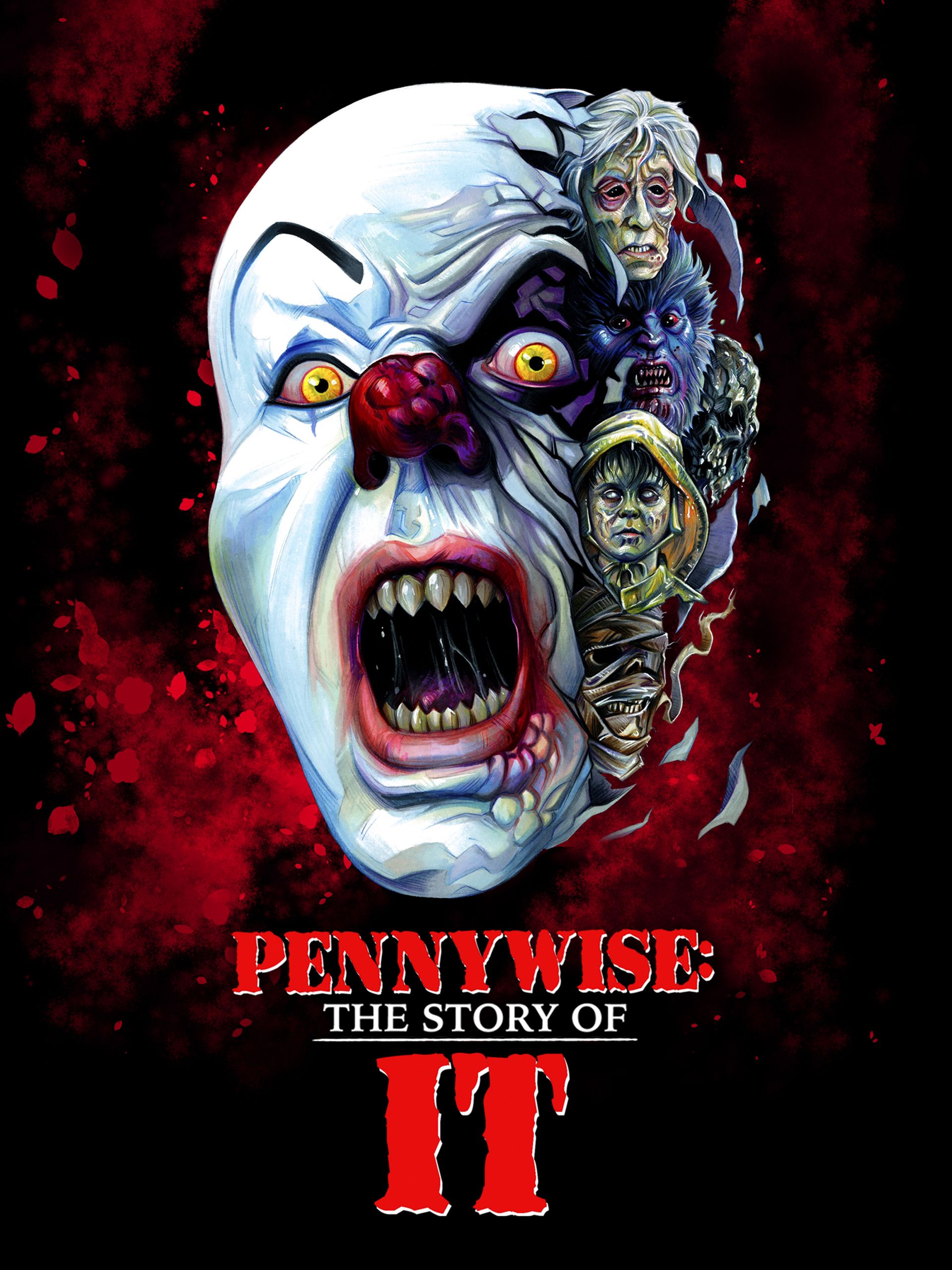
Pennywise: The Story of IT
Directed by John Campopiano and Chris Griffiths
Dead Mouse Productions; Fuzz on the Lens Productions; Kaleidoscope Entertainment; Cult Screenings UK LTD
126 minutes, 2022
www.facebook.com/pennywisedoc

If you have ever been on any of the main horror groups on Facebook, you will know there is practically a rivalry between the fans of the original 1990 version of IT and the 2017 remake, with Tim Curry and Bill SkarsgÄrd playing the role of Pennywise the intergalactic killer clown, respectively.

Well, there is no need to fight here, as this two-hour documentary focuses only on the original, 1990 two-part mini-series. Personally, I read the book, which pissed me off at the time (two many digressions, which is why I like King’s short story collections best) and saw the series on television when it originally aired. Again, I was unsatisfied with the ending: it seemed anti-climactic.

With an extremely large cast of the film’s writers (including Stephen King in both new and archival footage), directors, actors, etc., the film is wisely broken down into chapters to envelope the many sides of the production. Even the first one, about the of taking the book to screenplay to airing sounds like it should be cut and dry, but they manage to keep it incredibly interesting.

The second chapter discusses the cultural effects of the killer clown psychology that permeated the very fabric of not only the arts, but life itself. Brought up are how clowns can be scary, and how King made that more so, leading to the likes of clowns cropping up on sideroads to scare drivers, increasing the fame of serial killer John Wayne Gacy, films of real clown from circuses, and even Sid Haig’s (d. 2019) Captain Spaulding from House of 1000 Corpses (2003). This is, of course, followed by how they filled the role with Tim Curry.

Each chapter is like a deep footprint, filled with information, leading the way to and through the production. Both directors of this release have a history with horror documentaries, be it for Fright Night (1985) or Pet Sematary (1989), so they know how to build the story around and about the story.

The chapters are also inconsistent in length, which is a good thing. Rather than trying to push it to be longer or shorter, they let the narrative dictate timing. For example, the bit about filming in Vancouver is short and sweet, showing pictures of buildings then and now. For another one about casting the Losers Club, both kids and adults – and their similar features and working out their mannerisms – is quite long (and rightfully so); there is a nice mixture of archival and present interviews with the cast, especially since so many of them (the adults anyway) were so well known in the television world. Obviously, not all could be present as they have passed on, such as John Ritter (d. 2003), Harry Anderson (d. 2018), and Jonathan Brandis (d. 2003 at age 27). It was nice to see the likes of Richard Thomas, “Mod Squad’s” Michael Cole, “WKRP in Cincinnati’s” Tim Reid and Richard Masur (whose voice I will always hear in my head saying, “I don’t know, but it’s weird and pissed off” from 1982’s classic The Thing), but sorely missed Annette O’Toole, who does not appear in interview from the present (perhaps she was performing with her lucky hubby and songwriting partner, Michael McKean).

While there are a few other chapters, the last two are pretty obvious. The first is about the ending of the film, and apparently many of the crew felt as ambivalent as I did, which honestly surprised me. As Tommy Lee Wallace, director of the mini-series, states, “We had champagne ideas and a beer budget.” However, and smartly so, they hold no punches and give great detail about the final creature, whose face always reminded me of the end of The Fly (1986).

The last is the legacy of the mini-series, which I believe was short shrifted here. It had an enormous impact on so many, right into the modern day, setting off fierce machinations between the fans of the original and the remake (which is totally unmentioned here, even in the Legacy chapter, which surprised me; probably could not get the rights). It is important to remember that the SFX technicalities between the time differences is key. For me, both were equal, but the first was limited in what they could show because it was pre-cable being everywhere broadcast television, and the other was in the more accepting cinemas.

The editing in the documentary is worth noting because it is put together so well, there is no need for an overall narrator, the cast tells the story in a cohesive, nearly narrative way. The is a nice mix of archival backstage images that are both still frames and filmed (my favorite shot is of Tim Curry hanging on a light post, with a camera and microphone just inches from his face, and yet keeping his composure), and modern footage of the cast being “talking head” interviewed. Comparing the way the kids look now (they still seem so young to me, though they are now about the same age as I was when the film was originally aired), especially Emily Perkins who portrayed the young Bev (and would later play another iconic role as Bridgette in 2000’s Ginger Snaps).

For a documentary that is over two hours in length, I must say that it kept my attention all the way through, and that is saying a lot of positivity about the film. Whichever version of IT strikes your fancy, this will be worth the watch.

IMDB listing HERE

Tuesday, September 1, 2015

Review: Clive Barker Origins: Salome; The Forbidden

Text © Richard Gary / Indie Horror Films, 2015
Images from the Internet

Clive Barker Origins: Salome; The Forbidden
Directed by Clive Barker
Seraphim Films
www.mvdvisual.com          

Here is what I can tell you of what I know about Clive Barker: (1) he’s British; (2) yes, he does look a bit like the love child of Seth Meyers and Paul McCartney, especially when he was younger; (3) he is gay and a champion for gay rights; and (4) in my opinion, he is a far superior horror writer than Stephen King, just not as prolific.

There is always a debate about the two, but simply put, King is more populist, and Barker is more intellectual. You don’t really have to think during a King book, as massive as it is and full of pop culture buzzwords (e.g., The Ramones come up on occasion), identifiable characters and small words. Barker’s books are intricate worlds filled with arcane and wondrous details. Both are enjoyable, but as writing skill and use of imagery goes, Barker wins hands (on word processor) down.

That being said, there are probably more who know Barker by his film directing, especially the gore-fest Hellraiser (1987, based on his own Novella “The Hellbound Heart”), where he brings into being the now cultural iconographic Lament Configuration box and the Cenobites from hell, especially Pinhead, so perfectly brought to life by Doug Bradley.

Before Hellraiser, Barker also directed two short, experimental films, which have again been collected together, along with an undated 16-minute short of interviews with Clive Barker, Doug Bradley and screenwriter/novelist Peter Atkins. My guess is it’s from 1998, the first time these two shorts were released together for home consumption.

Salome
18 minutes, 1973 / 2015
Based on Oscar Wilde’s infamous 1891 French play, this version could almost be grouped into the Nick Zedd / Richard Kern / Lydia Lunch / Beth B (et.al) school of the Cinema of Transgression that would be taking off a few years after this was filmed.

Shot in black and white in what I’m guessing is 16mm (but could be 8mm), the images are murky, grainy, shakily hand-held, and sometimes using extremely high contrasts. Oh, and did I mention the speeds occasionally slow down, such as during the title character’s Dance of the Seven Veils?

Generally, the Biblical story goes that Salome (Anne Taylor) is influenced by her mother to seduce King Herod (an unrecognizable Doug Bradley in strange make-up) into cutting off the head of John the Baptist (a very pretty young man who is not identified), as there are no credits in the film; I am going by the info on IMDB.

There is full frontals of both genders, which was extremely rare at the time (the first nude male I ever saw onscreen was Don Johnson in The Harrad Experiment, which came out the same year as Salome). Shown over some plinking music, the film is essentially silent whereas there is no dialogue, but there are Foley additions to the soundtrack. While kept at a level of surreal, if you know the Biblical story, it isn’t too hard to figure out the essential story.

This is a film of patience, meaning if the viewer has some, there is some interesting work here. The acting is stage level, meaning a bit overblown (purposefully, I’m guessing, as they are essentially making a silent film, and that was the trend back in the pre-sound days, and further along), but it gives a better idea of what is happening, considering the visuals and the editing. On the other hand, I couldn’t make heads or tails out of much of the visuals of Transformers (2007), either.

I would consider this a successful film, but don’t think it’s necessarily for mass consumption.

The Forbidden
35 minutes, 1978 / 2015
Also based on a classic tale, this time we are given a version of Faust, who sold his soul to the devil in exchange for power and beauty in the form of Gretchen (Lyn Darnell), but of course, life is fleeting and eternity isn’t, so the devil always wins.

We meet the bearded Faust (Peter Atkins) as he conjures up some runes to raise Mephistopheles (Clive Barker), who first appears to be some kind of Asian version of a demon with exaggerated mask and kimono-type outfit.

Filmed half a decade after Salome, again, there is no dialogue, but there is music and sound effects. This time, however, most of the film is shown in the negative. As annoying as that may sound, it actually looks good, especially when you think that the black ink on white paper was most likely white ink on black paper. A lot of thought must have gone into the look of it.

Through most of the second act, Barker is not only nude, but sporting a “Mr. Happy” (which I don’t think I remember seeing in a straight film until either 2003’s The Brown Bunny or 2006’s Shortbus). He dances and it waggles while he performs a spell for Faust.

Possibly influenced by the works of Kenneth Anger (confirmed by the interviews in the extra section), the film has a dark side that the actors seem to revel in, which is no surprise, as Atkins, Barker and Bradley all belonged to the British avant-garde theater group, the Dog Company; their connection was made then and stayed around well into the Hellraiser years.

There’s a bit of an extended gruesome scene in the third act where our protagonist’s skin is sliced and peeled off by women with scalpels (separation of body and soul, perhaps, or maybe this is his torture for eternity in hell), which isn’t quite as wow as the fishhooks ripping Andrew Robinson apart in Hellraiser, but definitely a nascent idea that came to fruition later. Again, as this is shot is negative, so the blood must be a white fluid because it comes out as black, and similarly, everyone must have been in dark make-up because they all appear as white; or maybe they all had really good tans? Oh, wait, it’s England. Never mind.

Like Hellraiser, which deals with the complete giving of yourself for solving the Lament Configuration, both these films are based on making bargains and getting punished for it: Salome is about sex in exchange for John the Baptist’s head, and The Forbidden about a deal with the devil.

Philosophically, can one actually go wrong on an experimental film? The same question can be raised (pun intended) about abstract paintings. There are going to be those who will be either bored or disgusted (or both) by these films. Others – you Stan Brakkage fan stand up – who will analyze it frame by frame and see the beauty of it. For me, yeah, I liked Hellraiser better and found it more accessible, but I also respect what Barker and crew were trying to do, and give them a nod. Not for everyone, certainly, especially those who expect a body count or a linear storyline, but for those who study cinema, it’s an interesting opening pawn move for Barker at the beginning of his career.