Showing posts with label Haunted House. Show all posts

Friday, June 30, 2023

Review: Witchtrap (Special Edition)

Text © Richard Gary / Indie Horror Films, 2023
Images from the Internet
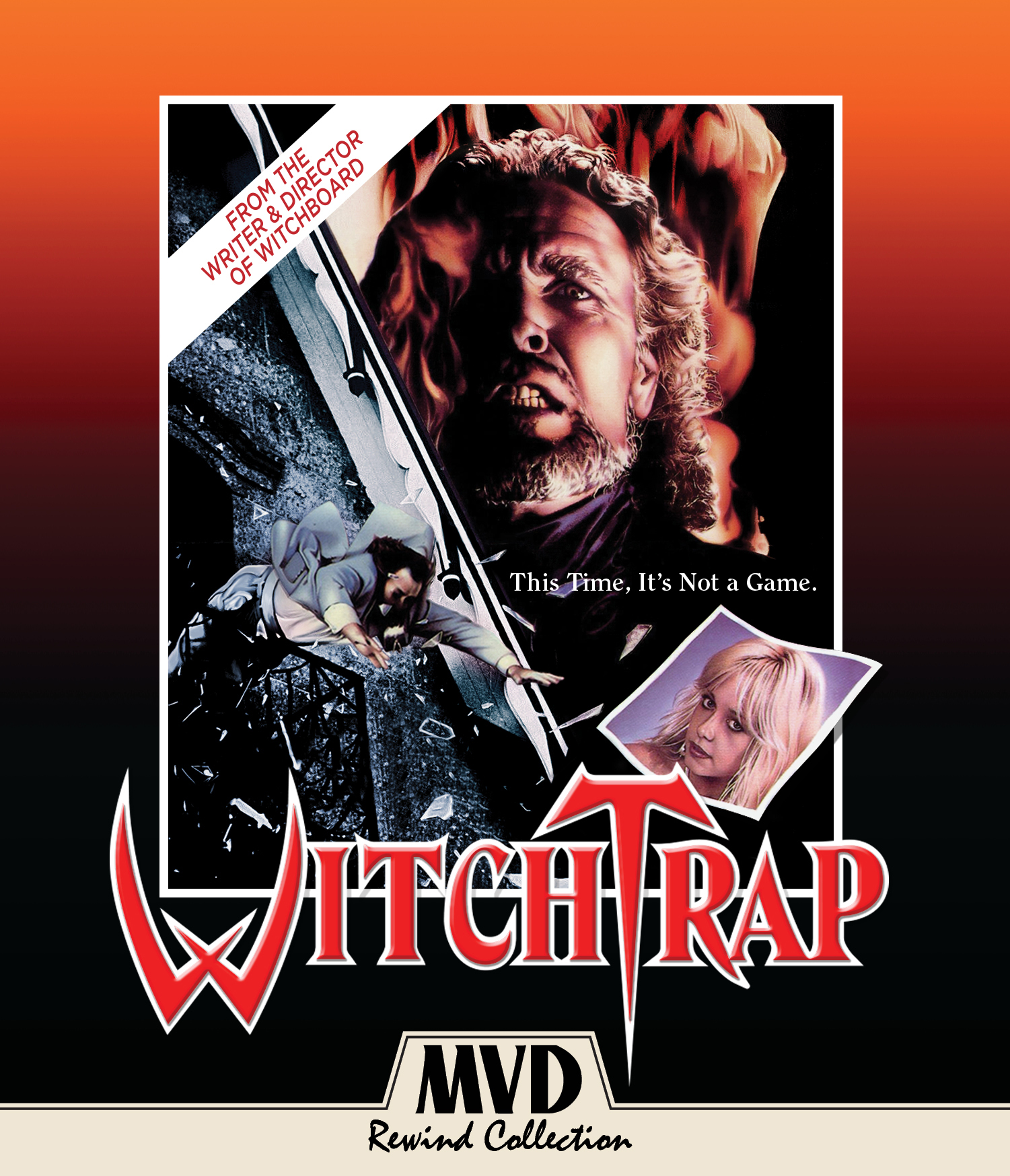
Witchtrap (aka The Haunted; The Presence)
Directed by Kevin S. Tenney
Moonstone Entertainment; Cinema Plus; CGO Pictures; Mentone Pictures; Magnum Entertainment; MVD Rewind Collection
https://mvdb2b.com/s/WitchtrapSpecialEdition/MVD12465BR
92 minutes, 1989 / 2023

One of my favorite ghost sub-genres is when a group of parapsychologist scientists go to a haunted house to investigate it. No, not like those silly “ghost hunting” shows on cable, but films with a darker turn, such as The Haunting (1963, based on Shirley Jackson’s excellent 1959 novel, The Haunting of Hill House), or The Legend of Hell House (1973, based on the 1971 book Hell House, by one of my favorite authors, Richard Matheson).

For Witchtrap, the script was written in 6 days and shot in Fairfield, California in 17. A nice quickie production, most likely designed for the VHS market, in which the second highest of the two top sellers at video stores was horror. That is why so many films came out in the 1980s. This one was just as the move towards laser discs and DVD was starting.

This is definitely a child of its time, when the demographics were geared more towards teen boys and young men, when women in these films were idealized and sexualized beyond the scope of the story. For example, every female character introduced, even the lead scientist, is either wearing next to nothing, high heels, or topless. Yes, there is a bathing and a shower scene (to be honest, the later is part of the story rather than just gratuitous), of course; at least one was mandatory at the time: wet women’s bodies were, if you pardon the cliché, the money shot.

The object of the investigation is to photograph and exorcise an evil ghost, hired by Devon Lauder (director Kevin Tenney) the nephew of the dead warlock (not witch) Avery Lauder (JP Luebsen; d. 2022). Devon wants to turn it into a B&B, but there is just that nasty and murderous spirit in the way, which is proven in the prologue.

Judy Tatum

The leader of the team is parapsychologist Dr. Agnes Goldberg (Judy Tatum) who is with her husband Felix (Rob Zapple) a mental medium. Next up is redheaded physical medium, stately Whitney O’Shea (Kathleen Bailey), followed by video technician Ginger Kowowski (the Linnea Quigley, top Scream Queen at that time, in an extended cameo and the shower scene). For security, along for the ride (and paycheck) is obnoxious boss Frank Murphy (Jack W. Thompson), who mentions that his beer is “as flat as my ex-wife’s chest,” and his two underlings, stereotypical for the time sauntering and horny (right down to often self lip-licking) for Ginger, Levi Jackson (Clyde Talley II), and the comedy relief, sceptic and sarcastic Tony Vincente (James W. Quinn) who could be the model for Chandler Bing; he really does have the best lines, including lots of references to other films and television shows, such as stating “Good night, Gracie.”

It takes 20 minutes of exposition (Act 1) for the team to get to the Lauter House (aka “Slaughter House”), where they meet the big, slow, and creepy – natch – groundskeeper Elwin (Hal Havins). Whose side is he on is the question – in genre films, it really can go either way – though it is obvious he is also a horndog. That is the way of films of this period: the women are either smart or bimbos, though dress the latter, and the men are either (but rarely) smart and obnoxious in one way or another. There is also a nice touch of racism beyond the stereotyping, such as Frank saying, “You’re gonna do what I say or I’m gonna kick your black ass down those stairs,” to witch – I mean which Levi responds, “Try it and I’ll tap dance on your ass like Bojangles Robinson.” But I digress…

Linnea Quigley, Clyde Talley II

This has been noted that the acting is quite wooden, but there is a reason in this case: as IMDB states, “all of the dialogue and sound effects had to be re-recorded in post-production because of a mix-up with the live sound recording.” All the dialogue is flat (same distance from the microphone) and it is hard to match emotions when you are trying to sync the sound to the screen. I was especially amused by the punches during a fight scene; not as “wooden” as in a Shaw Bros. release, but it does resonate like the same sound effect for each punch.

Kathleen Bailey

Of course, our intrepid troupe gets picked off one by one (nice body count with enjoyable blood and relative gore SFX by Judy Yonemoto). The issue for me is that each time it is about to happen, it is telegraphed in two ways. First, Whitney goes into extreme spasms whenever the ghost/warlock is about to do his due diligence. The second is when the music suddenly changes to an intense and dissonant string-based screech. The kills are still fun to watch, though, and a bit imaginative. There are also some decent jump scares, as was the trend at the time.

James W. Quinn

Starting off the Blu-ray extras is a group commentary track with: director Kevin Tenney, producer Dan Duncan, cinematographer Tom Jewett and actor Hal Havins. Fortunately, they kept their egos in the pockets and rarely talk over each other, and the obviously like each other, which comes across. There are lots of anecdotes, but much of it is a study on filmmaking that is not overly technical.

JP Luebsen

There are a series of interviews starting with Tenney (24 min), who also directed cult classics Witchboard (1986) and Night of the Demons (1988) before this one. He actually tells some interesting stories about the lead-up and making of the film that is not just the standard fare, including self-deprecating moments and insightful anecdotes. Next up is Linnea Quigley (14 min) who discusses how she got into the genre (though does not mention some of her earlier classic films), working with the director, and how much she loves acting in horror films (lucky for us). Then there is cinematographer Tom Jewett (15 min) discussing his career and has a bit more technical info. Last is with special effects supervisor Tassimo Baur (17 min), explaining his role with stunts, shootings, and explosions, for example. All the interviews have clips from the film, and they are solo talking head style, but the content is better than the form.

Added is the VHS version of Witchtrap (92 mins, with some of the extra gore removed thanks to the ratings board that wanted to give it an “X”). I did not watch this, only the uncut main film, not seen until the Blu-ray/DVD release. Last is a mostly on-set photo gallery and the original trailer, as well as other company coming attractions of films from the period. On the physical side, there is a reversible cover artwork and a really nice collectible poster, and for the technical, this is a “High Definition (1080p) presentation of the main feature in its original 1.85:1 aspect ratio, scanned and restored in 2K in 2016 from the 35mm Interpositive.” The audio is LPCM 2.0 Mono, and there are optional English subtitles.

Considering the budget and some of my comments, this is actually a surprisingly enjoyable film nearly all the way through. The effects are effective, it is shot well, and as is mentioned often in the commentary and interviews, the lighting throughout is quite noteworthy with its mixing of shadow and light.

This fits in well with the pantheon of 1980s horror cinema, despite its low budget, and even though it was released at the end of the decade, its heart is definitely on a VHS shelf, though seeing the full, uncut version is special.

IMDB listing HERE


Thursday, January 12, 2023

Review: Ghostwatch

Text © Richard Gary / Indie Horror Films, 2023
Images from the Internet

Ghostwatch
Directed by Lesley Manning
BBC; Screen One; Sonopress; MVD Entertainment
91 minutes, 1992 / 2022
www.sonopress.de
www.mvdvisual.com

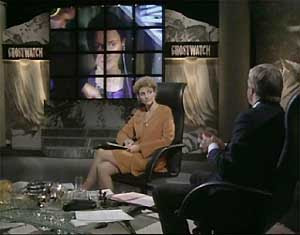
Right now, there is a proliferation of Ghost Hunters type shows on cable television. I have watched a couple of them, and they suck, so obviously made up or at the very least stretching credulity. But this BBC1 film dates back to 1992, ahead of the crowded market, and is presented as a real documentary. There is little indication beyond the credits that it is fiction and exclaims itself as “live,” and comes across as a news program like ”20/20” or “60 Minutes.” This is helped by it being hosted by respected newsman Michael Parkinson and well-known celebrity Mike Smith (d. 2014).

As with Orson Wells’ radio broadcast of “War of the World” (1938), some people did not realize it was a scripted piece as this was way before the popularity of the Found Footage genre, so much of the audience was caught unawares. And like Wells’ radiocast, this was presented on October 31.

Mike Smith, Michael Parkinson, Sarah Greene

In a regular looking home on Foxhill Drive (in England; I am assuming London), the Ghostwatch team is arriving to investigate the ghostly happenings in that house (the example they show is actually laughable for a number of reasons, but incredibly reminiscent of Paranormal Activity in 2007, nearly a decade later). Hosting the team is annoying comedian Craig Charles (of “Red Dwarf” fame). Note that most of the main characters are playing themselves. The “reporter” from the BBC and lead is Sarah Greene, who was married to Mike Smith at the time, which is acknowledged in the program, thereby giving it more credibility.

Like Geraldo Rivera and Al Capone’s vault (do you remember that?), for a while everything is pretty mundane as they switch back and forth between the house and the studio, where Parkinson and Smith interview a parapsychologist, Dr. Lin Pascone (Gillian Bevan), the owner of the house, Pam Early (Brid Brennan), and take calls from people who have possible ghostly experiences. Taking the counterpoint poo-pooing the events, is American Dr. Emilio Sylvestri (Colin Stinton).

Brid Brennan and the Wesson sisters

One of the questions in this show is whether or not the events are a poltergeist, due to the two puberty-period (no pun intended) Early daughters and real-life sisters, Kimmy (Cherise Wesson) and Suzanne (Michelle Wesson). Or, perhaps, could it be something more sinister?

Before we get to the meat of the matter, when the banging hits the walls, the film almost mocks itself with a series of red herrings that I thought was really well written (by Stephen Volk, who started his career with Gothic, the 1986 story of the creation of the Frankenstein novel).

Craig Charles, Brennan

This is the first time this has been released on Blu-ray, which looks incredibly crisp. There are some nice extras. First up is a brand-new Audio Commentary with British film historians Dr. Shellie McMurdo (University of Hertfordshire/University of Roehampton, whose interests include the horror genre, trauma theory, Found Footage horror, and torture horror) and Dr. Stella Gaynor (University of Salford; author of Made for TV Monsters: How has the rise of horror on US television impacted on the spectacle and acceptability of the genre?, as well as being a horror make-up artist). They discuss how original this TV film was at the time. The two Docs, who are personable, for quite a while discuss their reactions to the film when they saw it as young’ns. Eventually, they mention how certain scenes are culturally effective. It is a bit self-centered, but so refreshing than most of the flat and clinical, “Here is how it got started, cast stories, effect on culture” cliché commentaries.

Also new for the Blu-ray is the documentary, “Do You Believe in Ghosts?: 30 Years of Ghostwatch” (48 min). This is essentially a Making Of documentary, filled with interviews with the cast (Greene and Bevan), crew (including director Manning and writer Volk), among others. It is engaging and a bit of an historical document about the filming. It is mixed with scenes of the film that you have probably just watched, but using it as reference points to the conversations, works. It is well put together, and worth the view.

Gillian Bevan
Also on the disc is an archival commentary with writer Stephen Volk, producer Ruth Baumgarten, and director Lesley Manning. They give a bit more details about both the technical ends of the film and anecdotes. It amazes me that after all these hours of commentary, there is very little overlap of information. My guess is that this commentary was recorded for the DVD release in 2014. Last is the “Shooting Reality” featurette by director Lesley Manning (8 min). This shows parts of the script, the house floor plan, and Manning’s notes about it as she describes it, among other things. There is also the only clear and close-up picture of the ghost, Pipes (Keith Ferrari).

What kind of reaction did the audience have during the show and after? Well, the BBC announced that they received over a million phone calls that were both favorable and complaints by people who thought it was real (despite the credits at the beginning and end).

Greene

Just for the originality in its format, this is as an important television moment as Captain Kirk mixing it up with Uhura. There was no reality television frame of reference, and this makes it all the more powerful, and worth remembering when you watch this, and you really should. So much fun.

Oh, and there are reportedly 11 appearances of the ghost, Pipes. I saw four. Drinking game? Or maybe every time you see the two-liter bottle of Coke.

IMBD listing HERE


Tuesday, November 30, 2021

Review: Autumn Road

Text © Richard Gary / Indie Horror Films, 2021
Images from the Internet

Autumn Road
Directed by Riley Cusick
The Last Motel; Gravitas Ventures
95 minutes, 2021
https://gravitasventures.com/

I am the kinda guy who likes Halloween, whenever it appears. If I were to watch a Halloween-themed film in, say the dog days of summer, it would make no difference and I could like it the same. Also, I am willing to guess that will be true for most of those who are reading this review.

The reason I bring this up is because even though this film is opening just in time for Thanksgiving, it is heavily Halloween based, with its central location a “haunted house” themed deconsecrated church. In the extended prologue that is nearly long enough to be an act, it is run by a man and his two twin teen sons, nice guy Charlie and twisted bro Vincent (played by real twins Ranger and Jonas Lerway), with some help from their friend, Winnie (Maddy-Lea Hendrix). After Winnie goes Poof (no real mystery as to how or why since it is telegraphed and then given away in the prologue, but not on this blog), life is different for everyone.

Riley Cusick

A few years moseying down the road, hot-headed, possibly homicidal Vincent and glasses-wearing so you can tell them apart Charlie (both played by the director, Riley Cusick) still runs the Halloween house. While Vincent gets into fights with guests, Charlie is quick to defend him, though both are protective of each other in their own ways. It is not a healthy situation for either of them. The third character in this study is Laura (Lorelei Linklater), who happens to be Winnie’s older sister by three years. An actress who has not found success but has had some recent heartache, she comes home and gets re-hooked up with our odd brothers, both of whom take a shine to her in their own way. Needless to say, she is full of questions about Winnie.

The main focus of this release is the triangle of Laura, Charlie and Vincent. Along the way there will be some blood shed, some other strange characters – such as a diner regular (George Welder) who reminds me of the evil entity Bob from the original “Twin Peaks” series (1990) – and a situation where something eventually has to give way.

Lorelei Linklater

This is not a typical masked killer slasher, though there is a mask and a body count, but more on the direction of the film later.

The film is filled with long, static shots and lots of conversations, not just snippets of dialogue. Rather than it being in the “here’s some obscurities to show how cool I am,” Tarantino way, the talking is used for character building, which is absent way too often in genre films.

There is a nice use of color palates. Not the garish ones of primary colors that tend to be trendy nowadays (I call it the Creepshow factor), but, for example, in one shot, a character is wearing a mustard yellow colored top, drinking from a mustard yellow beer can, and sitting beside a lamp base that is, yep, mustard yellow. It is actually quite subtle rather than loud. The tone of most of the film is on the dark side, but so is the storyline, which is definitely a slow burn tension builder.

The use of technology for portraying twins is a lot easier now than it was when Cronenberg did Dead Ringers in 1988, where he had to physically cut the negative to make “two” Jeremy Irons. Now the studio magic is all done digitally and quite seamlessly with CGI software like Photoshop. Also, Cusick does really well in differentiating the brothers, and not just with glasses, or different hair styles (Vincent combs it in the middle), but also intensity. For example, much like Wes Bentley’s character in American Beauty (1999), Vincent rarely blinks (as with the owl mask he often dons), giving a subtly layer of unease that many people will not catch, but will still subconsciously feel.

While this is obviously Cusick’s film, both behind and in front of the camera, for his first feature (other than some shorts before this one), he has assembled quite the accomplished cast, though the main focus is on the three main characters. Linklater (who resembles a young Janeane Garofalo) holds her own, though she is on some level in a state of shock through most of the story with PTSD, so her emotional range is reigned in significantly, but is still likeable, despite Laura’s role being over shadowed by der twins.

Maddy-Lea Hendrix

Technically a masked slasher film, but much more of character studies than anything else, its pace may be off-putting for those used to the likes of the Halloween or Friday the 13th franchises where there are a certain number of kills per X minutes, but those of us who like some background and development, even when that precludes any major surprises, this is a well thought-out, put together release, and hopefully just the beginning of Cusick’s feature journey.


Friday, February 15, 2019

Reviews: Bram Stoker’s Shadowbuilder; HP Lovecraft’s The Unnameable

Text © Richard Gary / Indie Horror Films, 2019
Images from the Internet

These two reviews are together because both were based on the literature of master writers who are as vibrant today as they were in their own time around the turn of the 20 Century. Bram Stoker’s Dracula is a must read, and HP Lovecraft’s tales of the Old Ones and Cthulhu resonate today. However, these films are based on lesser known works, which I believe make them compelling. Are they loyal to the source work? Of course not, much like depictions Dracula and the films about the octopus-headed evil god. But that doesn’t mean we can’t enjoy, right?

Bram Stoker’s Shadowbuilder (aka Shadow Builder)
Directed by Jamie Dixon
Applecreek Communications / Hammerhead Productions /
Imperial Entertainment / Moonstone Entertainment / MVD Rewind Collection
101 minutes, 1998 / 2018
www.mvdvisual.com

“The Shadow Builder,” on which this is kind-of-based, is from Under the Sunset, Bram Stoker’s first collection of short stories (HERE) that was published in 1881.  In the original, the titular character could be envisioned as a sorrowful “Death” (sans scythe), who comes for a family when it’s their time (yes, I’ve read it). Like many tales of its period, where authors were paid by the number of words, it’s filled with imagery and adjectives more than narrative story, e.g., “The lonely Man’s heart grows heavier and heavier as he waits and watches, whilst the weary time passes and the countless days and nights come and go.”

And then there is this film, in which nearly everything changes or is given a more structured plotline than the original. A coven led by an evil priest resurrects the Shadowbuilder [SB] through a sacrifice and blood ritual. Rather than morose, it/he is an malevolent being with no foreboding or sadness, but rather is a creature who is after a young boy, Chris (Kevin Zegers) who is pure of heart and may become a Saint one day (yes, you read that correctly).


Andrew Jackson
In some ways, the SB (Andrew Jackson) is a cross between a vampire and a platonic incubus, in that as it passes through a victim, it sucks the energy right out of the person, leaving what looks like a burned out husk, which sometimes comes back to life (reminiscent of 1985’s Lifeforce, sans Mathilda May, but I digress…) for nefarious reasons. Also, being more demon than Death Proper, he is harmed by light, and must remain in the darkness.
On the side of light is a warrior priest, Father Vassey (Michael Rooker, of Guardians of the Universe fame, though for us genre fans, he will always be the titular mass murderer of 1989’s Henry: Portrait of a Serial Killer), Chris’ mom Jenny (Leslie Hope), and her boyfriend, Sherriff Sam (Shawn Thompson). Also in a quirky extended cameo role is the great Tony Todd as a nutzoid Rasta dude with an eyepatch named Covey who, of course, is an important lynchpin to the storyline.


Michael Rooker
As time goes on, the influence of the Demon on the town (filmed in Paris, Ontario) is one of violence and mayhem, and the folks go on rampages with axes and stripping on crosses for the gratuitous nudity. There is some nonsense of course, where the SB needs a certain amount of souls for a solar eclipse to gain full power, and he’s one shy… like he couldn’t just go over to anyone in the town who have gone nuts and just grabbed one, and the opportunities are ripe with fodder. To me that’s the big hole in the plot.
I really liked the religious aspects of the film, which both assures and questions religious fervour at the same time; whether God actually does intervene or is a “stand-back” kinda guy. On one hand is mentioned “an eye for an eye,” and then someone smarmily calls the end of the world “The Book of Rationalization.” It is smart to swing both ways like that, even though it’s pretty obvious they stand by God of Creation and certainly Jesus: while it does get only a little bit heavy handed in that way, it does not interfere with the story, so I’m okay with it, being the non-religious person that I am.

There’s lots of jump scares that work, some nice blood effects, a ton of digital effects that are reminiscent of Raiders of the Lost Ark (1981), and a large body count that help boost the payload of enjoyment.

The Blu-ray has many extras, most of which are new for this re-release: The first one up is the “Making of the Shadowbuilder” featurette (32:22), which presents the director, writer Michael Stokes and its actors Jackson and Todd. There is also a “Shadowbuilder: Visual Effects” featurette (13:26) and also a look at “Shadowbuilder: Kevin Zegers” piece (5:00); it is pretty obvious they were all recorded at the same time and then edited into different groups. Luckily, all three are entertaining, especially the effects one as the director describes how he helped create a digital layering technique that was used in a ton of mainstream features, such as Terminator 2: Judgment Day (1990).

Tony Todd
Then of course, there’s the full-length audio commentary by the director, Jamie Dixon. This is actually a nicely paced talk that reflects and rebounds off what the viewer is seeing on the screen. Dixon doesn’t just ramble on about technical aspects, it’s directly tied to the images present on the screen. This style is very informative yet low pressure for the viewer.  

Some other cool odds and end extras include a reversible, two-sided cover artwork, the trailer for the original release as well as other coming attractions, a poster folded into the clamshell case, and some subtitles that didn’t really work well off my Blu-ray player.

Like I said, some of the plotline is questionable, and other than the barest of connection to the original short story, but it’s a fun ride.
 

H.P. Lovecraft’s The Unnamable (aka The Unnamable)
Directed by Jean-Paul Ouellette
Unearthed Films / Yankee Classic Pictures / Unleased Classics / MVD Visual
76 minutes, 1988 / 2018
www.unearthedfilms.com
www.mvdvisual.com

The original short story on which this film is very loosely based was first published in Weird Tales in July 1925 (HERE). While both take the longer route to get to a point or anywhere near a plot, Stoker’s style was languid, while Lovecraft uses his writing editing the same way film does, with sharpness and snippets to express excitement, such as this nameable description of the unnameable: “It was everywhere — a gelatin — a slime; a vapor; — yet it had shapes, a thousand shapes of horror beyond all memory. There were eyes — and a blemish. It was the pit — the maelstrom — the ultimate abomination. Carter, it was the unnameable!” (Yes, I’ve read it, too.)

This is director Jean-Paul Ouellette’s first film, and he takes the initial tale and uses it as the starting point (after the obligatory prologue where we get some of the back story of Alyda Winthrop (Katrin Alexandre), aka the named Unnameable.


Mark Parra, Charles Klausmeyer, Mark Kinsey Stephenson
The focus of the story is two intertwining groups of overaged Miskatonic University (if it’s Lovecraft, it must be there; a guerilla-style UCLA stood in for the locale) students, mostly freshmen/-women, in New England. These are people who will wind up in the spooky house where the Unnamable lives. The first is the trio of snooty and egocentric hyper-intelligent (a Sherlock Holmes meets Sheldon Cooper type, though I supposed he’s symbolically an ersatz Lovecraft) Folklorist and writer Carter (Mark Kinsey Stephenson), always-in-a-suit-and-tie Howard (Charles King aka Charles Klausmeyer) and obnoxious show-off Joel (Mark Parra, who is now a noted Martial Arts expert).

Laura Albert
The second group is jocks Bruce (Eban Ham, who wears a sweater around his neck) and John (Blane Wheatley), who are creepy in trying to seduce Tanya (Alexandra Durrell) and Wendy (cult fave Laura Albert in her first film; she will become a top stunt women in film, but those in the know may always think of her as Mrs. Van Houten in 1989’s Dr. Caligari).  
Of course, as time rolls on, physical contact with the titular creature will be inevitable, leading to some really nice bloodwork effects and a decent body count. The creature also looks pretty good, and it takes quite a while before one gets to see it in whole (other than a quick flash that you’ll need to hit the pause button to catch.

The acting is a bit on the wooden side, but it’s somewhat forgivable as for most of the players, this is their first roles. As I stated near the top, it’s also the director’s first feature, so there is the learning curve of getting good performances from the cast. No, my big issue is something that is endemic in movies of this period, and that is the walking around the house (in this case; in others, it could be the woods) with a flashlight or candle for extended periods. Yes, I have discussed this before in other reviews, but in this film, if combined, it must take up a good third of the entire running time. Then there is door being locked in a house full of windows. Furniture goes out windows, breaking glass. This might be a good time to mention that there is a very dark, subtle humor that runs throughout.

An interesting aspect of the film that is totally dated is the whole subplot of jocks trying to get laid at all means possible, including trying to get the ladies drunk and forced embracing. Or, as is also true here and oft the case in horror cinema, the hot girl is all, “Hello, I just met you an hour ago: let’s fuck!” These two scenarios made my skin crawl more than the beastie, honestly. And yet, I liked the film, as ridiculous and full of holes as it may be, it is definitely a piece of its time.


Eban Ham
Among the extras are separate interviews done in split screens by Jay Kay of the Horror Happens Radio podcast with actors Charles Klausmeyer and Mark Kinsey Stephenson who are friends beyond the film (78:13), Eben Ham (30:55), Laura Albert (46:16), Mark Parra (33:36),and make-up artists R. Christopher Biggs and Camille Calvet (60:03); surprisingly though, none with the director. Kay does a great job in hitting the fine points of asking the right probing questions, and still manages to touch on the marketing buzzwords of the product (i.e., this Blu-ray and its sequel).
A full audio commentary with Albert, Ham, Klausmeyer, Stephenson, Biggs and Calvet in included. As you might guess by the sheer number of people contributing to this aural annotation, it’s kind of a mess with some information, and a lot of talking over each other, sadly.  Stick to the Jay Kay interviews for real info. To add to the extras, there’s a photo gallery and various trailers, including for this film.

There is a sequel by the same director, The Unnamable II: The Statement of Randolph Carter (1992) that has two of the same main male leads, which I have not seen yet. Time will tell.


Tuesday, January 15, 2019

Review: House of Purgatory

Text © Richard Gary / Indie Horror Films, 2019
Images from the Internet

House of Purgatory
Written and directed Tyler Christensen
Watching Eye Productions / Terror Films / MVD Entertainment
75 minutes, 2016 / 2018
www.mvdvisual.com 

As I’ve oft said, tangle up enough well-worn tropes and you may find yourself with something unusual. This one has a blast of ‘em, from structures that appear out of nowhere and are (of course) evil, to malevolent forces that know your secrets and fears, all based around a couple of couples of overaged actors playing high school teens on a road trip. This I get from the trailer, alone.

Halloween “haunted house” attractions are becoming increasingly popular. A truly haunted one is almost too good an opportunity to miss. Location? Unknown. That’s where the road trip comes in, of course. It sounds like a supernatural Talon Falls, but we shall see.

After a nice jump start, we are introduced to a group of high school (have to stop here to giggle) students who are partying on Halloween. Four of them decide to find the urban legend Halloween house that pays you back if you make it all the way through.


Brad Fry, Laura Coover, Anne Leighton, Aaron Galvin
The first couple is Amber (Laura Coover) and Ryan (Brad Fry). He’s the instigator and a bit of a macho dick who pressures everyone to keep on a-goin’. Amber comes from a religious family and we actually don’t learn too much about her, but more on that later.

The second couple is “nice guy” Nate (Aaron Galvin) and the unofficial star of this short feature, Anne Leighton. I guess she could be considered the level-headed one, but she’s in the same sitch as the rest of the kids [giggle].

When they do find the House of Purgatory, whether it’s the place of the urban legend or not is unclear, which is a wise choice on the part of the filmmakers, we learn that it is being run by a guy with a skull loosely painted on his face (Brian Krause, who in an extended cameo, is the biggest name in the cast, having been a “Whitelighter” on the television show “Charmed” for years) a la Captain Spaulding of Night of a 1000 Corpses (2003).


Brian Krause
The House also knows your deepest, darkest secrets; says that right on the entrance. However, we know little about this band of fodder for evil purposes, so while we learn their secrets eventually, fortunately we are given a miniscule portion of what their life is/was like, and what brought them to that moment at that point. What bothered me, though, is that in two cases, their “secret” is/was not a choice, but something that is/was put on them. No spoilers promise.
Which makes me wonder about the backers of this film. One could actually see it as a “Christian” fear theme sub-genre, with punishments that go beyond the deeds. In some cases, it seems like the parents are the ones who should be there, rather than these teens [giggle].

I’m also a bit annoyed at the throwing around of words like “gay (as in “that’s so gay”) and “retarded.” In the right context I don’t have a problem with the use of the words or not, but in this case it took me out of the moment, which is what you don’t want to do when watching a film, especially a genre one. For example, wondering if a particular character is gay because he’s nice is, well, whatever. But the “that’s so gay” is tiresome and passé.

Okay, so I’ve whined a bit upfront, but that’s not to say there aren’t some really fine touches throughout. For example, when our foursome finally do get into the Shed of Purgatory (you’ll see what I mean when you watch the film), there are different floors leading downward. Wisely, it starts slow and then continues to build tension as different floors are reached, escalating to a couple of perfectly pitched lulls in the bam! excitement level, letting the tension build again. No constant clobbering over the head, this is more like riding the waves. And yet, the angst remains in both the confusion of the characters and for us as everyone tries to figure out the characters’ next step (both figuratively and literally).
 
Note that there is practically no blood, but the sets look great and the cast is attractive.

A fun game when watching films like this is to “guess the references” to other genre films whose tropes are present. For example, there is one key element here from I Know What You Did Last Summer (1997), and a bit from the Sarah Hyland horror (read that as you wish), Satanic (2016).

The film is short at 75 minutes, and it could have been beefed up just a little with some expository info about the background of the characters, rather than just at the point of the secret revelation. That being said, there are also other parts that could have been cut down a bit, such as much of the pumpkin carving scene.

The extras are sound choices, chapters, captions (for which I am always grateful), and three trailers (one non-genre, and one for this film).

This is what I call a serviceable story. What I mean by that is that it’s not rocket science, but it does its job of being entertaining. Sometimes that just what a viewer needs when dealing with characters that are teens [giggle].


Sunday, April 15, 2018

Review: The Unwilling

Text © Richard Gary / Indie Horror Films, 2018
Images from the Internet


The Unwilling
Directed by Jonathan Heap
Vision Films / Northern Prod / Rough Diamond Prod /
Bertone Visuals Prod / Corrales Digital /
84 minutes, 2016 / 2018
theunwilling.com/

When I see a film that has played many festivals and numerous and very different posters, I get a mixture of excited and cynically suspicious. But I’m keeping my fingers crossed. The director, Jonathan Heap, was nominated for an Oscar in 1991 for a short called 12:01 PM. Since the millennium, most of his work has been shorts and a television series. I willingly enter the bargain of watching this with hope, however, considering the cast and the look of the stills from it, but I’m jumping ahead.

The premise is simple: an ugly and evil box gives you want you want, and then takes over your body and either kills others or gets the body killed through its actions. For lack of a better term, I’ll call this being a demon, though it’s never really quite specific on its origins, and even complains when someone tries to name it.

We learn the box has been doing this for quite a while as we meet an extended family, based on the children of the previous “owner,” veteran badass Lance Henricksen, who in an extended cameo still manages to outshine most. After the box had come into his life when the now adults were mere kids, he had changed and became a cruel tormentor to his children, leading the main and locus character, David (co-writer with the director, David Lipper) to become housebound due to severe OCD (think of Monk with agoraphobia and without the humor).
                                                                                                                                
Lance Henricksen
Also joining him at his home after the death of his dear old evil dad, to hear the reading of the will, are his similarly abused and hyper-vain sister Michelle (Dina Meyer, who gets to show off some impressive yoga moves), her brutish ex-husband Rich (Robert Rusler) and his current fiancée Cheryl (the lovely Bree Williamson, who I remember from the underrated television show, “Haven”), and cousins Kelly (Austin Highsmith), who is a lawyer and enabler to her junkie brother, Darren (Jake Thomas).

Not a huge cast, but just enough for a decent body count. But I’m jumping ahead of myself again here. The box itself looks pretty cool, sort of like coal with a Cthulhu-similar raised octopus design on it. There’s no denying that it’s bound to remind one of the Book from Evil Dead. Fact of the matter is that there is a lot here that is reminiscent of other films, which in itself I don’t really find to be a bad thing most of the time. It’s like a game of “Oh, I know that one! Take a drink!”

Dina Meyer
The film has moments of slow pacing here and there, but mostly it’s a building story. That being said, it can definitely use some editing and excising, such as how many times do we need to see the water coming from Meyer’s shower head straight on? It’s almost like you’re stuck a bit in David’s need to (rinse and) repeat. Luckily, this doesn’t happen often enough to give up on the story, which mostly works pretty well, in part thanks to its seasoned cast (meant as experience, not age).

Many of the characters are either not likeable or a bit two-dimensional, though David’s seems to be the most thought through (well, the actor playing him did co-write it, remember); however, he is also the center of the story, so that makes sense. We don’t get to learn too much about the others; well, more than occupations and allegiances. There’s very little backstory other than bad dad.

My big question, though, is the title. To me, it sounds kind of contradictory. Okay, here is what I mean by that: the whole premise is based on all the characters volunteering to do something with the box that I won’t give away, and then the box giving each what they want in order to…well, you know (i.e., see the film for yourself). They make choices about what they want, and follow through with the devil’s deal (or demon’s; still not sure). That sounds more like willing than unwilling. Is there something I missed? It’s a similar theme to the Leprechaun franchise where he grants wishes that brings along demise in it, or even as far back as Goethe’s Faust. The working title of the film was The Gathering, and while The Unwilling definitely sounds more chilling, the other seems more accurate. Yeah, I know this is a bit nit-picky; do with it what you will.

Bree Williamson
The SFX in the film are occasionally practical appliances (the blood consistency and color is really good, by the way), but there is also a lot of digital hoo-haa, such as swirling smoke, mirror tricks (reminiscent of Carpenter’s 1987 Prince of Darkness) and a visual “ripple” that leads a character to the box to get what he needs/wants. Other than one cheesy effect outside the house, they all look decent, but it’s pretty obvious that it’s optical.

The press release for the film quite proudly states (and rightfully so), that the crew includes the aforementioned Oscar-nominated director, “Oscar-… and Emmy-winning Cinematographer David Stump,” and multiple award-winning writer Philip Morton (second director and co-producer on this film). With all this heavy power, it’s not surprising that the film looks as good as it does. There is no one thing that is a standout to make me say “Wow,” but it’s definitely a good film, though somewhat washed out of color (I’m sure purposefully). Do I think it’s deserving of such praise? Well, it’s been shown at two dozen festivals around the world, so you there is something there worth noting.

Austin Highsmith
Other than editing, my only real note and quibble is that I think it didn’t go far enough. Except for a nice surprise at the end with an equally enjoyable practical effect (well, it looks like it is an appliance, so I’m assuming…), there is hardly any blood (even with the one person stabbed in a strategic place), the sensuality is minimal other than an affected nurse (Levy Tran, who is on the poster and most of her appearance in the film is in the trailer) and a seduction that changes tone, there is no nudity even with the obligatory shower scene (perhaps the Director’s Cut in a decade or two?), and a low level of actual scares. The pace and angst definitely increases over the course of the film, but it tends to get more shrill than thrill.

Jake Thomas
And yet… I still had a bit of fun watching it. Yeah, I’m critical, but I hope I am not harsh. Even with a seasoned director, actors and crew, there’s the next level and I mean these comments as “notes” and “critique” more than just “opinion” (i.e., where the problem are, rather than “good/bad”).

For example, the acting level is fine, with a bit over- and underacting on occasion. As I said, the cast are seasoned pros and have quite a catalog behind just about all of them, from both film and television, and it shows. The strongest weakness (an oxymoron!) in the writing comes, I believe, from this being the first screenplay for Lipper, and director Heap hasn’t had a writing credit since the early 1990s. But I hope they both continue to stretch their writing wings because there is promise here, and I think by a couple of more films they can be a force. I look forward to that.