Showing posts with label Spanish cinema. Show all posts

Monday, April 17, 2023

Review: The House That Screamed

Text © Richard Gary / Indie Horror Films, 2023
Images from the Internet

The House That Screamed (aka La Residencia; The Finishing School; House of Evil)
Directed by Narciso Ibáñez Serrador
J.F. Films de Distribución S.A.; Regia-Arturo González Rodríguez;
American International Pictures (AIP);
Arrow Video; MVD Visual
94 / 105 minutes, 1969 / 1971 / 2023
www.ArrowVideo.com 
www.MVDVisual.com

Spanish horror films from the mid-1960 until the early 1980s tended to be a bit goofy as is their Mexican cousins (see the Santos series), but sometimes they shined like this one, being a cross between a British Hammer Film, an Italian giallo, and a bit of the gruesomeness of Ilsa: She Wolf of the SS (1975); funny thing is, many of these came out after this release.

There are two versions of this film on the Blu-ray: the theatrical release (94 minutes), and an extended one called The Finishing School. I chose to watch the longer one (105 minutes). As with many giallos, this has an international cast, such as Prussia-born Lili Palmer (d. 1986), so some people seem to be speaking English and others Spanish, but all are dubbed or redubbed into English. This gives all the speaking parts a flat sound (rather than 3D), so people in front of the camera sound the same as those further away. Unfortunately, there is a Spanish option (again, dubbed and redubbed).

Mary Maude, Lili Palmer

Taking place in the Victorian late 1800s in France, Mme. Fourneau (Palmer) strictly runs a boarding school for girls in a huge, isolated, and chained-up mansion, which seems to specialize in discipline and corporeal punishment. The feeling of this all has the vibes of Suspira (1977) and Phenomena (1985), again, both of which proceeded this film. Despite the size of the place, all the students sleep barrack-style in one room. This gives the opportunity for the viewer to see them all in underlaces, and even a corset.

Into this nearly prison comes comely Térèsa (Cristina Galbó) – pronounced Teh-RAY-sah – who is met excitedly by Fourneau’s student underling, thin and statuesque Irènée (Mary Maude, in her first yet defining film) – pronounced I-rhe-NAY) who is the school’s bully and has a killer smirk, among other traits that one might expect in this kind of film. She has a thing for Térèsa and is not afraid to hold her power over her as much as the rest of the girls (they are supposed to be teens, so I will use the term “girls” freely).

Cristina Galbó

To add to the weirdness, Fourneau’s teenage son, Luis (John Moulder-Brown) is sequestered in an upstairs room (though sneaking out to peek on the students, but then again, who would not?), though he has a budding relationship with student Isabelle (Maribel Martin).

And now, on occasion, there is the stabbing deaths. And yet, this double-dips and is also a psychological thriller, between the bullying, the discipline, and the occasional romps. Speaking of which, while there is no real nudity, there is a group shower scene where the students wear white gowns under the water, making them nearly translucent. I am assuming this has to do with the time period this was filmed, and possibly different censorship laws in España.

Palmer, John Moulder-Brown

There are a few surprises in here with the shifting of unexpected power dynamics and, naturally, murders. The body count is not high, and there is blood but no gore yet very ahead of its time, and yet the tension is usually held at quite an elevated level.

Honestly, I am not sure how much of this was filmed in a real location or studio, but it is stunning to look at the architecture and décor. Also noteworthy are the cinematography and editing. Even the lighting has a personality of its own. But just as noteworthy is the orchestral score by Waldo de los Rios.

The smirk

The technical side of the bonus material contains a brand new 2K restoration from the original negative, a High Definition (1080p). The official extras start with an English commentary by Spain-born film historian Anna Bogutaskaya. She explains the importance and influence of this film in both Spain (the first to be created specifically for worldwide distribution) and the international market, for example. What is also interesting, the discussion is about the film and its meaning, especially regarding specific scenes, with few anecdotes about, say, the actors involved. She talks about the director, and his effect on both Spanish and wider filmmaking.

There are a few new interviews. Starting off is “This Boy’s Innocence,” (24 min; in English) with actor John Moulder-Brown, discussing his character, what he brought to it, and about working with the director, Palmer, and Galbó. “All About My Mamá” (9 min; in Spanish with subtitles) features Juan Tébar, who wrote the original novella (Serrador wrote the screenplay), discussing the relationship between Luis and Fourneau. Surprisingly, as he mentions his influences, he does not mention Robert Bloch.

“The Legacy of Terror” (14 min; in Spanish with subtitles), with the director's son, Alejandro Ibáñez (Serrador died in 2019). Despite being born more than a decade after the film, Alejandro gives some nice insights on the director, and the Spanish political environment into which it was released. Then there is “Screaming the House Down” (20 min; in English), with Spanish horror expert Dr Antonio Lázaro-Reboll, discussing the history of the film and its director. Most of this has been covered by previous material. Also included is archive footage with Mary Maud (12 min; in English) from the Festival of Fantastic Films in 2012, interviewed on stage by Adrian James, giving stories about the director, how she got the role, and retells the entire plot.

With title cards to explain what the viewer is watching, there are some alternative footage (6 min) from the original Spanish theatrical version, some changed due to Spanish censorship. But even more fascinating is seeing the difference between the pre-restoration footage and this Arrow version. Along with five of the original trailers, TV and radio spots, and an Image gallery, the Blu-ray has a reversible sleeve featuring original and newly commissioned artwork by Colin Murdoch.

Despite the red herrings, I figured out the killer about halfway through, but that did not stop my enjoyment of the piece because of the “why” of the murders, which was exceedingly creepy and effective. Sure, it borrows a lot from the gothic Hammer milieu, but it also helped inspire so much more that would come later, especially from European cinema. It is just luscious.

IMDB listing HERE


Wednesday, June 15, 2022

Review: The Living Dead at Manchester Morgue

Text © Richard Gary / Indie Horror Films, 2022
Images from the Internet

The Living Dead at Manchester Morgue (aka No profaner el sueño de los muertos; Let Sleeping Corpses Lie; Don’t Open the Window)
Directed by Jorge Grau
Synapse Films; Star Films SA; Flaminia Produzioni-Cinematogrpahiche;
MVD Entertainment
95 minutes, 1974 / 2022
www.MVDentertainment.com

Despite using “Manchester” in the title, it sounds like this is a British film, but au contraire, it is actually of Italian Spanish origin. Which means it can be either really good or really bad, or so bad it’s good. I am a fan of Italian giallo films from the period, and also of the absolutely crazy Spanish-origin releases of the period, such as The Blood-Splattered Bride (1972).

To be fair, parts of the outdoor scenes of this was filmed in England, such as Lucio Fulci’s The New York Ripper (1982) was filmed in, well, you know, but most was in Madrid and Rome. However, both the English and the European actors are all dubbed into English, as was the style at the time.

Cristina Galbo, Ray Lovelock

On a road trip to deliver a small statue, obnoxious antique shoppe owner and future protagonist George (Ray Lovelock; d. 2017) has a fender-bender with redheaded and obvious future love interest Edna (Cristina Galbó), and so ends up sharing Edna’s car. For a liberal, he’s a real macho moron, full of toxic masculinity (“I’m driving!" he declares without asking, though it is her auto). He better chill out, or I’ll be on the side of the living dead. The gender roles are codified into “Me Man You Woman” kind of thinking, which I’m so glad that, as a culture, we are starting to break out of, if you’re not a modern Republican.

After a brief set-up of how the dead come to life via farm experimentations with radiation, I kid you not, and Edna being attacked by an obvious dead person reminiscent of Bill Heinzman in Night of the Living Dead (1968), they manage to find the farm of Edna’s sister Katie (Jeannine Mestre) and her photographer brother-in-law Martin (José Lifante) farm. Just in time for the dead guy to make another appearance (George and Edna drove…how did the dead guy beat them to it?; this happens a few times with various zombies).

Jeannine Mestre

Anyway, the point is that it brings the police, including a Sam Spade-meets-Dirty-Harry type of hard-bitten cliché Sergeant Inspector (American actor Arthur Kennedy on the other side of his Oscar-nominated career; d. 1990), who uses a gay slur word and bemoans the loss of being able to act violently against suspects who he deems guilty until proven innocent. You can tell by the tan trench coat.

While there are a nice number of flesh-eating zombies scattered throughout, though usually 3-4 at a clip, they indeed feed on the living, but also have quite a bit of strength (e.g., two of them pick up a grounded tombstone) as they stumble around. They also have an ulterior motive to what they are doing that is actually kind of uncommon for the genre; for that, I will happily give the filmmakers credit. One of the zombies even rises vertically stiff as a board, reminiscent of Nosferatu: eine Symphonie des Grauens (1922).

Arthur Kennedy (right)

There is a lot extrapositions used, such as obviously the living vs. the dead, but there is also the modern youth vs. the fascist elders (relatively speaking), and the strongest point may be the natural environment vs. agricultural technology that is polluting and killing the land.

The name of the film is actually a bit of a misnomer, as it doesn’t take place in Manchester (other than the opening montage), though there is a truck seen more than once with the name on it. It actually takes place (but not necessarily filmed in) the beautiful countryside near Southgate and Windermere in the U of K. This new 4K restoration of the original 35mm negative really shows off this visage. In general, this is a very good looking film, being stylish without being overly “arty,” making it more accessible, thanks to the amazing care of cinematographer Francisco Sempere (d. 1979).

The gore is plentiful when it is employed and looks great (possibly real offal and organs), and there is little nudity other than a seemingly gratuitous scene right off the bat (explanations about streaking as a political movement is given in the Blu-ray’s Extras Section). No complaints, but had me scratching me noggin.

There are tons of Extras on this Blu-ray, some may argue more than is necessary for a secondary-level release, but let’s dive in: It starts with a featurette about the director, who passed away in 2018: “Catalonia’s Cult Film King: A Documentary About Jorge Grau and His Manchester Masterpiece” (89 min.). This comprehensive coverage of the career of Grau includes a number of interviews, including Grau himself (in Spanish with subtitles) and numerous British film historians. They discuss his career, his entrance into horror, with The Female Butcher/The Legend of Blood Castle (1973) about Lady Bathory, and especially focuses on The Living Dead at Manchester Morgue. One of the writers notes that this film came out before the “zombie rules” were codified, so there are some notable differences from other general Living Dead inspired films to come. But what interested me the most is the discussion of the fact that Grau was coming out of the transition of Fascist Spain, and he represented some characters to reflect that, namely the modern and liberal (and douchey is you ask me) George, which was Grau’s leaning, and the Fascistic police inspector. Also, I was happy to hear the lone woman on this documentary, a critic, comment on the subservient and hysterical woman/strong and in-charge man stereotype. It kept me watching the entire length.

Another featurette is “The Scene of the Crime: Giannetto De Rossi in Discussion from Manchester” (16 min), which is new for this Blu-ray. De Rossi (d. 2021) is the make-up and special effects artist, who is interviewed by writer Eugenio Ercolani. This is in English, though De Rossi is subtitled due to his heavy accent. He also famously worked on a bunch of Fulci films, such as Zombie (1979) and The Beyond (1981). He discusses how he got to work on this film as well as Fulci’s, and what he feels about his accomplishments. Another Extra that also focuses on him is “Giannetto De Rossi: Q&A at the Festival of Fantastic Films, UK” (43 min.) recorded in the same year and at the same festival as the previous interview, in 2019. This is also moderated by Ercolani, and goes into more detail thanks to the larger time given. It also goes over much of the same territory as the first one, but without the video clip examples. I did a little skimming on this one.

However, the highlights are two full-length audio commentaries with film historians. The first is with Troy Howarth, an American who writes books about European Cult Cinema. Honestly, this sounds like every other historian’s commentary in every other Blu-ray for every other film. That being said, I found it interesting because I love film history and this guy is obviously more knowledgeable than I am on the topic, so give it a listen, but know what you are getting into (as the Herman’s Hermits sang in paraphrasing, “It’s into something good”). The second commentary is with film critics Nathaniel Thompson and Bruce Holecheck, who cover similar ground as the one with Howarth, but manage to cover even more material despite some overlap, and they also add some humor to their descriptions. As for other bits and pieces, there are the likes of the Original Theatrical Trailer, Original TV Spots, and “Radio Spots.”

While considered B-level in the Italian zombie giallo genre, this really should not be missed, because it has become a classic, and there are so many connections to the likes of Fulci and Argento that it certainly is now part of the storied canon. Besides, it is a hoot. Strong SFX, decent story, stirring music all combined into something eminently watchable. Enjoy. Mangiare!

IMBD Listing HERE 


Thursday, January 20, 2022

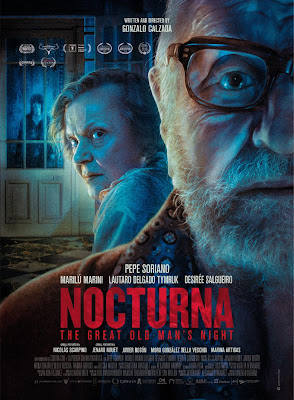
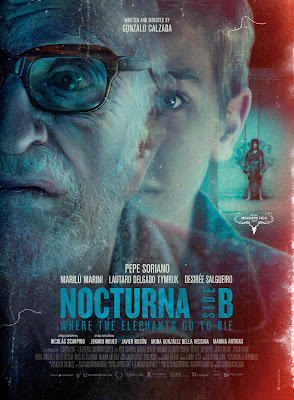
Reviews: Nocturna: Side A – The Great Old Man’s Night; Nocturna: Side B: Where the Elephants Go to Die

Text © Richard Gary / Indie Horror Films, 2022
Images from the Internet

 Both these films are on iTunes/Apple TV, Amazon Prime Video, Google Play, Xbox, Vudu, Vimeo, DirecTv, local cable and satellite providers, and on a single-disc DVD. The trailers for the films will be at the very bottom of the blog.


Nocturna: Side A – The Great Old Man’s Night (aka Nocturna: Lado A – La noche del hombre grande)
Directed by Gonzalo Calzada
Cine Argentino; Coruva Cine; La Puerta Cinematografica; Breaking Glass Pictures
107 minutes, 2021
https://alief.co.uk/NOCTURNA

This will be the third and fourth film from Argentina that I will have reviewed on this blog, the others being Francesca (2015) and What theWaters Left Behind (2017; aka Los Olivados). Each of these films is quite different, but one thing that runs in common is the intensity. If you were expecting light fare like Mexican Santo releases, you have ladrò up the wrong árbol.

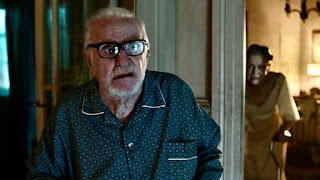
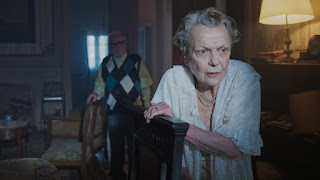
This is an intense study, focusing on a 100-year-old man, Ulises (actor and playwright Pepe Soriano, who has won the Argentine Critics Association Award three times, was also a Valladolid best actor winner, and was nominated for a Spanish Academy Goya Award; he is in his early 90s), facing his mortality, is working his way through remembrances and forgetfulness, as his age tugs at his present and past, and the holes of memory in between. His past is represented by a childhood self (Jenaro Nouet) from the day he met his wife, Dalia (Marilú Marini, who is often known for a number of French films from the 1970s and ‘80s) that is also represented by her younger version (Mora Della Veccia).

Pepe Soriano

It almost appears as time is fluid in many ways, as the film plays with the reality of the moment and the tricky bits of memory and its holes. For example, an event might be mentioned at some point, and then it happens. While this is purposefully unsettling and occasionally confusing at some point, it shows the mind of this older man, and his relationship with his wife.

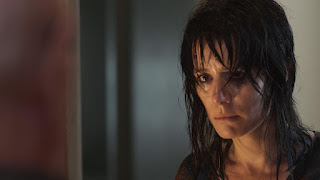
Also involved is the kind-hearted building manager, Daniel (Lautaro Delgato), who means well and is trying to help the occasionally befuddled Ulises as best he can. Then there is the mysterious and angry woman from upstairs, Elena (Desirée Salgueiro), who bangs on Ulises’ apartment door.

 While the film rolls out in its own time, getting the viewer a chance to get to know the characters a bit, what stands out is the emotions, which flow like rolling hills, as the old man’s chest continues to hurt and things are not always as they seem.

Marilú Marini

For some reason, some have categorized this a “horror” film, and on some level I understand why, but I beg to differ. Yes, there are intense moments filled with dread and possible ghosts, but is it corporeal remains of people or spirits of memories, or some level of senility? This is more emotional thriller that goes at its own slow, precise pace (with moments of chill thanks to the lightening storm sounds going on outside the window and the uncertainty of what is going on). That being said, when the film premiered at Screamfest Film Festival 2021, it won many awards including Best Film, Best Director, and Best Actor.

Desirée Salgueiro

The camerawork is gorgeous, especially a warped glass scene where the past and present unite in a blur of images. The lighting throughout is yellowed and dim, like an old light bulb to match the mood and perhaps to reflect Ulises’ dimmer brain functions. While most of the story takes place either in Ulises’ apartment or in the hallways of the building, it never feels claustrophobic thanks to the cinematography which is, again, fluid.

The orchestrated soundtrack fits the film perfectly, swelling and rising at the same time, to help hit emotional peaks. Yeah, this is more of an poignant film than a fright-fest, but do not be surprised if, by the end (or at the end), you have a couple of tears rolling down (yeah, I did).

IMBD Listing HERE 


Nocturna: Side B – Where the Elephants Go to Die (aka Nocturna: Lado B – Donde los elefantes van a morir)
Directed by Gonzalo Calzada
Cine Argentino; Coruva Cine; La Puerta Cinematografica; Breaking Glass Pictures
67 minutes, 2021
https://alief.co.uk/NOCTURNA

While the first film was a bit longer than average, this one is a comparably shorter nearly featurette, at just over an hour. Likewise, this review will be relatively short, as well.

The footage here, broken up into many chapters (as was the main feature). However, there is no narrative. Images are shown that reflect the full story, and are manipulated to look like they are 8mm (or an equivalent), with grain and varying speeds, many in black and white or muted, manipulated colors. In the first chapter, the images were going by so fast, I was getting a bit of motion sickness, and I would skip this part if I were an epileptic, honestly. Or, hide the top part and just read the captions. As with Side A, the captions are incredibly easy to read, being an almost orange color, making it pop out. Also, I find most captions go faster than I can read them, but that rarely happened in either Side.

As for the text meanings, well, honestly again, it was a bit lost on me. It’s philosophical and whimsical, and often I had no idea what they were discussing (yes, I have a Master’s in Communications). This caused me to stop reading and just enjoy the footage as it went by. It feels more like an art instillation than a narrative film.

By modern U.S. standards, Side B would probably be delegated as an extra on a DVD or Blu-ray (especially the latter), which is why it makes sense that both are being released together. It kind of has the feeling of a Making Of featurette, but the footage is unique, albeit shot at the same time as Side A, almost like Outtakes of extra footage. It certainly is a curiosity, but I did find myself getting antsy by the end, but that was most likely due to my confusion than an opinion of the film proper.

IMBD Listing HERE 

Side A trailer:

Side B trailer:

Saturday, July 10, 2021

Review: Face of the Devil

 Text © Richard Gary / Indie Horror Films, 2021
Images from the Internet

Face of the Devil (aka La Cara del Diablo)
Directed by Frank Perez Garland
Star Films; La Soga Producciones; Jinga Films; Danse Macabre; MVD Visual
87 minutes, 2014 / 2021
www.facebook.com/caradeldiablo/ 
www.Jingafilms.com
www.MVDVisual.com

Usually, when a story claims to be “Inspired by true events,” you know it’s going to be either a slasher film or dealing with the supernatural, be it ghost or demon/devil. And since this film is from the Northern Peru city and jungle surroundings of Tarapoto (the characters travel the 600 miles from Lima), it is no surprise that it is leaning towards the latter. Peru is generally a religious country, and religion tends to lead to belief in the evil end of the supernatural spectrum, as well as the holy. As you may guess, the film is in Spanish, with English subtitles.

Vania Accinelli

In this version of a cabin in the woods, it’s a wooden, multi-room hotel in the middle of the jungle with no internet or phone service (natch). Actually, it looks like a cool vacation spot, even though there are no roads leading in or out (just walking trails), so I wonder how it is self-supported. But I digress… The only way to get there is by boat. On that small craft are seven attractive young friends who are undergrad age, including the main couple, virginal Lucero (Vania Accinelli, in her first role) and Gabriel (Sergio Gjurinovic), another couple, Mateo (Nicolás Galindo) and Fabiola (Maria Fernanda Valera), and three others friends, Paola (Carla Arriola), Camila (Alexa Centurion), and diminutive incel Pablo (Guillermo Castaneda), who has a thing for Paola. 

The creep factor starts early on with the odd and unsmiling “host” of the place (Ismael Contreras), as he passes out the keys to the giggling gaggle of youths. Needless to say, he fills the iconic role of the older man who warns the group to be careful, because no matter where you are in the world, if a bunch of young people onscreen get together to go somewhere secluded, there must be this character, be it the guy who runs the gas station, just walking along, or in this case, runs the hotel.

After some exploring and topless bathing by a beautiful waterfall, the group settle into a hot tub to tell the equivalent of scary campfire stories in order to bring up the main topic and threat of the film, the shape-shifting, whistling Tunche, or demonic spirit (thank you, Google).

Before you can say ceviche – okay, about 20 minutes in – a mysterious woman starts popping in and out just beyond the windows to start the second act, and the motor starts revving, slowly at first and building. There is also quite a bit of wind and rustling of foliage. It sounds weird, but it was a bit unsettling, as the director used it well: not over- nor underdoing it.

Despite following a few of the group-in-the-woods paradigms, one of the aspects I really liked about the film is that the kids in question are not slasher cliches. For example, there is no jock who mistreats women or his friends, no over sexualized woman who backstabs, no goths, no know-it-all intellectual who seems to prenatally be aware of everything about the supernatural, no prankster… you get the picture. One thing I will say, though, is that – and I can only go by the English translation captions – the word “moron” is used a lot. These are more genuine-feeling people, despite some natural bickering here and there, which is actually better because there is no one to root for to get killed (you know, that satisfaction when the jock invariably gets it, for example). They all have their own personalities, and come across as decent people, generally. This helps the kills be more emotional, which I believe makes for a better picture overall.

How does the Tunche arrive at this faraway location to pick off our crew one by one? Its origin becomes obvious, in part, pretty early on, thanks to some nice flashbacks, but the film does not lose any of its umph because of that

Despite the nice sized body count, there is actually very little blood for quite a while, and minimal gore. As for the physical end, there are some naked breasts and a male tush, and a theme of almost-sex, but this is watchable for both the horror hound and the novice (who is okay with the nudity).

The acting is better than usual, which is hardly surprising considering the work many of the cast has done, mostly in shorts and especially playing recurring characters on television series.

Although there are fewer living bodies by the third acts, there are still moments of tension, and a nicely done reveal, as it should be in a genre film. And as a movie in this category, it quite lives up to it. It is appropriately eerie, and manages to keep it up pretty consistently, when the group isn’t emersed in water somewhere. Through the love and squabbles, and lots of bikinis, it successfully pokes at you more with mood and tension than with jump scares. I found this enjoyable, even with the subtitles, which were easy to read, and did not pop in-and-out too fast, as is often the case. A worthy view.

Extras are a few really interesting trailers (including for this film), most of them in foreign languages with captions, as well as the standard stereo options and chapters.


Sunday, May 31, 2020

Review: The Supers


Text © Richard Gary / Indie Horror Films, 2020
Images from the Internet

This is the third of a three-part review series of the films of Yolanda Torres. They are in chronological order, over the past three days. These three films were all written by Joan Alvarez.


The Supers (aka The Supers!)
Directed by Yolanda Torres
aFilm International Film Workshop; Easy Stiges
101 minutes, 2017 / 2020
www.easystiges.com

Recently, comic book superhero films have been mega-gigantic, CGI-driven extravaganzas, with a cast of thousands, a cost of multi-millions, and scenes of destruction left and right. Be it the Marvel or DC universe, it has been mostly the top elite of the super crowd, with the likes of Batman, Superman, Iron Man, Wonder Woman, Spiderman, Black Widow, etc.

It’s only been recently that some of the lesser characters have been getting some screen time, with the likes of the Suicide Squad (DC), the Guardians of the Galaxy and the upcoming The New Mutants (both Marvel), to some success. Well, let me take a step back here, because while that timeline is true of the major film players, the indie films have been busy in that department for years, with varying success (story-wise, not financially). For example, there is the joyous and raucous Kick-Ass (2010), and just on this blog alone, I’ve reviewed some outrageous ones (The Surge of Power: The Stuff of Heroes, 2004), the humorous superheroes (The League of Superheroes aka The ABCs of Superheroes, 2015), the and then the downright dour and ludicrous (The Rise of the Black Bat, 2012).

Sarah Tyler Shaw and David Chevers
Actually, I find the minor releases more interesting than the X-Men and Justice League superstars, because usually they are shown as more “human.” That is where The Supers comes in. We are introduced into a world where both DC and Marvel characters exist and mutant powers are somewhat culturally normalized, though we never meet them, of course, thanks to copyright laws.

Among those who we do encounter are our three leads, who all live in the City of Justice: first, there is Paul, the Atomic Avenger (David Chevers), whose power is Telekinesis (he can move things or people with his mind, or pop them out and then in where he wants) but suffers from a severe fear of the dark; Tyler, the Restoress (Sarah Tyler Shaw), has the power to heal but is OCD and has a fear of germs; and then there is Stan Kirby (great name that’s a mix of combo of Stan Lee and Jack Kirby, which is – err – Marvelous) who is Pulseman (Ross Ellis), and whose power is EMP (Electro-Magnetic Pulse) and has debilitating claustrophobia.

Heading it off is Dark Ness (Claudia Trujillo), who can use mental control but has narcolepsy, and whose costume looks a bit like Darth Vader’s (or perhaps Dark Helmet’s, from 1986’s Spaceballs), who has dreams of being a supervillain instead. Her lone henchman is a security guard named Frank (Marco Dollenz), one of my two favorite characters in the film for some reason.

Marco Dollenz and Claudia Trujillo
The essential premise is that this threesome’s minor powers are overshadowed by their weaknesses, so their Superhero licenses are rescinded, and they are forced to take the most menial of jobs (e.g., telemarketer), which even with that they struggle for various reasons.

But, of course, there is an assignment given to them by the superhero Powers That Be through Bob (Ian Breeds), to join together and retrieve a stolen object that is important to those Powers. Are they up for the task? We find out starting with the Second Act of the film.

This is both a simple story and a complex one, because of the human element (i.e., very Marvel-esque in that way). The characters are all likeable, even Dark Ness and Frank. Everyone is trying to live their lives with all its foibles, and yet most still do some good in the world. This mix of simple comic book-level story with a tendency not to talk down to its audience or complex characters gives the viewer a sharp new look at a (especially recently) well-used theme of superheroes; yes, even the complicated and conflicted ones, like Batman and Spiderman.

There is a very sharp and dark sense of humor and self-awareness that flows through the veins of the story, without it being – dare I say it – too comic book-ish. Even with the comic book framework of “cells” that separate scenes, this is more story and heart than bang-bang (though there is some of that, as well). Barcelona is a beautiful city, and we get to see some angular buildings that fit well into that “cell” framework, though I wonder about all the empty streets that we see; I found that kind of interesting and distracting at the same time, but that’s just me.

Oh, and by the way, my second favorite character is the Pizza Guy (Marc Dennis), perhaps for his involvement in anchovy pizzas, which happens to be my favorite kind (seriously). Meanwhile, I really feel it would be cool if this would continue and there could be sequels, but kept at this level, not as a mega-film.

The Supers trailer HERE.

Saturday, May 30, 2020

Review: The Forsaken


Text © Richard Gary / Indie Horror Films, 2020
Images from the Internet

This is the second of a three-part review series of the films of Yolanda Torres. They will be in chronological order, over three days. These films were also written by Joan Alvarez.


The Forsaken
Directed by Yolanda Torres
aFilm International Film Workshop; Easy Stiges
86 minutes, 2015 / 2020
www.easystiges.com

Tales of kidnapping for ransom gone awry are certainly not new. Even back in 1907, short story maven O. Henry wrote an iconic one with a comic bent called “The Ransom of Red Chief,” for example.

Of course, this account takes itself quite a bit more seriously, if not with a profound sinister and possible supernatural tone. Five British and Spanish kidnappers for hire, with Tarantino-eque names like Mr. Blake, Mr. Quartermass, Mrs. Peel (who wears tight leather pants; what, no Mr. Steed?) and Number Two (Alberto Esparza), have grabbed schoolgirl Sara (Claudia Trujillo playing younger than her years, but looks well in the part) under the orders of an unknown and unseen contractor, aka Number One. The goal is to extract a tidy sum from Sara’s well-to-do businessman father.

Alberto Esparza and Claudia Trujillo
The place they take Sara is a beautiful old stone house (shot at Casa Felix, Olivella, near Barcelona) in the middle of flippin’ nowhere, where she is tied up. Except for Mrs. Peel (Sarah Tyler Shaw), no one really takes any time to try to connect to the rightfully scared bound and blindfolded girl, which is understandable considering the circumstances.

But, being a horror film, if you can’t tell by the title, there is more afoot than meets the eye in the creaky abode (man, I really love what we see of this house!). We get creaky sounds from the locked basement, enough creepy atmosphere to figurately blow the doors off with, and five criminals who do not trust the others in their own group.

In the first half, at least, there seems to be a heavy reliance on The Haunting (1963) where you don’t actually see anything other than objects hinting at evil, such as a key twisting in a lock over some highly dissonant music to set the appropriate mood. That and the fact the people in the house cannot physically bring themselves to leave (a nice way to keep them around without damaging the house).

Sarah Tyler Shaw
More meat’n’taters than Torres’ previous release from the year before, The Afterglow (2014), but this still keeps up the artistic level, applied with more as an emphasis than a hindrance. There is a strong use of shadows (showing off, among other things, Shaw’s amazing cheekbones), dark filters, and angles that are just skewed enough to be off-putting, often without being conscious. Plus, there is that deep, mysterious bass sound that occurs to jangle the viewer’s nerves.

Without trying to give away too much, there is definitely an Evil Dead (1981) vibe going on here, with a malevolent force emanating from – well, it’s pretty apparent right off – that possesses the kidnapping krew one by one, in some way or another, often through the visual as a theme (eyes, mirrors, etc.). Instead of a Necronomicon, there is a box of notes written in diary form. A cool aspect is that the next victim’s name appears in blood somewhere, but you don’t know who that is because they are all using pseudonyms. That is another great touch.

While filmed in Spain, it is an English-spoken film (with Spanish subtitles). For me, the only drawback was the accents, which are quite strong in some of the players, from both the British and Spanish actors. Speaking of which, I wonder about Sara’s eye make-up: while raccoon-eyed style, it does not seem to smear, even though she has been crying profusely and is blindfolded. Ah, the magic of movies!

The gore, however, is infrequent and all the more shocking because of it. Sometimes gore can enhance a mood, but here it’s the moments of it that tie the tone to the story.

The acting is all amazing, and the characters are nicely fleshed out in terms of personality even without much of a backstory, considering they are anonymous even to each other. That being said, by far the women have the strongest fortitude.

As possession films go, this one is actually quite good, with a creepy, crawly overall mood, in part thanks to the lighting of the stone interior, the soundtrack, and bass that rumbles through numerous scenes and the off-set camera that I discussed earlier. Any one of those things could work, but Torres manages to mash them together into a terse and tense piece of genre cinema that is a beauty to watch.

The Forsaken trailer HERE.