Showing posts with label VHS. Show all posts

Saturday, November 12, 2022

Review: L.A. AIDS Jabber

Text © Richard Gary / Indie Horror Films, 2022
Images from the Internet

L.A. AIDS Jabber (aka Jabber)
Directed by Drew Godderis
Visual Vengeance; Wild Eye Releasing; MVD Entertainment
78 minutes, 1994 / 2022
www.wildeyereleasing.com
www.MVDEntertainment.com/
This relatively new imprint of Wild Eye Releasing, called Visual Vengeance, is an interesting idea. They deal with lowest of low budget archival films, usually shot on VHS or some other older medium, without correction. The stories are goofy, but usually not as much as the acting. And for all of that, I say ‘Woot Woot!!” It is great that these films are getting to see the light of day again. There are so many VV films that I have never heard of before, though I have read the name of this one before in indie horror mags. I am looking forward to seeing it.

Jason Majik

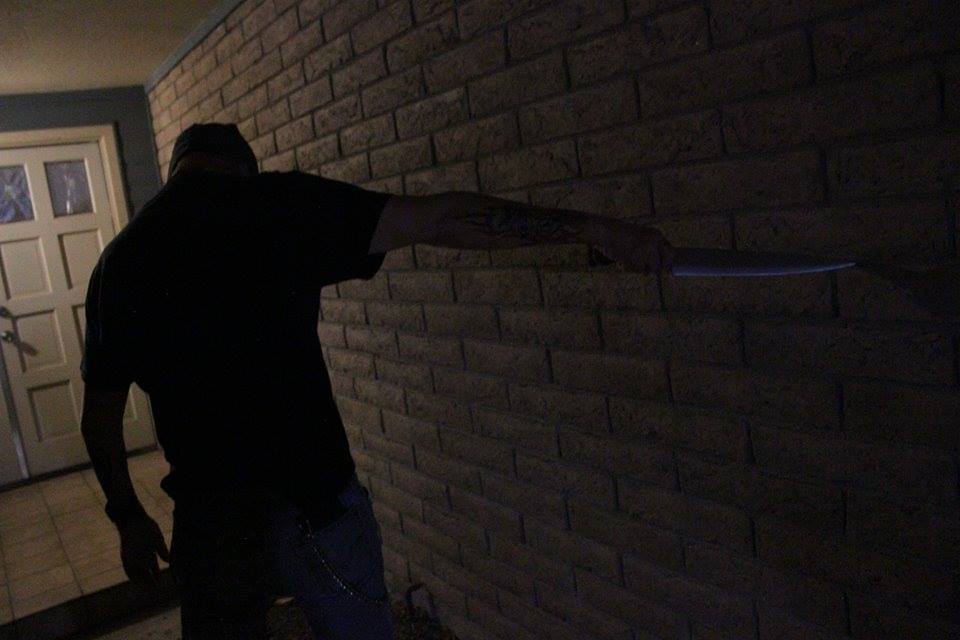
The cheesy synth score by John Martin Turner during the opening credits tells you exactly where you are in the indie horror food chain. The main character, who is also the antagonist, is 19-year-old Jeff Roberts (Jason Majik). He definitely has some borderline mental issues, especially with anger. And now he has been diagnosed with AIDS; wouldn’t he have HIV first, especially since he believes he contracted it from a particular prostitute six months previous? Saywhat?

His anger is having an effect on his world, including getting fired by his boss (Fred Nugent); his physician, Dr. White (Craig Harris) and a social worker (Victoria Crane) are worried about him, that he will hurt himself or someone else, including his girlfriend (Mitzy Tony), but they will not call the police. Saywhat?

Meanwhile, Jeff is making a list to take revenge upon, including the prostitute, by, yes, injecting them with his blood. But wait, if the prostitute (Susan Para) already has AIDS to his belief, what would be the purpose of injecting her with his blood? Saywhat?

Marcy Lynn, Tony Donangelo

Unstable Jeff starts going around stabbing people on his list, as well as random pedestrians. The cops (Marcy Lynn, Tony Donangelo, and then Justin Mack) almost catch him but he escapes. I bring this up because in an alley chase scene you can clearly see the shadow of the cameraperson, which made me smile. I love low-budget films just for reasons like that.

When Jabby calls a feisty female television reporter, Judith Campbell (Joy Yurada), to threaten her, she has a co-worker include the police on the call to try and nab him. Yet when the cops come a-callin’ to her house to see if she wants protection, she questions how they know about it. Saywhat?

But, to be honest, I am impressed by the sub-stories, like the cops who are trying to get him, and the reporter who is in danger from needle-boy. The film actually has more depth than I was expecting, despite some of the logical fallacies, such as the ones I mentioned above. There are others as well, just not as glaring.

Despite being taken from master SD tape, the film is grainy as all get out, especially the outside night shots (the time capsule imagery of seedy L.A. is enjoyable), and towards the end there is video noise that made me both grateful that it is uncommon with current digital technology, and ironically a little bit nostalgic. The acting runs from pretty flat to over-emoting, but that is to be expected.

The film ends exactly like one might think it would be concerning our AIDS gent (well, I did, anyway), but there is still a nice O. Henry-ish twist at the end that had me laughing and a bit confused.

Majik, Joy Yurada

Now, the bonus features of this Blu-ray are extensive, all done within the past two years. It starts with the “Director’s Introduction to Movie” (1 min), a nothing burger of thanks to the cast and distributor. The real meat starts with the full-length commentary with Godderis, Wild Eye Releasing’s Rob Hauschild, and low-budget director Mark Polonia (e.g., Camp Blood First Slaughter; Shark Encounters of the Third Kind;Virus Shark). Sometimes there is a bit of just describing what is happening on the screen, but that is only a small part of it. Most of it is pretty interesting as there is descriptions of what was going on with the scenes, talking about L.A. at that time, and explains some of the Saywhat? moments, like the disappearance of a particular character. It is a good schooling for indie, low-budget filming. Amusingly, no one mentions the shadow in the alleyway.


And if that wasn’t enough, next up is “Lethal Injection: The Making of L.A. AIDS Jabber,” with the director (10 min). While I found the full commentary interesting, this covers mostly new ground, and is just long enough to keep the interest going. It makes sense the next interview is “Bleeding The Pack: An Interview with Lead Actor Jason Majik” (29 min). It’s a bit rambling, but he discusses how he was chosen for the role, what it was like shooting the film, and he fills in some gaps which even Godderis is vague. He also talks about the post-filming in his life, including seeing it for the first time while tripping. While it’s kind of unfocused, and maybe because of it, it kept my interest.

The next featurette is “L.A. AIDS Jabber - 2021 Locations Visit.” (16 min). I always find these before and after location scenes fascinating. It is led by Godderis, and things are almost indistinguishable from 30 years ago. Following is an “Interview with Blood Diner Director Jackie Kong” (9 min). As an actor, Godderis co-started in Blood Diner, which became legend. Honestly, I did not watch it. Nor did I watch an interview with Godderis’ son who appeared briefly in the film when he was 3-years-old, called “Growing Up On Set: Justin Godderis” (9 min). However, I was curious about the next, “Actress Joy Yurada Interview” (7 min). She played the reporter. Some of it is a bit rambling, but it was fun when she pulled out a binder with the film’s notes and her lines.

The next talking head is the “Through the Lens: An Interview with Cameraman Rick Bradach” (6 min). It’s okay, but not very engaging to me. “Interview with Actor Gene Webber” (4 min) follows. He was a secondary police character, and doesn’t really bring much to the table. The last two digital extras are a photo gallery consisting of behind-the-scenes shots of the first day of shooting, and the new version of the trailer.

On the physical side, there are liner notes in a booklet titled “Rage in the Blood” by Tony Strauss of Weng's Chop magazine, a collectible folded mini-poster, stick your own VHS stickers, and a reversible BR sleeve featuring the original VHS art

This is Drew Godderis’ only directorial endeavor, though he’s acted in a number of well-known B horror films. When it came out, Godderis personally distributed the film on VHS. I am aware it has been decades since this was released, but I wonder if he will ever direct more, please.

IMDB listing HERE


Sunday, October 20, 2019

Review: The New York Ripper (3-Disc Limited Edition)


Text © Richard Gary / Indie Horror Films, 2019
Images from the Internet


The New York Ripper (aka Lo squartatore di New York)
Directed by Lucio Fulci
Fulvia Films / Silent Warrior Productions / Blue Underground / MVD Entertainment
93 minutes, 1982 / 2019

I’m grateful for the VHS revolution of the 1980s because it introduced me to the world of Italian horror cinema that most likely would have escaped my radar. As I have stated before, most people refer to Dario Argento, and while I know his work is brilliant, I see him as more form than content as his films are beautiful, but the stories are mostly lacking and confusing. The first time I saw a film by Lucio Fulci (d. 1996), The Beyond, it was jaw-dropping in both story and level of horror and blood.

Jack Hedley and \Paolo Malco
Blue Underground has restored this film into 4K Blu-ray, which was taken from the uncensored original camera negative, and it is startling. The clarity of the blood and gore is a thing of beauty in it’s grotesqueness. It had been re-released in Blu-ray in 2009, and some of the extras here are from that, but the new 2019 restoration of the work from the grumpy Maestro is noteworthy.

This film is striking in particular for several reasons. First, unlike some of Fulci’s other known works in North America, this isn’t really a horror film, though it could pass as a slasher; it’s more classic giallo, with cops and murders rather than zombies and demons. There is a deeper psychological aspect to this release, as I will get to eventually.

Almanta Suska
Second, even for Fulci, this is quite the brutal film. Like the similarly murderer-in-New York Maniac (1980; also recently re-released by Blue Underground), this is a psychological study of the killer, who in this case is not revealed until much later rather than being the central character right off the bat, remaining as a who-done-it, as well. While I’m at it, there is a subway station chase scene that is very reminiscent of the two-year earlier Maniac; I’m not sure if it is coincidence or an homage.

While it’s true that the victims are pretty and female – something that may raise an eyebrow now but was common back then – it’s the way they are dispatched that raises the bar and makes it almost uncomfortable in an additional way in this modern and woke metoo world. The gore is close-up (though not clinical like torture porn) and of course all done with appliances rather than digital. With the new 4K processing, the – err – death comes more alive to the eye.

Andrea Occhipinti
The third is something quite extraordinary as becoming iconic, and that is the “Quack Quack” sound made by the killer; while spoken in not quite a Donald Duck way, it is in a high-pitched, forced voice. This weird speech and sound have resonated through the decades of when this first was first released, most likely for the oddity of it (much in the same weird way Angela stands frozen with mouth agape at the end of 1983’s Sleepaway Camp).

The plotline is pretty basic: a slasher is going around New York killing beautiful women while taunting Fred Williams (Jack Hedley; not Hedy), the grizzled police Lieutenant on the case, with quacked-up phone calls. Williams brings in Columbia University professor Dr. Paul Davis (Paolo Malco) to help him do a psychological profile on the killer. While this is happening, one woman named Fay survives an attack (Almanta Suska), and now she and her professor husband, Peter (Andrew Painter, aka Andrea Occhipinti) are living in fear of the killer returning.

The thing about this film is that everyone has their own vices, be it prostitutes, sex addition, being gay (again, it’s the ‘80s), so the killer is not the only one with sexual deviances and dalliances (in the story’s perspective, not mine). In many cases, these proclivities result in the ending of life.

Alexandra Delli Colli
The film is beautiful to look at, even as it scans New York at one of it’s physically low moments, with subways that are graffiti-laden, live sex shows on the Deuce (42 Street), litter everywhere, and shuttered stores and darkened streets that are now better lit). Hell, the opening pan of lower Manhattan from Brooklyn (my turf) includes the Twin Towers (RIP).

In this Blue Underground series, which includes the aforementioned Maniac and Fulci’s Zombi (1979), there are lots of extras, the main one being the three discs, namely a High Definition Blu-ray (1080p), a Standard Definition DVD Widescreen 2.40:1 feature presentation, and the Original Motion Picture Soundtrack CD by Francesco De Masi. Some “quick and easy” ones are the Theatrical Trailer, and Poster and Still Gallery, audio in 7.1 DTS-HD (English); 1.0 DTS-HD (English, Italian); 1.0 Dolby Digital (French, Spanish), and subtitles in English SDH, Francais, Espanol, and English for Italian Audio.

There are a whole series of featurettes, as well. To start, there’s “The Art of Killing - Interview with Co-Writer Dardano Sacchetti” (29 min), who discusses the genesis of the screenplay, his love/hate relationship with Fulci, and what the film means to him; it’s all quite interesting. Next is “Three Fingers of Violence - Interview with Star Howard Ross” (15 min), who played the key missing digits suspect, Mickey Scellenda. While he talks a bit in circles about mundane things such as weightlifting, he also has some nice film anecdotes, especially about his female co-stars. For “The Second Victim - Interview with Co-Star Cinzia de Ponti,” (12 min) we meet “Rosie,” who bikes down from Central Park to Park Avenue, to the Staten Island Ferry (that’s quite the in-town distance), only to get slaughtered by the Quacker; it’s also the first murder we actually see. A former Miss Italy (1979), Cinzia discusses – what else – working with Fulci in this and a further film, Manhattan Baby (also 1982). Her stories are interesting and a bit self-focused. The next two are both about the same actress, “The Broken Bottle Murder - Interview with Co-Star Zora Kerova” (9 min) and “'I'm an Actress!' - 2009 Interview with Co-Star Zora Kerova” (10 min). Obviously, the stories overlap a bit here, but enough new information is given in both that it’s worth watching

Daniela Doria
The next discussion is “The Beauty Killer - Interview with Stephen Thrower, Author of Beyond Terror: The Films of Lucio Fulci” (23 min). The first in English, Thrower describes a deeper beginning for the film, and paints a picture of both what it means in an analytic way (especially the mystic of misogyny), and how it was received by critics, fans and government at the time. “Paint Me Blood Red - Interview with Poster Artist Enzo Sciotti” (17 min) was a bit less than I was interested in, so I truthfully skipped it (though probably would have watched it if it were shorter). Last of the featurettes (but not extras) is “NYC Locations Then and Now” (4 min) from 2009. Already 10 years outdated, it’s still a fascinating B-roll (with music behind it) as we see very particular places compared in 1982 and 2009. I really enjoyed this, and in many ways, it made me nostalgic for the old Deuce.

The big extra, of course, is the audio commentary with Troy Howarth, author of Splintered Visions: Lucio Fulci and His Films. Howarth has a lot to say, and he tends to talk really fast, which works both for and against him. Let’s get to the “against” part first to get it over with. There is a lot – and I mean a lot – of data thrown at us for each actor, both onscreen and voiceovers. While this information is important, certainly, much of it can be found on IMDB. It starts to sound like someone reading off a bunch of sports scores or multiple weather reports, where it kinda all blends together. Where the commentary shines, however, is when Howarth discusses anecdotes of the backstory of the film, and especially when he waxes poetic about the reaction to its release and his social/cinematic critique of it, a little of which of my own I will add in the last paragraph of this review. He does get one fact amusingly wrong when he ponders whether a certain subway El staircase is the same one used in The French Connection (1971). As I lived a few blocks away from the 79 St Station in Brooklyn where TFC was filmed, I can confirm that this was indeed not the same location.

On the physical side, two other extras are the lovely 3D slipcase cover and a collectable booklet inside with new essay by Travis Crawford.

One of the aspects of this film that I enjoyed the most was the successful use of red herrings. The who is the killer is questionable until the reveal. The possibilities bounce around a bit and is a head scratcher. I picked who I believed it to be, to be proved wrong, which is always better.

This film is notorious for its violence and its misogyny, and yet the female characters are the most interesting, with the strongest personalities, instincts and intellect. They shine more than the anti-hero copper, Williams, who is an angry, burned out shell of a person (as I would argue is the character of Danny in Blue Bloods, but I digress…). Also, this work has one of the bleakest endings, right up there with the likes of The Day of the Locust (1975). But for this particular story and the timeframe in which it was released, it all makes sense and also still makes it stand out. This is Fulci at his fiercest and his finest.


Monday, October 26, 2015

Review: Scream Machine: Unrated

Text © Richard Gary / Indie Horror Films, 2015
Images from the Internet

Scream Machine: Unrated
Directed by Walter Ruether III
Deadly Indie Entertainment / World Wide Multi-Media (WWMM)
71 minutes, 2015
www.facebook.com/scream-machine-2015
www.worldwidemultimedia.net
Link to purchase on Amazon HERE

Anthology films are sort of like what people say about the weather: Don’t like one story?  Another one will be on soon. Here, you have a serving of five tales to, in the words of the press machine, “make you faint, puke and quite possibly soil your pants.” Now there, my friends, is a slogan from sloganland. Or is that Tromaville?

Lloyd Kaufman
After a hysterical intro by the Troma-tic Lloyd Kaufman, we are introduced to the wraparound story of the earth after 95 percent of its population has been wiped out by an Ebola plague (nice sarcastic albeit dated note). Dr. Fry (Scarlet Fry) in a flimsily made bird mask and a bad Central European accent gives us the lowdown and introduces us to a verbally nasty and literal talking head named…wait for it…Mr. Headly (Executive Producer Paul Hemmes). Fry fires up the projector and introduces them.

First up is “Sledgehammer.” No, nothing to do with Peter Gabriel, this one is about baseball. Perfect timing as the Mets and Cubs head into the World Series. Why this matters, I don’t know, as I’m not a sports fan. But I digress…


Murderous Mr. Met?
The southpaw trying out for a team is known for his 150 mph fastball, referred as the…well, you get it. Prodded into it with not so nice results, he gets signed anyway. In this story the attacker is no surprise, but it doesn’t matter. The acting is wooden, the story is short, and the gore effects are pretty enjoyable (though the blood is a bit too thick and dark, but what the heck). There is a sharp ring of comedy that runs beneath the surface that adds to the fun.

In Anytown, USA, in 1993 (as the title card announces), we are introduced to “Cannibal Pen Pals: The Dahmer Obsession.” A gay man who is married to a fiery black woman (to please his family…obviously they don’t live in Ferguson) has been having a pen pal romance with imprisoned Jeffrey you-know-who, and wants to go to him and have a conjugal visit. Of course, Dahmer wasn’t allowed  visitors due to the horrific nature of his crimes, including having sex with dead corpses, both whole and, as Dr. Herbert West said in Re-Animator (1985), parts. Of course, our nutzoid pal wants to know what it was like so he can join Dahmer in spirit. But one thing we’ve learned from the first story and it looks to be a trend, there is going to be an O. Henry/Twilight Zone twist. This story is somewhat questionable about a number of social  situations (go ahead, call me PC), but it’s definitely more cohesive a story than the first, and equally as off-the-wall.

If you’re into this kinda stuff, I’m going to guess you’ve seen those horror prank videos where some shmuck in a clown outfit chases some stranger in a parking garage with a sledgehammer or chainsaw. I’m waiting to hear about one of those assholes getting their shit kicked. Anyway, the next story, “April Fool’s Party,”  is a similar idea with a twist. A group of four meth heads decide to scare the tweaking dealer of theirs in an elaborate The Purge­-like – you guessed it – April Fool’s joke (my friends know better than to try any AF shit on me, but I digress…). Of course, things don’t go as planned.

You can tell that this bunch of dickheads have no sense of proportion by the bad teeth and red around the eyes (classic meth signs). But what drove me the craziest about this story is that it could have been so much more, and the ending is a bit anticlimactic.  When it ended I had the double thought of “Is that it?” and “did I miss something?” Perhaps being a story about drugs and me being mainly strait-edge means I missed the point of the story, the same way I don’t get Cheech and Chong.

“Septic Shock” tells the shit for brains story of a double cross ending with a man locked into a not-so-empty septic tank by his wife and her lover. Of all the stories, this one is the most artistically done, and we get to see – and somewhat feel – his fear, and revolt at his circumstance. Not sure about the turtle eating celery, perhaps that’s a bit too symbolic and metaphoric for me. Still I was impressed at the direction it went. That being said, it went on a bit too long, but that’s just something subjective, so what the hell do I know!

That's HEADLY,
as in on a Headly of Lettuce
The final, and most coherent story, is “The Deadly Indie Drive-In,” which is actually quite a simple tale, which makes it work so well. A woman on a date at a drive-in theater forgets her medication, and soon starts hallucinating that the person on the screen and the voice coming out of the speaker are talking to her, and telling her to… I’m sure you can figure it out. This was a lot of fun, even if you see the punchline coming.

For me, what makes this so much extra enjoyable is that the woman, Kim Wagner-Hemmes, is the real-life wife of the man with whom she’s on a date, Paul Hemmes, and the person whispering sweet murder in her ear from the screen is Scarlet Fry, the director. This incestuous working bunch seem like they are really having delight doing this, and when it comes right down to it, ain't that the point of the whole excursion in the long run?  

One of the things that I find really special about this film is that there is absolutely nothing supernatural going on, but rather it’s everyone being all too human, especially in the foibles department. Make that deranged, actually, or as the publicity states, “Each [story] featuring the three M's of Horror: Madness, Murder and Mayhem.”

What also makes this work all the more better (as they say colloquially in my neck of Brooklyn), is that just about all the cast is everyday looking people, not model types. Some are chubby and balding and others unconventional to Hollywood standards and expectations; you know, not people you would necessary see in an ad selling Rolexes. I appreciate that. No nudity, but the gore is plentiful and quite decent looking, in an indie micro-budget kind of way.

There’s no way around it, this comes off as a VHS-style cheapie with visions of grandeur and reality based in Quiki-Mart productions. In other words, if you like your horror old-school ‘80s, you might get a kick out of this in a nostalgic, Throwback Thursday kind of way; or you may just be lucky enough to have a low enough sensibility of denial of reality to see beyond the film itself to what they are trying to reminisce: enjoyment.


Monday, May 26, 2014

Reviews: Bookending Jim Wynorski: Gila!; The Lost Empire

Text © Richard Gary / Indie Horror Films, 2014
Images from the Internet
 
Jim Wynorski is in good company. Although he arrived on the scene later in the game, starting in 1983, he deserves to be included with the likes of Roger Corman, Dave Friedman, and Hershell Gordon Lewis as purveyors of low budget and often transgressive cinema that is designed for fun and profit on a micro-budget. Wynorski has used many different directorial names (e.g., Sam Pepperman, Harold Blueberry) to cover 150 films within various genres, including horror, fantasy, exploitation and sexploitation. What I am reviewing here are re-releases of his films by Polyscope Media Group from the very beginning to the near recent.


The Lost Empire
Produced, written and directed by Jim Wynorski  
Polyscope Media Group Inc.                  
83 minutes, 1983 / 2013
 
The 1980s was to video indie micro-budget horror films what the 1950s were to, well, cinema house micro-budget horror films. In the case of the former, it was a new market desperate for new product to put on shelves, and the two most popular genres for quickie flicks were porn and horror. Fed on the big screen by the likes of the magic trio of Freddy, Jason and Michael, the nascent direct-to-video (D2V) hunger produced many a marvellously wondrous WTF fantasy world. This film is just one example of it.
 
I remember seeing this film on VHS back in the mid-1980s and thinking it was a piece of shit. Part of the problem with D2V is that back then it was rare to find letterboxing, which companies thought people would not like. It’s not surprising, really, since nearly all televisions had square screens and if a film presented was letterboxed, the image became really tiny. And if you had less than a 19”-er, it was unwatchable; don’t let me get started on foreign films and trying to read subtitles. They used a method called pan-and-scan, which meant you only saw as much as a third of the screen at a time. If two people were talking in one shot, it would flip back and forth between them, and action scenes became as muddled as, well, the new Transformer series (aka, “what the fuck just happened? All I saw was movement!”).
 
As televisions became larger and the quality of VHS gave way to more defined DVD (etc.), The Lost Empire became a lost film. It hadn’t made its way into the new technology, leaving it in the lost empire of grainy and pan-and-scan dimension. Thirty years later, Polyscope has given Wynorski’s early work a hand up, and have re-released the film in full-screen, cleaned-up, theater-ready glory. But is this film worth it?
 
Seeing it now again, after all these years, yeah, it was. Sure it’s not a great film, but it sure as hell is a fun one. I see lots of first releases by directors, and there are certainly problems due to small budget, writing, and acting that tend to be consistent that even remain right this very minute.
 
In the case of this film, it’s partially a feeling of “this may be my only shot, so I better cram as much as I can into it at once” (Wynorski confirms this on the commentary track). While it’s fun to play spot the reference¸ this can also lead to clichés. However, sometimes – as in this case – there are so many, it surprises you because you can never predict which homage he will use. The biggest and most obvious are Enter the Dragon, Dirty Harry, and James Bond, specifically Dr. No.
 
The premise is tough cop Angel Wolfe (Melanie Vincz) – as in savior / lone wolf – has a brother who was a cop, killed during a hysterically funny and bloody pre-credits robbery. She swears revenge when she learns that it was engineered by a sinister group that has an island where they are training beautiful women to fight, lured in by a large-prize contest. Leaving behind her porn-star looking boyfriend, federal agent Rick Stanton (Paul Coufos, a future Wynorski repeater), she sets on a path to investigate and seek retribution. Along the way she picks up two more associates to help in her plan. First there is Whitestar (Raven DeLaCroix, a star in Russ Meyer’s Up! and at the time Wynorski’s girlfriend; she also rightfully earned a producer’s credit here, a Native American who Angel once saved. DeLaCroix, who designed her own cleavage-bearing costumes, is mostly Native with some Métis thrown in). Despite her ample bosom, it was her blue eyes I actually found most beguiling. Go figure. Last there is the gum-poppin’, prison-sprung Heather McClure (the ill-fated Angela Aames, who would die of a heart condition not long after this), who had been placed there by Angel.
 
The premise behind the plot is the search for an ancient jewel that has mystical powers, and when combined with its twin already held by the island’s “mastermind,” supposedly brings enough power to control the world. Everyone is looking and killing for it, but it has a mind of its own. So the three women, who often crack wise, set off to the island kingdom to seek out and kick some cult butt, even before knowing about the gem, which ultimately makes itself known.
 
That’s about as much as I’m willing to give away, storywise. Let me say right off, that even though it was Wynorski’s first release (he has at least one previous that has never been publicly released), it actually looks quite good. Sure, some of the sets and matte painted backgrounds look a bit like the first season of Star Trek, but by using the Roger Corman playbook (and the Corman studio lot, among other locations), he manages to make the most out of what he has. The SFX look really cheezy, but unless you were at Lucas level, this is how most of it appeared for indie films at that technological juncture. The laser machine at the end, however, just made me laugh and laugh.
 
Despite his lack of directorial credits, there is actually a pretty impressive cast of secondary characters that is worth noting. For example, the villain (not giving away anything because it’s in the credits) is the Tall Man himself, Angus Scrimm, chewing scenery his entire time on screen, acting more with his eyes than anything else (squint…wide…squint…wide). Also from the Phantasm franchise (there is a new Phantasm scheduled to be released in 2015 with the original cast!) is Bill Thornbury, who played the older brother, and here plays Angel’s younger brother. Next up is softcore icon Angelique Pettyjohn, known mostly for an episode of Star Trek as a fellow “thrall” with Shatner, here is practically unrecognizable (to me) as a prison gladiator who wears a black leather dominatrix costume that she peels piece by piece.
 
As a police captain in a short cameo near the start is redheaded Kenneth Tobey, known mostly as the lead in the original version of The Thing From Another World (1951). Then for an even briefer moment there is Tom(my) Rettig, who was the original owner of Lassie in the first series of the television show (1954-57).
 
One other notable actor is Blackie Dammett, the one person who could out-scenery-chew Angus. I couldn’t remember where I had seen him before, and after looking it up, it was from National Lampoon’s Class Reunion (1982). Considering the way he overacts, it’s not surprising that (a) his last role was in 1990, and (b) he will be better known through history as the real-life drug dealing dad of the lead singer of the overrated Red Hot Chili Peppers. Man, is he a bad actor.
 
Wynorski had made some weird choices here. For example, no matter what the occasion, everyone is going to be showing lots of cleavage. In fact, when Angel goes to visit her brother in the hospital, she wears a shiny gold one-piece that is skin tight and cut down to nearly the navel. Even on the island, everyone’s hair is perfectly quaffed, and Angel’s changes from straight to poufy to having ringlets. Apparently, even on an isolated island used for women gladiators, girls will be girls.
 
Of course, in the story, there are so many holes, not even counting the lead henchman (stunt man and real-life bully, according to Wynorski’s commentary, Robert Tessier) and his ever-changing eyebrows. For example, the shuriken (Japanese throwing stars) are way too thick to stick into anything, the three female leads are constantly snarking at the island’s – er – management, as if the guards cannot hear them, and they manage to sneak out of the facility a few times, despite there being cameras everywhere, and more importantly sneak back, even after there is reports of “intruders.” There is one character that has a broken leg (portrayed well by Linda Shayne) in scene, and is walking around the next day.
 
Although it was “acceptable” at the time, in hindsight, there is a lot of less-than-subtle racism floating around here. For example, a Chinese character cameo is Charles Chang (yes, dressed identically to Charlie Chan), played by occidental character actor Art Hern, with all the stereotypical broken Engrish. For DeLaCroix’s character, she is constantly using clichés (and remember, she’s also one of the producers) such as, “Yes, kimosabe.” She bares her overly large cleavage while wearing a Native headdress. As for sexist, well, duh, that’s the genre, and that’s an enjoyable given.
 
While most of the electronic music is terrible, sounding like many of the television cop show themes of the period (electric keyboard going “ooo-wahhhhh ooo-wahhhhh”), it is hard to criticize it because it was the style for the time. What is notable, however, is that some of the humor – and there is a lot here – actually works. Groaners for sure, but bound to bring either a happy “Oy!” or genuine smile.
 
The disk has only two extras, a truly interesting commentary track by Wynorski that confirms many thoughts I had while watching the film, and a silly “stills” track that is merely screen grabs from the film itself, rather than during shooting. However, it was nice to see one shot of Shayne’s fate that Wynorski discusses but is really hard to see while watching the movie.
 
Looking back, this film is actually important in a way, in the larger scheme of things. It is a time capsule of a particular style that propelled the home-grown market in a time when even low-budget films had to be shot on film (in this case, Cinemascope!), and be opened to a greedy market that was in a sometimes painful growth spurt. Though I did not like it when it was first released, I can now appreciate it for what it was, and especially for what it was trying to be in the cultural arena.


Gila!
Directed by Jim Wynorski      
Polyscope Media Group Inc.                  
91 minutes, 2012 / 2014
 
Gila! Is actually a made for television (Sci-Fi Channel) remake of the 1959 low-budget monster film, The Giant Gila Monster. It was part of the popular subgenre of supersized creatures, such as Them!, The Giant Behemoth, The Killer Shrews (made by the same group that did …Gila Monster), Gorgo, Konga, and even Gojira.
 
In an very similar storyline, also taking place in 1959, a bunch of 30-year-old teenage hotroding friends discover there is a dinosaur sized poisonous (though this aspect is never used in the plot) Gila Monster roaming around their Texas-based, Indiana shot town. The head of this motley crew is hero Chase (played with gusto by Brian Gross, currently starring as Kirk on the Star Trek: New Voyages series) and his best gal is girl-next-door-with-a-smart-mouth Lisa (Madeline Voges). If this were a western, Chase (what else would you call someone who races hotrods?) would definitely be wearing a white hat, though he’s so goody-goody, it would probably be white bread. He makes Steve McQueen in The Blob (1958) look like Marlon Brando in The Wild One (1953).
 
Chase’s nemeses (i.e., the “black hat”) would be the stereotypical JD type “Waco” Bob (Jesse Janzen), who is a short-tempered, woman-abusing thug that spent three years in “juvie.” His squeeze is the hot Carla (Christina DeRosa, who looks like a rounder version of Alyssa Milano), who of course has the hots for Chase. While she is also cartoonish, Christina actually manages to make her into a fuller (no pun intended) character, which is actually a large compliment. Like most of the roles, hers is written quite two-dimensional, though she successfully gives her some nuances. She is also the one who supplies any form of sex appeal, with or without the cleavage and self-butt slaps.
 
The other two main characters are the local Sherriff (veteran actor Terence Knox, who was a regular on St. Elsewhere, among others; you’ll probably recognize his face, especially if you’re over 30). He’s sort of a substitute dad to Chase, who has a mother and baby sister suffering from the after-effects of polio, but no father.
 
As with previous films, Wynorski has managed to dig up some aging teen actors who look well beyond their years, and yet for some reason makes me happy (that they are there, that is). First up is the mayor’s wife, played by Julie McCullough, who infamously was future religious fanatic-tea party spokesperson-asshole Kirk Cameron’s steady in the Growing Pains television series. The wife is kind of a harpy, but her character sort of disappears after one scene. I was waiting for her to be swallowed whole, as that’s how they set up the tone. But more important (to me, anyway) is Kelli Maroney, who was in one of the only soapers I watched, Ryan’s Hope, and in such classics (seriously) as Night of the Comet (1984) and Fast Times at Ridgemont High (1982). She’s the deputy who doesn’t fare as well as McCullough (hey, it’s in the trailer). The coup d’état though is getting Don Sullivan in a minor role. Who that, you ask? He was Chase in the original …Gila Monster.
 
The monster is, in this case, caused by toxic waste hidden in a cave. The townsfolk have to find the scaly critter and get rid of it before it can lay eggs, which makes me thing about Lena Dunham’s comment about having, “like, a thousand follow-up questions, such as…” how do they know it’s female (i.e., does a male Gila monster have a dangling participle?), and doesn’t there need to be another that size for it to mate with, which means there would be at least two? There are lots of issues I have, but I believe this has more to do with the four (yes, four) writers more than director-for-hire Wynorski.
 
With an estimated budget of nearly a million buckerinos, I can think of so many micro-budget directors who would have been able to create much better effects for half that amount. I’m guessing most of the money went towards the CGI monster itself, but the CGI blood, CGI explosions, CGI feedings, CGI car crashes all look more 2002 than 2012. Perhaps1992. I will have to say, though, that there is a couple of really good face meltings toward the beginning of the film, which appear more appliance than graphic.
 
One of the highlights of the film is the soundtrack, which includes a number of rock and roll classics by the likes of Bill Haley and the Comets, the Everly Brothers, Dion and the Belmonts, and even the true king of rock and roll, Chuck Berry. There are a couple of decent original songs and a mediocre cover of “Fever” (using the pre-Peggy Lee-added text).
 
The best of the extras are the trailers for both this film and the original. The rest of them are kind of meh. There is a slide show, a text description about the original film, a text narrative of Drive-In culture, and the original recording of Don Sullivan’s “Mushroom Song” (with lyrics) from the first film. I like the way Wynorski does commentaries, but there is none here, again I am assuming because he didn’t write or produce.
 
So, do I recommend this? Yeah, without a doubt. Sure it lags in parts, but it is a fun escapist nonsense that has a relatively decent sense of humor when it wants, the acting is purposefully juuuust over the top, and the monster is, well, huge. Now if he can only bring back Traci Lords, like he did with Not of This Earth (1988). Oh, wait, that’s right, he is, in a new feature called Sharkansas Women’s Prison Massacre, due later this year.
 
 The Lost Empire trailer here: http://www.youtube.com/watch?v=Kng-5N7YCXk

Gila: