All genres of suspense, terror, and horror will be reviewed by Richard Gary. His address to send preview copies supplied upon request to rbf55@msn.com.
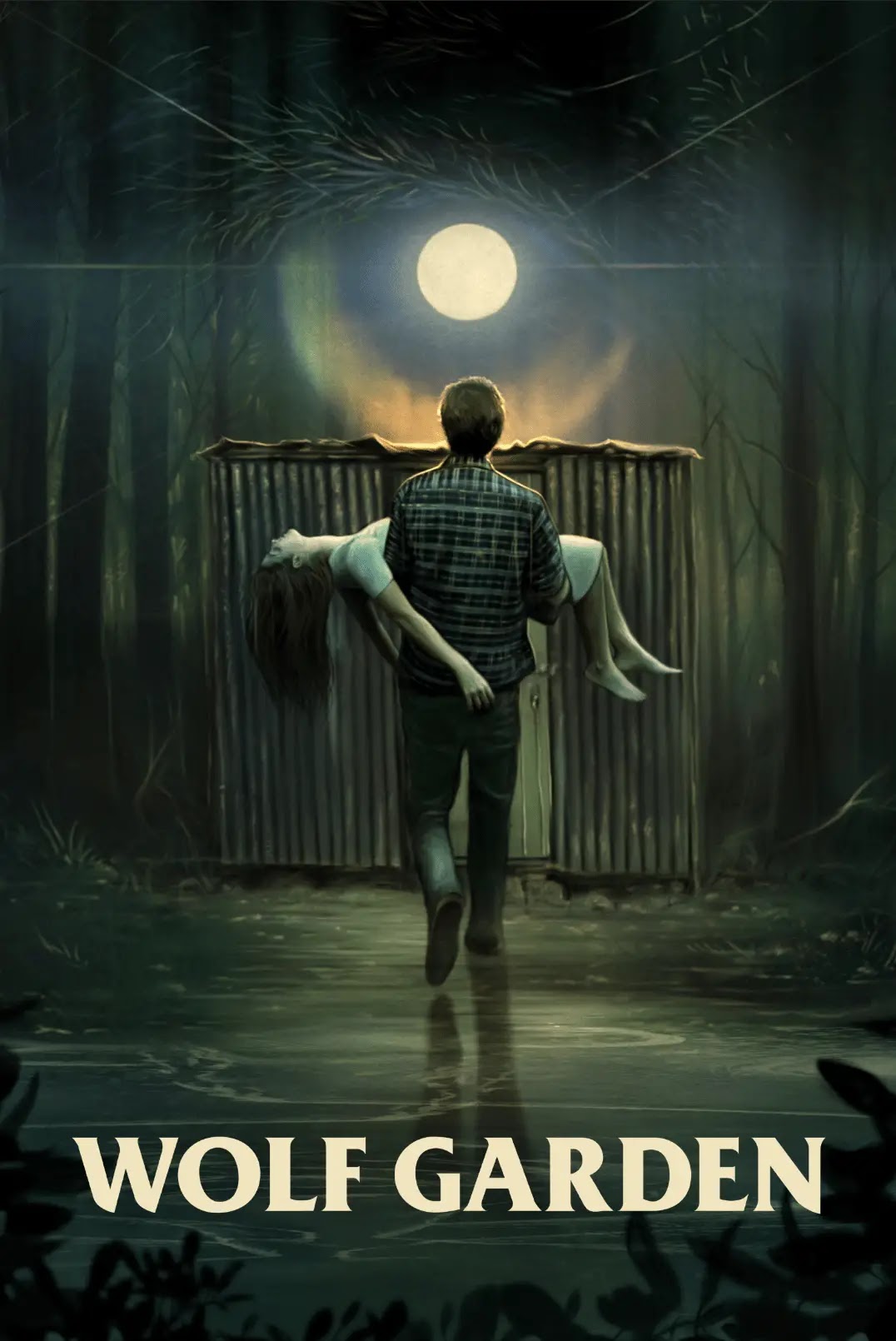
Wolf Garden Directed by Wayne David Lightning Strike Pictures; Gravitas Ventures; Strike Media 89 minutes, 2023 www.strike-media.com
For some reason which I care
not about nor to be explained, the production of the werewolf genre seems to be
more focused out of the UK than in the US. And this release is no exception. This
is true even though the arguably biggest werewolf film, An American Werewolf
in London (1981), is actually a North American release, though filmed
across the lake.
For this film, which is
both arty and gritty, William (Wayne David, who also wrote and directed)
is a man living in an isolated location in Hertfordshire in a relatively big
house (referred to in the film as “The Cottage”) on large grounds. He is sad
and despondent. William thinks back, thanks to many montages of flashbacks, to
his beloved wife, Chantelle (Sian Altman).
Wayne David
The woods and the mood are
dark (but not too visually dim) that reflect his inner emotions, as he goes out
to a padlocked shed (called “The Garage” though it is too small to hold a car; perhaps
it is a British term?) on the property where he feeds cut up raw meat to something
inside that is growling.
An extremely slow burn, with
little dialog, mostly between William and Chantelle in the flashbacks, William’s
loneliness is palpable. And who is the stranger (Grant Masters) who keeps
appearing?
Sian Altman
Twenty minutes in, and it
has been all mood and mostly William, pouting his depressed way throughout the
house and woods intercut with happier memories. Still, It is interesting that
it is often hard to tell what his reality is, and what is in his mind.
Isolation can screw with thoughts, and it does not appear that he has a television
or even a book to pass the time, just to mull the situation, whatever it is,
and stew in it.
There is a bit of gore, but
this is not a film for fans of that subgenre. This is definitely more psychological,
and there is more emoting than there is rampaging. Most of the wolfism is seen POV
and in the sound of the growling and howling, though it is not hard to figure
out just who is the wolf in question, if there actually is a lycanthrope, or if
it is in William’s possible madness.
There are only three
characters seen on screen (other than in the background or heard on the phone),
keeping the story tight and almost claustrophobic, even with William often
being in the woods, many times in the dark. Those three prove themselves to be
able to hold up the film, and this is certainly a tour de force by David, who
is in nearly every scene, usually by himself.
Grant Masters
It is also a very
beautiful looking piece, with luscious cinematography and well-timed editing.
With the exception of a single scene near the beginning, all of it takes place
in The Cottage, the woods, and at the shed.
The small cast gives me
the impression that this was filmed during COVID. Or perhaps it is budget constrains.
Or both?
I really enjoyed the film,
with its near gothic moodiness and lighting, though I was sometimes confused about
the storyline. Even though everything coalesces during the third act, there are
so many flashbacks to various periods that I occasionally felt like Billy Pilgrim,
unstuck in time.
Wolf Manor (aka Scream of the Wolf) Directed
by Dominic Brunt
The Club of Wyrdd Tales; Mitchell Brunt Films; Wild Edric Media; Francis-Castle
Pictures; Lightbulb Screen Distribution; Strike Media
85 minutes, 2021 / 2022 www.Strike-Media.com @wolfmanorfilm
#WolfManor Film
Whether it is zombies,
vampires or especially slashers, there are a lot of films about low-budget
filmmaking under duress. It’s a meta look at how films are made, and how
someone in the cast, crew, or at the location, is out to getcha. For this release,
if you have not figured it out from the title, deals with a film crew is being
jeopardized by a werewolf.
Who can complain about a
good lycanthropic film, eh wot? There have been a number of noteworthy ones in
the past few years, and happily this one joins the canon. There is something
about the transformation of a man (or woman) to a monster that can be like, say
The Thing (1982), where a person can look normal, but inside lay a
deadly secret. For this British opus, filmed in Leeds, mostly, the monster is
declared at the beginning as it starts in the night of the full moon.
At the titular Wolf Manor,
the now-abandoned home of a magician, The Great Mascalini, in the countryside
of small-town UK, the film crew, led by director Derek (Rupert Proctor), is
making a low-budget vampire film starring washed up once-star, Shakespeare-spouting
Oliver (James Fleet). He is just part of the whole uninspired crew near the end
of a long shoot, who just seem weary of dealing with him and the whole
production in general.
There is a very dry comedic
tone to this, such as two reporters from a Fangoria type magazine who are
on their way to interview Oliver, but first heading to the local pub for
directions, The Blue Moon, and commenting that it should be called “The
Slaughtered Lamb,” before mentioning to the owner that perhaps they should “stay
off the moors.”I am assuming I do not
have to mention the reference. Another is people assuming a severed arm is a
prop; the prop master, Owen (Martin Portlock) steals the scenes he is in
regarding this.
We do not see the beastie
(Morgan Rees-Davies) in all its glory for a while, but we visit his actions
pretty early on, and they are nicely blood-soaked albeit a bit visually dark as
it is the night (full moon be damned). When we see the creature’s point of view
shots, it is in black and white, and through a handheld camera (a bit cliché,
but it still works).
When we finally do get to
see the werewolf, the make-up is really good, and I was impressed with the way
it both walked upright, and ran kind of wolf like on all fours (front being
claws rather than paws).
Obviously, the cast and crew
are fodder, and luckily there is enough to make a decent body count, with some
really glorious gore effects, without being too “technical” in its look. The detached
heads, hands, intestines and other body parts have a realistic look that made
me smile, rather than cringe in details.
One has to wonder if and
who each of the characters are based upon. That is the thing with meta making-of
films, the writer is bound to add characteristics of people he/she/they know. Most
of them are not people you would necessarily want to meet, but the two most
solid characters are just about the only females in the film: the boom mic
operator who they just call Boom, Ellie (Sade Malone), and especially Fiona
(Taila Zucchi), who seems to be the only one with brains in the entire cast,
and for that is one of the central figures in the story, and the most sympathetic
to the audience.
The kills are nicely
spread throughout the story, rather than just being a bloodbath in Act 3, which
makes this more enjoyable with less slow points in-between. Also, there are a
number of jump scares, and some of them are effective, as the kills come out of
nowhere most of the time. What drives the monster is an overwhelming need to
kill, as well as hunger; if a werewolf eats a human, is it cannibalism?
The entire film takes
place in one night, the time of the full moon, obviously, though this is the
UK, and the overcast weather makes this very dark (lighting), both indoors and
out. Oddly, we never actually see any scenes of the film-within-the-film being
shot and instead the story is totally behind-the-scenes, so no bright lights
for the cameras, inside being as murky and full of shadows as the outside. You
may have to squint at certain points to see clearly.
For an indie, lower budget
film, the acting is quite good with just a few moments of scenery chewing by
the lead, Fleet, which is quite purposefully added to indicate he is a big ham.
The ending was partially
what I expected, but then again it also had some surprises mixed in with it. This
was an enjoyable watch, with just the right amount of both gore and humor. And
speaking of the finale, be sure to see the origin story after the credits.
Winifred Meeks Directed by Jason
Figgis October Eleven
Pictures; Figgis-West; BayView Entertainment 88 minutes, 2020 www.facebook.com/winnymeeks/
I was excited about getting
the chance to review another film by director Jason Figgis. While he has been
incredibly prolific over the last few years, I had seen and reviewed two of his
previous output: Children of a Darker Dawn (2012) and Don’t You Recognise Me? (2016). Both of these films are very dark and intense, and quite beautifully shot.
Truthfully, I must admit
that ghost stories are among my faves, especially with a gothic nod. And this
doesn’t as much nod as headbang. Time to click on *play*.
Lara Belmont
Asthmatic Anna James
(Lara Belmont) is a popular author of youth mysteries on a deadline, who has
hit a dry patch. What better way to rekindle a writing block than to rent a stunning
house in the middle of nowhere? This particular trope is well worn (e.g., 2004’s
Secret Window, possibly 2007’s 1408); perhaps the underlying connection
is that the creative mind is more open to spirituality.
Anyway, the Seaview House
(the opening shot tells why) in Suffolk, England, is beautiful, but imbued with
a darkness (camera filters help) that could have come right out of Shirley Jackson’s iconic
opening paragraph of her novel, The Haunting of Hill House (1959). At
once both modern (such as a flat-screen TV) and rustic (lead pane windows and a
dial phone), it is a perfect place for a spookie to be hanging around, doncha
think? Figgis, who was also the Director of Photography, does a very masterful
job of capturing it in a loving-yet-mysterious manner. I really enjoyed how he would
situate the camera in a different room, and you would watch the character of
focus through the doorway.
The first act is mostly atmospheric, as Anna
settles in for the night, with a beautiful score and long and luxurious shots
at the start, other than a quick jump scare. We get familiar with the sadness of
Anna, reflecting these moody views of her temporary life at the house. It definitely starts as a slow burn, with one
subtle indication that there is something not right, shown almost as a throwaway
line (okay image), and another warning of what’s to come. Which brings me to a
digression, if you will forgive me: why do genre films (especially) need to
have a scene of someone brushing their teeth? It’s a pet peeve, sorry. Now back
to our scheduled program…
Julie Abbott and John West
Ever slowly, but
increasingly so, the presence of a previous owner, the titular Winifred (Julie
Abbott) makes herself known. She vacillates between sadness and anger, both reflecting
the mood of Anna, but bringing her own story with it, which is the mystery
behind the film of which Anna seeks to learn in the second act.
There are a few inside subtle signals, such as
this youth mystery writer being forced to listen to a radio play version of
Sherlock Holmes, and early-in-the-film showing of the rising dead in the form
of Nosferatu: eine Symphonie des Grauens (1922), and the house haunting
film House on Haunted Hill (1959), among others on the telly; gotta love
public domain. In fact, there is a lot of radio talking programs disbursed throughout,
such as writings by the “father of modern medicine, “Canadian physician Sir
William Osler, who promoted euthanasia.
In the nothin’ for nothin’ department, I found
the bookstore Anna goes into in Westleton, on Google Maps, thanks to the Snug
Tea Room across the road. That made me feel good, for some reason. She goes to
the store to research the house (though any author I know would stop to see if
they could find their own books).
While this is a contemporary story – albeit with
an older ghost from a hundred years ago – I would definitely define this as
gothic, with its turn-of-the-century (at least) house and what inhabits within
its walls (and beyond).
I believed I figured out the ending pretty
early on, but I’m happy to say I was wrong, Figgis did not take the easy and
obvious route, which is refreshing. With only two living on-screen characters
and one un-, the rest of the cast is either on the phone or mostly the radio.
Perhaps the disembodied voices are to reflect the spirits of the world, or specifically
Winifred. It is a solid choice. As, in rare exception, no two people are seen together
between the three characters, and in those cases, they are easily 6 feet apart.
I am assuming this was shot during the COVID-19 epidemic, and was edited (by
Figgis) in a very sharp and precise way. The photography and drone work are excellent, over
the beautiful West Coast of England.
My only quibble about the film, and I know
this is trivial at best, is I do not like the picture of Belmont on the poster
as it does not do her justice.
There is no blood, no violence, no nudity
(other than an upper back), and no contact, and yet this still manages to be
extremely creepy, which is a credit to Figgis. My appreciation of his work just
keeps growing.
Before I started watching this update of a reissued 1994 British documentary
television show about arguably one of the three most important horror film
companies in the 20thCentury – the other two being Universal
Pictures and American International Pictures (AIP) – I tried to think back to
the first Hammer Film Production I can remember seeing in the theater. It could
have been She, The Nanny (which began
my crush on Pamela Franklin for a couple of decades), Die! Die! My Darling!, or One
Million Years BC (all released in 1965). However, I have a vague memory of
seeing The Creeping Unknown as a
second-bill feature years after its original release as Quatermass Xperiment (1955), probably as a back-up for one of the
AIP Poe releases with Vincent Price; they helped cement my love of the genre
through the decades. Since then, I saw so many of their films and franchises, Dracula
and Frankenstein, especially.
It makes good sense that the narrators of this documentary are the
biggest stars Hammer helped introduce to Western cinema: Christopher Lee (d.
2015) who was best known as Dracula in Hammer Films, and the man with the
world’s greatest cheekbones, Peter Cushing (1994, soon after this was released;
I was a member of his British Fan Club), who reimagined by Dr. Frankenstein and
Van Helsing. It should be noted that Cushing’s career dates back to appearing
in the Laurel and Hardy feature, Chumps
at Oxford.
Wisely, it starts off right at the beginning, with how the name Hammer
originated (which I did not know, or perhaps did not remember), into its
formation as a viable force during the post-World War II period, and how they
attained their admirable talent, such as director Freddie Francis.
There is a nice compendium of archival footage and early ‘90s modern interviews, so many of the stars
of the early releases, as well as the classic ones, such as Francis (d. 2007),
Hazel Court (d. 2008; one of the few to be in both Hammer and AIP films), Ingrid
Pitt (d. 2010) and Veronica Carlson are present for first-hand accounts. We see
original footage and modern interviews of both actors and crew. Also enjoyable
are interviews with some American directors, and how they were influenced by
the Hammer collection, such as Joe Dante, John Carpenter, and Martin Scorsese.
A point they make here but don’t dwell on (consider the name of the
documentary, after all), is that early on there was hardly a genre that Hammer
didn’t tackle, including swashbuckling, crime dramas, and science fiction. It
was the Quatermass mash-up of sci-fi and horror that got them noticed to an
Ameican audience, which is where the larger money was, and from there it was
the revitalization and reboots of the classic Universal monsters where the
studio became financially sound. Peter Cushing says at one point, paraphrasing
the name of one of his films, “Frankenstein Created Hammer.”
Rather than follow the releases merely chronologically, wisely break the
film up into “groups.” For example, there is a whole segment that just focuses
on the Frankenstein films, some more successful in quality than others, in my
opinion, and thankfully everyone looks at it both nostalgically and with a
sense of whimsy, including David Prowse (he would go on to play Darth Vader in
the original three Star Wars films)
and Cushing himself, who comments at some point that his hair in a later film
looked like Helen Hayes. Needless to say, this is an exciting part of the film
for me.
After Frankie-Baby, there’s “The Count Also Rises,” discussing, well…
Dracula (are you surprised? If you are, you need to see this and learn your
horror history, Jack… or Jill). Actually, I do agree and disagree on a point
they make in this segment. They comment that what makes Lee’s Dracula so
special is the level of sexuality he brings to the character. Well, yes,
onscreen he definitely made some in the audience swoon (both female and male, from those I’ve talked to),
but to imply that Lugosi’s Big-D wasn’t sexy is just wrong. Lugosi was a major
sex symbol in the 1930s and ‘40s (pre-drug addiction), and while there was no
blatant sexuality on screen as there was with Lee (e.g., a woman lying in bed
pulling down her neckline to be bitten), Lugosi’s portrayal just burned with
sensuality, using his voice – as is true with Lee’s baritone – and eyes,
specifically. Can I get an Amen?
Younger people may think of Lee as Saruman, but for those “kids” of my
g-g-generation, Lee is Dracula and Dracula is Lee; and I say this with the
utmost respect and admiration. When he plays other roles, such as Lord
Summerisle in the wickedly great The
Wicker Man (1973; not the Nic Cage travesty remake), it’s easy to accept.
But when Lee’s name is mentioned, it’s his cape and red eyes that come to mind.
The Dracula-based series was also extremely popular for the company, though Lee
pulled the plug on himself continuing the role after the cartoonish and garish Dracula AD 1972 (1972) and The Satanic Rites of Dracula (1973). He
explains why here, which is good to hear dripping from his lips directly.
The second half of the documentary is a bit more esoteric, covering many
bases. For example, there is a look at a few films that did not make money,
such as the sensationalist courtroom drama Never
Take Candy From Strangers (1960) and the sci-fi thriller The Damned (1963) to how Hammer had one
of the first full-time female producers with Aida Young (though Freddie Francis
sorta poo-poos her role). On more a more technical side there is discussion
about how Hammer used exceptional crews and eventually had their own look (they
definitely did), and how they managed to score major talent, such as Oliver
Reed, from both the UK and the US.
Adaptations of classics (e.g., Phantom
of the Opera in 1962 and The Devil
Rides Out in 1968) are discussed, including an interview with my personal
favorite horror writer, Richard Matheson (d. 2013).
Now, Hammer kinda hit its stride, especially with me, in the late 1960s and
in the early ‘70s, and I have no doubt looking back that part of it had do so
with what is covered in a chapter here called “Hammer Glamour.” The stars were
good looking; there were bountiful cleavage, and a strong sense of both horror
sexuality and sensuality. Films like Dr.
Jekyll and Sister Hyde (1971), Lust
for a Vampire (1971) and Twins of
Evil (1971) were fine examples of what fed a teenage boy the equivalent of
what many superhero films do now with the same formula using Harley Quinn
(Margot Robbie), Black Widow (Scarlett Johannson) and Wonder Woman (Gal Gadot).
Wisely, this film looks at both the good (marketing) and bad (sexism/gender
politics, as well as the overuse of the theme of sexy lesbian vampires*) of
this aspect, though because it was filmed in the early ‘90s, perhaps not as
deeply as it might since the emergence of the #metoo current history.
This logically leads into the prehistoric releases that seemed to begin
with One Million Years BC, including
interviews with its two major stars, Raquel Welch and the underrated Martine
Beswick; the latter would go on to other dinosaur-and-human releases that
seemed to come out quite often, and were often over-acted and over-melodramatic
in joyful exuberance. There are also a couple of brief interviews with the man
who designed many of them, the king of pixilation himself, Ray Harryhausen (d.
2013).
This was actually getting close to the end of the Hammer phenomenon,
with their the horrible but (unintentionally) hilarious last horror film To the Devil and Daughter in 1975, and
the 1979 horrible and not hilarious (unintentionally) comedy The Lady Vanishes. But thanks to
extended footage added to this new version of the documentary, we are told of
its somewhat limited revival in 2008, with the likes of Let Me In (2010) and The Woman
in Black (2012).
This is a fun and informative way to spend a couple of hours of horror
film history, and with the 40 minutes of added footage, all the more bettah. It’s well thought out,
extensive in its clips and interviews, and pretty thorough.
I do need to add a comment, however, about something I felt was left out. In the late 1960s and through
the ‘70s, Hammer wisely chose to go into the home distribution market, well
before the advent of VHS. It was common to see 8mm and Super 8mm short versions
of Hammer Films in 50’ (4 minutes) and 200’ (15 minutes) versions, both with
sound and silent. I still have a batch of the silent ones somewhere, though no
projector anymore. This was some solid marketing.
* It should be noted that one of the very first horror stories ever
published in modern history, even before Dracula,
was the 1871 Joseph Le Fanu novella, Carmella,
about a lesbian vampire.
Manchester,
England, England / Across the Atlantic Sea… It’s a town known for, among other
things, melancholia, producing such music as the Smiths and Joy Division / New
Order (none of whom show up in the soundtrack, thankfully). Not exactly a
cheery lot. So it makes sense that it would be the locale for a somber film of
blood, guts and… well, I’m getting ahead of myself here.
Elliot James Langridge
Based
on the novel by Stephen McGeagh, we are introduced to slacker Michael (Elliot
James Langridge) who meets Lee (Jessica Barden, the big name in the cast due to
her work on the 2017 Brit series “The End of the F***ing World”) on the way to an
employment agency. Late at underdressed in a gray hoodie, he’s a bit seedy, and
she’s excitable, in a way reminiscent of the Melanie Griffith character in Something Wild (1986), without the extreme and exaggerated danger
level, though she seems more stable as time goes on. Before the scene is over
and less than 10 minutes into the film, she’s talked her way into moving in with
him and his toe-jam pickin’ roommate, Dig (Andrew Ellis); think of the Rhys
Ifans character from Nodding Hill (1999),
though without the charm. Personally, I would have asked for some ID to see her
age; Barden is mid-‘20s, but can easily pass for close to underage, wildish or
not. Why take the chance, eh? Anyway, I digress…
Jessica Barden
To
thank him for the arrangement, Lee gets him a job at her Uncle Ian’s (William
Ash) – err – massage parlour working the door security. It isn’t long before he
discovers the big secret of the place, though it isn’t that hard to figure out,
even if you just watch the trailer or see the attached publicity photos. It’s
also not a new theme these days, with the likes of the “Santa Clarita Diet”
(2017-ongoing) and especially Raw
(2016).
The
film builds nicely, one foot in front of the other, as we delve ever deeper
into Michael’s old (through dreams and flashback) and new life. Lee hints early
on that she knows that he’s ”different,” and being a genre film, you know something
wicked this way comes in wrappings of a woman with a child-like face. A similar
technique is used in real life to drag life stragglers into cults, and this one
is a doozy.
Roxanne Pallett
There
is a bit of competition hinted at between Lee and one of the women at the
parlor, the very hot Alex (Roxanne Pallett, sporting a very ‘60s Carnaby Street
vibe; think Julie Christie), who is somewhat the antithesis of Lee (cute-sexy
vs. hooker-sexy). Also caught up in the whole thing is Michael’s confused and OCD
sister with some PSTD issues, Mand (cute Sally Carman, currently on “Coronation
Street”).
Nearly
everything the audience learns about events is parallel to when Michael becomes
aware. This is a nice touch, as is the predictability factor, which is a mixed
bag. For example, there is one death that is expected, some unexpected, and
honestly one I thought I saw coming that didn’t happen (no spoiler alerts).
The
cast is certainly not acting newbies, all having long histories in British
productions, especially telly series. Most have been in similar shows from time
to time, and I’m going to assume that many of them know each other from this
work, as the British market – especially up north in Manchester – is probably
limited to some extent. What I’m trying to say, is that the cast is stellar,
playing nuanced performances that give credibility to the characters, no matter
how outlandish the activities involved.
Sally Carman
The
film also looks stunning. Camera work, lighting, and cinematographic framing
are offset by a somewhat languid editing that draws the viewer in, rather than
lingering too long to the point of distraction. It also reminds me a bit of Long Night in a Dead City, which was
filmed around the same time in New England. Know that the accents here are
thick as fleas and twice as chewy.
On
some level this can be considered an organized crime genre, but there is way
too much of body parts and moistness
for this to be just your average crime caper. Also, it’s too controlled to be
considered a slasher film, either. But know there is a nice body count, and a
lot of body jus.
The
ending is left wide open, I suppose for the possibility of a sequel, which I
will also gladly eat up. The average film viewer may not want to have a meal
before watching this, but if you’re a genre junkie like me, you’ll relish this
over some White Castle (what’s the British equivalent?) and a cuppa… red wine.
12 minutes, 2013 The
Domestic 8 minutes,
2013 Both written
and directed by Mike Tack Apocalyptic Conservatory Studios www.youtube.com/user/miketackisgod
Mike Tack is a new director on the
scene, and as in the case of many others going for the solid reputation (i.e.,
serious films, rather than comedies or “quickies”), he is starting off small,
with some shorts to use to gain backing for a full feature. Something tells me
that it could well happen based on what I see here.
Considering the length of these two
excursions, Tack manages to get the most of his stories and actors. His pace is
consistently strong, his editing even, and the films look better than most.
They are both dark tales involving some form of social justice to the extreme.
The reasoning for the comeuppance is
plausible, but the extreme measures taken is what will get your attention. The
intense and excessive level of violence and gore, shown in detail, is what will
get these films noticed as much as the reason, the story, or the director’s
skill. It’s amazing what can be done with a rubber band, a Q-Tip, or even a
chisel. The carnage is realistic, the intent is to inflict harm, and the thrill
given to the viewer is, well, that depends on your “winch” level. Mine is high,
but I still squirmed at certain instances. That is credit towards this Kent,
UK, director’s aptitude behind the camera.
In One
Careful Owner, it’s easy to tell who the intended target is, and from the
first scene, you know he has it coming. The why and how is what will grab your
attention. Who doesn’t want a scuzzy used car dealer to see the error of his
ways, especially if you’ve dealt with an unctuous one (I’ve been pretty lucky,
but I digress…). However, we don’t learn why the focus of The Domestic is getting the treatment until much later on, but I
guarantee it’ll stick with you and make you think twice. Because we don’t know
the circumstances of the actions until the conclusion, it separates the reason
from the harsh physical actions, making the encounter all the more “squishy.”
It would be easy to call this the now
generic coinage “torture porn,” but because of the competence of the
filmmaking, especially for a relative beginner, this elevates the releases to a
higher level. Okay, The Domestic has
very little other than the abuse until the O Henryism, so this may fall more
into this category, but the emotions raised and the level of character
development in the short period of One
Careful User is what takes this to a higher level.
I have two hopes for Tack, given these
two shorts. First, I wish him well in getting the funding needed for present us
a full length film. I’m interested in what he does with the time between the
red stuff. Second, I’m hoping he keeps making shorts because I know I would
enjoy seeing his progression from film to film, considering his growth between
these two, which made within a year of each other.
The complete The Domestic
One Careful Owner Trailer
http://youtu.be/byCviB13p_E
The Brits definitely have a history of ultra-violent
crime films, evident in the likes of The
Long Good Friday (1980) and The Cook,
the Thief, his Wife and Her Lover (1989). But there is a difference between
those and this one, other than those above both having Helen Mirren as the
female leads.
Both Friday and
TheCook, while unflinching looks at the mob for the time, they were
both relatively mainstream films that played in the theaters and though pushing
the envelope, had limits if they wanted to maintain a relationship with the
theaters. Day is 30 years later in
the post-torture porn era. The gloves are off, the appliances are on, and the
blood and body parts will separate.
The story focuses on a very low-end gangster, Mitchell
Parker (Nick Rendell), who works for the mob as a collector of money owed. After
an extended sex scene with his wife, the next shot is of him on the morgue
table, still giving a Sunset Boulevard/William
Holden (1950) type of voice over. He had found an incredibly large sum of cash
held by one of his marks, Hopper (played by Giallo legend Giovanni Lombardo
Radice, who was in such classics as City of the Living Dead [1980], The Church
[1989] and Cannibal Ferox [1981], often under the pseudonym of John Morghen),
who he then murdered and took the cash. From there, things start falling around
him.
We watch as a number of people involved in the missing
money get beaten, tortured and… No, I’m not going to give too much away, but it
all shown in glorious and gruesome detail. This is to gangster behavior what Trainspotting (1996) was to addiction,
and Kids (1995) was to adolescence. If
the viewer is anywhere near squeamish, hopefully the title alone will inform
them, never mind the cover art shown above. The first two-thirds of the relatively
short film are hard to watch, even though there really aren’t many sympathetic
characters.
Keeping that in mind, the last third is a grand old
shoot-em-up with lots of collateral damage that everyone can enjoy who likes
these kinds of action things. Perhaps a bit more bloody than a Die Hard film, but it matches the
firearms.
If you’re taking anything I’m saying about the film as a
negative review, that is not how I mean it. Darren Ward does a great job of
directing in Guy Ritchie territory (without the humor). The camera angles are
sharp, as is the editing, and the color saturation is of earth tones, highlighting the oppressive and colorless
lives and to play up the “claret” as the blood is described more than once.
The story tries to justify Mitchell’s stealing of the
cash, hence the “redemption” in the catch phrase, but that does not reason out
his brutal killing of Hopper. For me it was one of the flaws of a very strong,
yet simple story at its core. There are no grand twists, no unexpected duplicities,
including the multiple double-crosses, just a grand meat and ‘taters tale.
Nuthin’ wrong with that.
The extras are plentiful. The Making Of documentary is as
long as the film, broken up into four segments. About half it is fascinating,
the other half you may want to zoom through here and there. But let me digress
here for a second. Much of the added footage is about Radice, who essential has
an extended cameo. Yes, I know he is a “legend,” but he gets first name credit,
and so much of the footage in the extras is about him; setting up for his kill,
showing how they made the fake neck for it, and quite frankly boring interviews
with him (mixed with some interesting comments by him). It seems a bit
obsessive to me. Yeah, I love those old Giallo films too, but c’mon. Okay, back
on track: other shorts include some extended scenes which are mostly good and
enjoyable, but rightfully taken out, especially the car ride with the big boss
and the schmuck underling.
I’m not sure if this is a commentary about modern British
society, or the government (as The Cook
was back when), but even if it isn’t deeper than the Platte River, it gets the
job done, with little budget that looks much larger on the screen. If you can
take realistic violence (as opposed to “cartoon” aggression of a Steven Segal
type), odds are this will be worth your while, even with the sometimes incredibly
thick British accents, mate.
Slice
(original Thai title: Cheun)
Directed by Kongkiat Khomsiri Casino Crush / Five Star Productions 99
minutes, 2009 / 2012 www.MVDvisual.com
Tai is an assassin for an underworld boss. He gets set up
and sent to prison for 10 years for wounding a cop, and while in the joint,
he’s told who to kill in there. However, after a few high-profile and bizarre serial
slayings that angers a politician, he’s taken out of prison and sent to find
the possible killer, who may have been a childhood friend.
The killings, which we get to see in full detail, are
carried out in quick, brutal fashion by a figure in a full and flowing red cape
and hood, carrying a large red rolling suitcase that will eventually house the
cut-up bodies (which we also get to see; the corpses, that is). The victims
seem random, though they are all despicable, including child molesters (a big
industry in Thailand, and I’m sure this is a commentary on that subject) and
spoiled, oversexed political scions. Though you would think someone walking in
a flowing bright red full-body cape and hood with matching luggage would be
easy to spot… I’m just saying…
Now, Tai is no magical Jet Li / Bruce Willis character,
he is more human with deep emotions and a girl friend who wants him to get out
of the business. He is promised if he find the killer in 15 days, a deadline demanded
by the angry politico, he will have his record cleaned and become a police
officer, working with his dyed white (you can see the roots) and wild-haired
police acquaintance.
We follow through with Tai’s investigation of his friend
/ suspect back in the village in which he grew up. We also follow the
progression of his friendship with a fey neighbor, who is constantly being
picked on and called variations of the “fag” word. For a while Tai joins in
with the taunting, but a bonding occurs. It is a brutal childhood for both, but
especially for Nut, who becomes his only friend.
Some of the characters of the film, such as the Don
King-wannabe copper, are a bit, well, perhaps not stereotypical, but definitely
over the top. Tai seems pretty standardized as a person, though more Jack
Nicolson in Chinatown than Van Damme
in everything. There are no martial arts, not an excessive amount of shootings
in the street, nothing blown up, and yet the story remains riveting.
For parts of the film, there’s a level of expectation,
which is rewarded. However, I did not see the reveal coming, and kudos for
that. Many times I’d watch a cop show and within the first five minutes know
who was the baddie, but not this time.
While the killings are disturbing, we’ve seen it all
before as limbs get blown off, heads explode, and knives plunge. In a “realistic”
film setting rather than the cartoonish Saw
or Hostel franchises, the grittiness
gives the violence a certain further edge, even with some ridiculous characters
(e.g., the white-haired cop). What disturbed me more, however, were the
convincing looks of the bodies after, and the extreme level of gay bashing that
runs throughout.
This is an incredibly well-made film, and beautifully
shot, and yet exquisitely painful to watch, as are many Asian films of this
genre. The horror is in the everydayness of the brutality. Sometimes the viewer
doesn’t know whether to look or turn away, not because of fear of the “boo!”,
but rather the transcendence of what violence truly looks like. I’m willing to
bet the ones who would have the most trouble viewing this would be those who
work in hospitals, ambulance drivers and the police, because it is so accurate
to that humanist side of rage. That is a complement to this film.