Showing posts with label Chad Ferrin. Show all posts

Tuesday, May 10, 2022

Review: Night Caller

Text © Richard Gary / Indie Horror Films, 2022
Images from the Internet
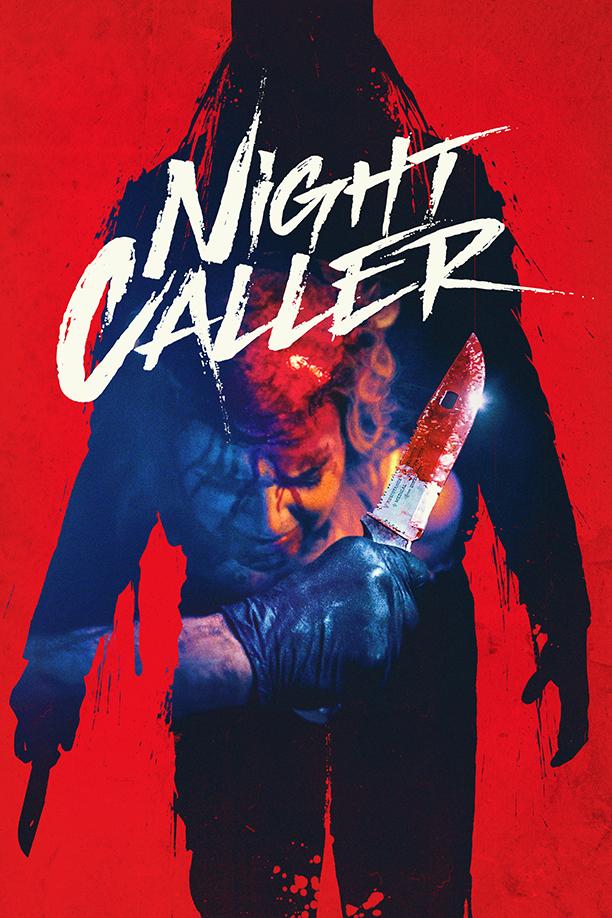
Night Caller
Directed by Chad Ferrin

Crappy World Films; Girls and Corpses Films; 123 Go Films
84 minutes, 2022
www.123gofilms.com/night-caller

Back in the 1980s, late night was filled with commercials for things like telephone sex-talks and psychics. Personally, I don’t believe in this form of spirituality (I dated the assistant of a professional psychic a few years ago and saw how it worked). That being said, skepticism is not a hindrance to watch films like this one because, hey, is an unstoppable guy in a hockey mask reality?

Susan Priver

Anyway, now that I have gotten that caveat off my chest, let us delve into this film, which focuses in on Clementine Carter (Susan Priver), an attractive woman of a certain age who has a gift (what a certain writer might call a “shining”). She works on the business end of a telephone psychic hotline in a space she shares with fellow phone psychic and boss Jade Mei (international star Bai Ling). Jade also has visions, so in this story, both are legit psychics.

Bai Ling

At the very start of the film, Clementine gets a call from a stranger (the underappreciated Steve Railsback of 1985’s Lifeforce, among so many other classics) and gives her an obvious fake name (yet, Clementine gives clients her real name!), and she sees him murder someone (comedian Kristi McHugh) in her mind, with a big hunting knife. After, he does just that in the real world, in a nice, gory, practical-effects way, including his signature (we son learn) scalping. Shades of Maniac (1981)! This masked killer wears a black stocking over his face, a long blonde wig, and a toque on top (it is filmed in Los Angeles though, not Canada). There is a bit of sexual ambiguity with the killer, who likes to remove certain female body parts, reminiscent of Buffalo Bill in The Silence of the Lambs (1991); there is also a couple of nods to Psycho (1960). And like that film, there is a deep psychological element to both the killer and the psychic that both separates them, and makes them somewhat similar, dealing with the dead and the beyond, whether it is “real” or in the mind.

Clementine’s life is a bit of a struggle. She lives with a movie-loving dad, Charles (Robert Miano, who I’ve recently reviewed in Parasites in 2016, by the same director as this film, which I listed as one of my fave releases of the year) and Get Gone in 2019). His room is full of movie posters and VHS tapes. At one point he’s watching Patrick (1978), which is an Easter Egg as it’s a film about someone who kills, psychically. Her late mother, Emily (Kelli Maroney in cameo form, who was in a number of great ‘80s classics, like 1984’s Night of the Comet and 1988’s Chopping Mall), comes to visit her in dreams as a Cassandra, to warn her of danger. Then there is her racist, Ponzi scheming, violent and alcoholic ex-husband, Doug (Michael Cambridge) who is still pestering her and blaming her for his hitting her (“You should have seen it coming, ‘Madame Psychic’”). Will he redeem himself by the end, or will he be another body for the serial killer? I know which side the majority of the audience is probably on.

Robert Miano

One interesting concept is that, for the purposes of this story, fate can be altered, so if someone has a vision, steps can be taken to change it, which leads to unexpected developments rather than having a vision written in stone (or brain, anyway). Playing with this concept is one of the finer points on the story, and also keeps the suspense going, because even if one of the psychics has a vision, which left alone is what would occur, that does not mean it will happen that way.

The most frustrating thing about this film is that Clem (as her father calls her) has a tendency of making some really stupid decisions, such as going all Karen on the coppers (she even says, “Let me talk to your supervisor,”), giving out too much information or going to dangerous places alone (I get pissed at police procedurals where the cop goes in on their own without back-up, as well; it’s a too common theme). You don’t need to be a psychic to see the problems from a mile away. But it’s not just her: why does the Hotline keep answering the killer’s calls, and if they must, how come they don’t record them for the police? There is definitely, however, a nice interplay of what is “real” and events occurring in the mind of one of the seers.

Kelli Maroney

Another fine point with this film is that it is not filled with starlets running around akimbo, but rather mature actors who are more realistic for the roles (though Priver is only 17 years younger than Miano, who plays her dad). Along with Maroney, there are a few other cameos of note, such as Lew Temple (he’s been in a bunch of Rob Zombie’s films, including The Devil’s Rejects in 2005).

Despite the ages of nearly all the main actors being near or above senior citizen level, the photography makes them look good, even with the over-use of close-ups (for some reason, it seems most of Ling’s shots are a foot from her face; so close, in fact, that when she has scenes with Priver, they practically look like conjoined twins to keep them in the same shot.

As much as I kvetched about some aspects of this story, it still managed to keep the tension and interest high throughout, even as I yelled at the screen, “Why are you doing that!?” There is no nudity, but the gore is quite plentiful, top-notch looking, and all practical, by storied indie make-up artist Joe Castro. It all works together well for the story, so it lives up to its promise.

The film is available on a number of digital and cable platforms, including iTunes, Amazon, Google Play, iNDemand, and DISH.

IMBD Listing HERE 


Wednesday, April 5, 2017

Review: Parasites

Text © Richard Gary / Indie Horror Films, 2017
Images from the Internet

Parasites                        
Written, produced and directed by Chad Ferrin
Crappy World Films
81 minutes, 2017
www.crappyworldfilms.com
www.facebook.com/

“Living in a jungle, it ain’t so hard /
Living in a city, it’ll eat out, eat out your heart.”
- The Heartbreakers (Thunders not Petty) [HERE

Nothing makes me happier (well, perhaps that’s an overstatement) than a film title that can be seen in multiple ways. As for this film, I’ll be getting to that in a bit.

Three college jock-types are roaming around the big bad city and get lost. Not a good thing, especially in the neighborhood in which they’ve landed. Now, get your mind out of the National Lampoon’s Vacation view of Detroit, this area of Los Angeles is not colorblind, but it is certainly greenback poor. The key word there is poor, and then add in homelessness and frustration-fueled anger… that’s a volatile mix in an indie screen world.

The three dudes, including Sean Samuels as Marshall (middle)
As the dudes drive around, getting deeper into the vicinity, they make comments about the homeless they see like, “Give them a broom to clean that shit up,” and sarcastically, “Look! That one has a cell phone!” We’re definitely not dealing with liberal-leaners, but a Trump squad mentality. Then, they run over something and get a flat. And that is where the story really takes off.

In an updated idea right out of Two Thousand Maniacs! (1964), they are confronted by a mob of homeless men (and one woman) who don’t take kindly to strangers in their neighborhood, such as it is. It quickly escalates, and before you know it, one of the trio, Marshall (Sean Samuels) is running down the street nekkid in fear for his life, with a band of bums out to even the social score a little bit.

Okay, that’s about as far as I’ll give in details to the plot (the box and trailer below give similar info, so I’m not divulging too much). The patriarchal leader of the mob is Wilko (Robert Miano) who exudes anger, hate and racism beautifully. The problem with Wilko is a human one rather than merely of poverty: he is a narcissist who blames others for his own actions. One could argue that he is a product of having nothing left but ego, but I could also see that it could be part of what brought him to that level in the first place. In this case, his actions have left a witness, and he has to deal with it. As the de facto leader of our not-so-merry troupe, he brings the other street people with him to clean up, as it were.

Robert Miano as Wilco
While they are (nearly all) men of the streets, they are strong, but can they deal with Marshall, who is a quarterback in top physical shape? Quick to adapt, he does what he needs to survive, as he becomes the focus of a distorted version of The Warriors, without the fancy costumes and catchy dialogue. He has no choice but to come on out and play as he is hunted down by the urban version of the backwoods mob. It becomes a question of how does one win against a group that has nothing to lose.

The added social commentary is as Marshall becomes more and more identified as a homeless person, wearing their clothes, limping from a wound and covered in blood; being African-American in this case especially demonizes him as “Other.” He becomes a target not only of his hunters, but of the very people that he was accused by the gangly group of being in the first place, one who targets the homeless with paintballs and flame by people his own age who are slumming and looking to burn off some political incorrectness.

Joseph Pilato as Wilde
One of the standout roles here is a drunken ex-soldier, Wilde, a homeless man who is at odds with Wilco, played with great dexterity by Joseph Pilato. If you need clarity, he was the asswipe army leader, Rhodes, in Day of the Dead (1985) who famously gets ripped in half by a mob of zombies. He definitely proves here that he’s got acting talent.

For me, one of the rare disingenuous moments is a scene depicting how the mentally ill get released to the streets (the “droppin’ the kid off at the pool” bit). I know that after Geraldo Rivera’s “Willowbrook” expose in 1972, a lot of the psychologically infirmed were booted out of mental facilities which then closed their doors, but this seems more like fiction. That’s not to say it doesn’t happen, because what the hell do I know from my privileged white male position, but it didn’t feel right, somehow. Hopefully.

As the athletic Marshall runs for his life, he meets Wilco’s diminishing band of followers, who seem to meet up with Marshall one at a time, forcing his hand to do things he probably never would have believed himself capable. But does that make him culpable? The effects of these actions are done with practical SFX, which are nicely handled (even with the lack of continuity of the absence of blood on a recently used rake)

This film is definitely testosterone fueled, as there are only two women in the entire cast, being one of the followers (Suzanne Sumner Ferry) and a prostitute (Silvia Spross); as a side note, both Ferry and Spross also appeared with Miano in the television series “Sangre Negra.” Sure, some of the guys are just there to kick ass in a pissing contest against Marshall, but as the numbers dwindle, the remaining ones begin show some sense. Whether that is good for them or not in the story, I won’t say.

Getting back to what I meant at the beginning by the meaning of Parasite, the film actually asks the audience to think about exactly whom the term refers. Is it the street people, who certainly those of a Republican bent (in the present political environment) would see as living off the teat of society without giving anything back, or the Bourgeoisie college students who use the homeless as paintball target practice because they deem the homeless lives as worthless?

The music is quite minimalist and stunningly stirring, especially the folk-laden tunes like “House of the Rising Sun” and “In the Pines,” mostly sung by the cast, such as Miano and Samuels.

The film is actually quite effective and engaging, well shot, and the acting is quite good. Even the over the top moments (such as Wilko shouting, “I’m gonna kill ya dead!”) are not played to the point of making the viewer wince, but keeps one in the moment. The story will probably retain the viewers’ interest throughout (I did for me), as Marshall literally runs around the empty streets of Los Angeles fending for his life. The ending is effective, albeit predictable, considering the zeitgeist of the film’s tone and story direction. It’s a worthy viewing.