Showing posts with label stabbing. Show all posts

Tuesday, May 10, 2022

Review: Night Caller

Text © Richard Gary / Indie Horror Films, 2022
Images from the Internet
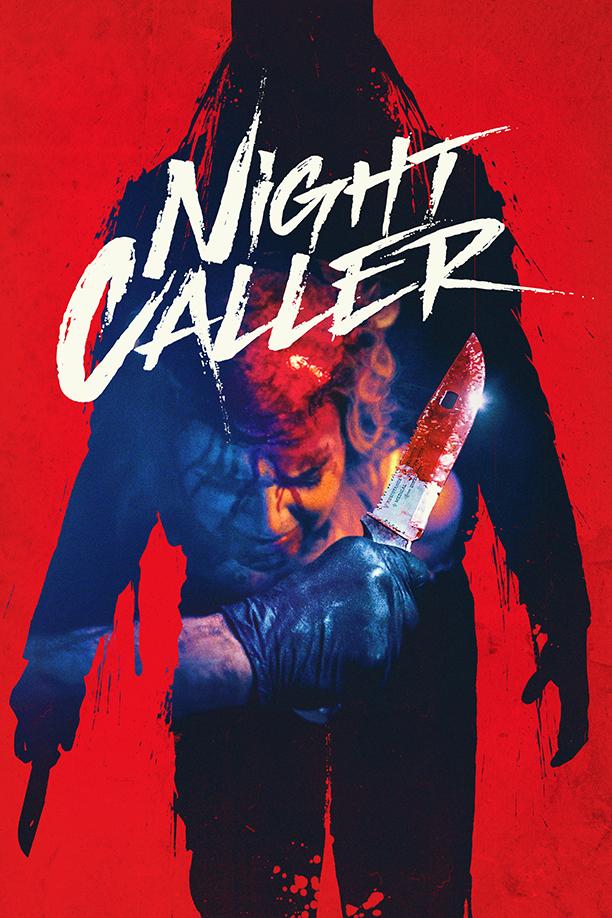
Night Caller
Directed by Chad Ferrin

Crappy World Films; Girls and Corpses Films; 123 Go Films
84 minutes, 2022
www.123gofilms.com/night-caller

Back in the 1980s, late night was filled with commercials for things like telephone sex-talks and psychics. Personally, I don’t believe in this form of spirituality (I dated the assistant of a professional psychic a few years ago and saw how it worked). That being said, skepticism is not a hindrance to watch films like this one because, hey, is an unstoppable guy in a hockey mask reality?

Susan Priver

Anyway, now that I have gotten that caveat off my chest, let us delve into this film, which focuses in on Clementine Carter (Susan Priver), an attractive woman of a certain age who has a gift (what a certain writer might call a “shining”). She works on the business end of a telephone psychic hotline in a space she shares with fellow phone psychic and boss Jade Mei (international star Bai Ling). Jade also has visions, so in this story, both are legit psychics.

Bai Ling

At the very start of the film, Clementine gets a call from a stranger (the underappreciated Steve Railsback of 1985’s Lifeforce, among so many other classics) and gives her an obvious fake name (yet, Clementine gives clients her real name!), and she sees him murder someone (comedian Kristi McHugh) in her mind, with a big hunting knife. After, he does just that in the real world, in a nice, gory, practical-effects way, including his signature (we son learn) scalping. Shades of Maniac (1981)! This masked killer wears a black stocking over his face, a long blonde wig, and a toque on top (it is filmed in Los Angeles though, not Canada). There is a bit of sexual ambiguity with the killer, who likes to remove certain female body parts, reminiscent of Buffalo Bill in The Silence of the Lambs (1991); there is also a couple of nods to Psycho (1960). And like that film, there is a deep psychological element to both the killer and the psychic that both separates them, and makes them somewhat similar, dealing with the dead and the beyond, whether it is “real” or in the mind.

Clementine’s life is a bit of a struggle. She lives with a movie-loving dad, Charles (Robert Miano, who I’ve recently reviewed in Parasites in 2016, by the same director as this film, which I listed as one of my fave releases of the year) and Get Gone in 2019). His room is full of movie posters and VHS tapes. At one point he’s watching Patrick (1978), which is an Easter Egg as it’s a film about someone who kills, psychically. Her late mother, Emily (Kelli Maroney in cameo form, who was in a number of great ‘80s classics, like 1984’s Night of the Comet and 1988’s Chopping Mall), comes to visit her in dreams as a Cassandra, to warn her of danger. Then there is her racist, Ponzi scheming, violent and alcoholic ex-husband, Doug (Michael Cambridge) who is still pestering her and blaming her for his hitting her (“You should have seen it coming, ‘Madame Psychic’”). Will he redeem himself by the end, or will he be another body for the serial killer? I know which side the majority of the audience is probably on.

Robert Miano

One interesting concept is that, for the purposes of this story, fate can be altered, so if someone has a vision, steps can be taken to change it, which leads to unexpected developments rather than having a vision written in stone (or brain, anyway). Playing with this concept is one of the finer points on the story, and also keeps the suspense going, because even if one of the psychics has a vision, which left alone is what would occur, that does not mean it will happen that way.

The most frustrating thing about this film is that Clem (as her father calls her) has a tendency of making some really stupid decisions, such as going all Karen on the coppers (she even says, “Let me talk to your supervisor,”), giving out too much information or going to dangerous places alone (I get pissed at police procedurals where the cop goes in on their own without back-up, as well; it’s a too common theme). You don’t need to be a psychic to see the problems from a mile away. But it’s not just her: why does the Hotline keep answering the killer’s calls, and if they must, how come they don’t record them for the police? There is definitely, however, a nice interplay of what is “real” and events occurring in the mind of one of the seers.

Kelli Maroney

Another fine point with this film is that it is not filled with starlets running around akimbo, but rather mature actors who are more realistic for the roles (though Priver is only 17 years younger than Miano, who plays her dad). Along with Maroney, there are a few other cameos of note, such as Lew Temple (he’s been in a bunch of Rob Zombie’s films, including The Devil’s Rejects in 2005).

Despite the ages of nearly all the main actors being near or above senior citizen level, the photography makes them look good, even with the over-use of close-ups (for some reason, it seems most of Ling’s shots are a foot from her face; so close, in fact, that when she has scenes with Priver, they practically look like conjoined twins to keep them in the same shot.

As much as I kvetched about some aspects of this story, it still managed to keep the tension and interest high throughout, even as I yelled at the screen, “Why are you doing that!?” There is no nudity, but the gore is quite plentiful, top-notch looking, and all practical, by storied indie make-up artist Joe Castro. It all works together well for the story, so it lives up to its promise.

The film is available on a number of digital and cable platforms, including iTunes, Amazon, Google Play, iNDemand, and DISH.

IMBD Listing HERE 


Sunday, October 25, 2020

Review: Occurrence at Mills Creek

Text © Richard Gary / Indie Horror Films, 2020
Images from the Internet

Occurrence at Mills Creek
Directed by Don Swanson
Spruce Films
84 minutes, 2020
www.sprucefilms.com   
www.facebook.com/occurrenceatmillscreek/
www.occurrenceatmillscreek.com/index.html

What is smart, in my opinion? Starting small and then expanding. Case in point: this film began as a short with the same title (reviewed HERE). After working out the kinks, it has now been expanded to a full-length feature. It’s kind of like writing a novel and setting up an outline first. With the same core cast who now comprehend the roles better than probably just sitting around a cast table read, they are starting with an understanding of their character’s motivations. The short could almost be seen as OJT (On-the-Job-Training).


Ava Psoras, Betsy Lynn George, Alexa Mechling

The backbone of the story, to start, is more or less an intense family psychological drama, told in the present and via flashbacks, where half of the family is dead within the first five minutes, with certainly more to follow. The focus is on college-age Clara (Ava Psoras), who is not having a good time. First her mom, Emily (Betsy Lynn George, Ava’s real-life mom, who has credits including 1996’s Petticoat Planet – one of the first DVDs I owned – and in Billy Idol’s infamous “Cradle ofLove” music video)  passes on, and then her 15 year-old sister Cassandra (Alexa Mechling) goes and drowns by the lake’s dock after an argument with Clara; meanwhile, her estranged and physically abusive lothario father, Victor (Joel Fishel), is coming around for the funerals and trying to get back into Clara’s life before... well, you’ll see.

In the prologue we see mom shipping off, and then pick up at Cassandra’s farewell. During the funeral scene, one of many in the film, as Clara and her father stand together while a line of well-wishers go by, I could honestly emphasize with Clara’s muted and disjointed reactions to the overwhelming stream of humanity to the point of almost boredom as I felt that exact same way in that position with the passing of my parents.

From the beginning, we are given slivers of scenes in non-chronological order for the first 20 minutes or so, covering most of the content and about the length of the original short, though it never loses its sense of moodiness. After about 20 minutes, the film settles down into a more narrative form, but in the shadows, there is always something off, with the spirits of mom and sis mostly silently popping in every once in a while to remind Clara that things are not quite right.

There are indications that make the viewer wonder how much is real and what proportion is within Clara’s noggin. Are these spirits she’s seeing really happening, in her mind, or visions/warnings/hints to the audience that only she can actually see?

Clara is not exactly likeable, full of built up anger and attitude, but her equally sullen, flat moods fit in with the tone of the film. She’s a rich, privileged woman in long fake eyelashes whose family helped build up the town of Mills Creek. But, of course, there is a deep and dark family secret that she will investigate and figure out, or possibly give in to it. That’s the viewers’ job, to explore it with her.

There are some hints of blood letting here and there throughout the film, but we don’t get to witness excess until the conclusion catches up with the story, making it stark and shocking, which works the better for the overall plotline. Much of the film has quite the languid pace, so when the action occurs, it’s all the more unexpected.

The entire film looks beautiful in widescreen. There is a bit of artiness that may get lost on some shock-mavens, but as I said, the film is mostly evenly paced, giving the viewer time to mull over the actions on the screen, and try to piece it all together. It definitely has the feel and tempo of many thoughtful Scandinavian films or television shows (though it was filmed in the Pittsburgh area), but I like that.

This is only the second feature for director Swanson, other than quite a number of shorts including documentaries and music videos (two for this film, which will certainly show up on the disc), though the only one I’ve seen is the abbreviated earlier version of this film. This release shows an enormous amount of talent and thoughtfulness. Plus getting Betsy Lynn George and also MaLinda Parker (aka Lynda Maroni), who appeared in the early George A. Romero films Season of the Witch (1972) and The Crazies (1973), both to come out of retirement to appear here, shows his talent to draw others to him. That’s a good sign of things to come, I would imagine.


Friday, July 31, 2020

Review: Survival Knife


Text © Richard Gary / Indie Horror Films, 2020
Images from the Internet


Survival Knife
Directed by Mike McKown
Robot Monkey Studios / Wild Eye Releasing
102 minutes, 2016

Even before I start, this is an interesting premise, if one looks at the time framing. In most films, especially the slasher genre, it usually takes 20 minutes (not counting the ubiquitous prologue) for the action to build (Act 1), another 40 minutes for people to start up getting killed (Act 2, or, the ramp-up), and then the rest of the film is where the action is packed and the killer is exposed and sometimes done away with, usually by who is often known as the “Final Girl,” a term I believe was framed by Carol J. Clover in her amazing book, Men, Women, and Chainsaws: Gender in the Modern Horror Film, which can be found online as a .pdf.

Well, this film picks up where Act 3 starts as its Act 1 (or perhaps one could call it an extended, 8-minute prologue since the credits run over it; it’s all semantics, so I’ll leave that up to you, dear reader). Right off, you can see some nods to previous films as a homage, such as A Nightmare on Elm Street (1984) where the masked killer, the Survivalist (Jesse-Lee Lafferty) runs his knife along the wall (who would do that in real life?) in an abandoned factory (that makes a great film set) like Freddy did with his glove in the furnace room, and the one-eyed, eyepatch vengeance seeking lead in the Swedish classic, Thriller: A Cruel Picture (1973).

Though the Survivalist is mort and his body fried and now fertilizer, suddenly there are more killings in the woods in his style, while our final girl Penny (Danielle Donahue) is having vivid dreams of violence. Unlike One-Eye, there is no vengeance to seek with her masked slasher gone, so the question is whether our PTSD-ridden heroine, like the lead in Ms. 45 (1981), is fulfilling a need for action triggered by past events? Needless to say, Penny is angry, and why wouldn’t she be? No longer able to work (as a stripper, natch), her fiancée and all her friends were the Survivalist victims, and the press is hounding her – well, one reporter, anyway (Kaitlin Schoeb).

She also has to deal with the likes of a too-personal psychologist (psychiatrist?), Dr. Lentz (Bruce Lentz), a empathetic police detective, Jake (Lonnie Thomas), and a less than sympathetic one, Kim (the wonderfully named Melissa Troughtzmantz), who are the procedurals on the case to find the murderer. Speaking of which, I figured out the key element of the murders just before the half-way point in the film (that is my procedural).

Overall, this release is pretty bloody and violent throughout, sometimes in the present and others in flashback, but most of the time (as in other than one time), it is without gore. There is, however, a few scenes of gratuitous nudity (all female), and even a shower scene, which at one point was practically a given in slasher films. And then there is the occurrence in the strip club, focusing a lot on the action at the poles, beyond the storyline occurring at the bar.

The film uses mostly a muted color palate early on, with dull hues tones, such as dark blue striped shirts, or pillows with black and white patterns; there are no bright colors like reds or yellows. Even the walls and plush chairs have gray tones, and the apartment rooms are sparse. The flashbacks are shot through a sepia-toned filter. Even Pittsburg, where it is filmed, looks a bit washed out in long shots in a bit of haze of smog. I was impressed with the filming within the abandoned factory, which is a mixture of bright sunlight and deep shadows. Occasionally the people in the sunny bits look a bit washed out, but overall, I was struck.

The acting is mostly passable, with some of the secondary characters being a bit wooden, but you definitely can feel Donahue’s anger through her clenched, very white teeth, which is how she talks most of the time (anger issues, remember?). The electric soundtrack sounds decent without it being overly synth-sounding (I’m not a synth fan; too 1980s even for me).

The story was written by Jim Towns, who actually did a great job with this complex plot, even without much exposition as to what life was like before the killings (other than Penny’s engagement). What makes this a good tale? Well, just as it doesn’t start where most films do, neither does it end there, as it continues beyond the point of where one would expect it to be; plus, there a few false endings, and that is decent writing for this release.

That’s not to say there were not a few weak points: for example, Penny keeps kneeling and bending on a bad knee (something I live with), getting up with relative ease. Also, there is a distracting overdubbing in one scene that is really bad, involving the name of a strip club which was obviously changed at some point after filming (for legal reasons?). I’ll chalk that up to budgeting, so I will forgive that.

Mainly, the film is a bit long, and could easily have about 10 to 15 minutes excised (that’s what the “Outtakes” feature on a disc is for). That being said, overall, I would say it’s a well done slasher and psychological thriller that has some nicely done twists and turns.


Saturday, February 29, 2020

Review: The Torment of Laurie Ann Collum


Text © Richard Gary / Indie Horror Films, 2020
Images from the Internet


The Torment of Laurie Ann Collum
Directed by Mark Dossett
Rock Bottom Pictures / Tolac / Terror Films
70 minutes, 2014 / 2020

The Torment of Laurie Ann Collum is being considered a “throwback” film to the slasher days of the 1980s, which feels appropriate since it’s supposedly based on a “true story” that takes place in 1988, in the small Florida town of Patoma. Now, just because I cannot find anything about the killing on an Internet search, nor the locale of Patoma, don’t mean a thing if the film’s got that swing (doo-dah).

Shannon Scott
Filmed just north of Orlando, FL, including Ocala, the making of the release seems as interesting to me as the story itself. Let me ‘splain (as opposed to mansplain): while there is a decent sized cast for a mini- (make that micro-) budgeter, there are actually only three people involved in what is described on IMDB as “90 percent of the film.” This includes the main titular character played by attractive and toothsome Shannon Scott, the hair-follicle-challenged Sheriff Parks (director Mark Dossett), and the invisible boom (sound) guy, Reynaldo Rodriguez. This makes for a much lower cost scale, of course, and an interesting read of the credits as the two leads play not only multiple characters (more on that later) but most of the crew. I love that they were brave enough not to feel a need to use pseudonyms.

Speaking of playing with names, I would like to imagine that Laurie is in part named after Laurie Strode, from Halloween (1978), and Sherriff Parks is named after Michael Parks, who played a similar police-related role in both Robert Rodriguez’s Planet Terror (2007) and Quentin Tarantino’s Death Proof (2007). But that’s just me, and I digress.

And now back to our story: Laurie Ann is a homebody, as she’s developed agoraphobia, a common mental misfunction to those who have suffered from trauma. It’s been used a lot lately, such as with Ouija Room (2019), as it’s a great tool for there’s-someone/thing-in-the-house genre, as the PTSD-inspired illness makes the viewer wonder if the threat is real or imagined by the character in question.

Mark Dossett
Laurie Ann, who’s mom is away, is happily watching television (including Bugs Bunny!), having a Tom Cruise moment of miming rock into a stirring spoon, and eating a lot to take up some time. To paraphrase Monty Python, try to explain to the cell phone/Internet kids today, and they won’t believe it.” But weird things are starting to happen, and there may be someone else in the one-level house with her (no running upstairs here!). Or is there? Ahh, there’s that PTSD questioning thing that happens! She calls the cops, which is how Parks gets involved.

The first act is a light touch of curiosity, the second is more intense interactions, and by the third, we’re into the torment/terrorizing. There is a bit of a nod to some other films sprinkled throughout, such as When a Stranger Calls (1979), the closet and use of a wire hanger like Laurie Strode in Halloween, and just a wee bit of The Texas Chain Saw Massacre (1974).

Part of the problem with the “based on a true story” trope is that there is a tendency to put in a title card at the front stating the end result of the character(s), usually in a vague way. This is also used a lot in found footage. To me, this is a mistake as it takes some of the suspense away. If we already know the character will live or die, that removes the big question. Though in this case, I’m sure people will still pay attention because of the “Torment” part of the film’s name (as a side note, to me the title sounds like a ‘70s porno flick directed by someone like Gerard Damiano).

I have to admit, I figured out who the masked person was in the first five or ten minutes of the film, but honestly, I still enjoyed staying until the end; and make sure after you read the credits, to stick around for some important story info afterward.

One aspect I both enjoyed and was baffled by was the use of religious tropes throughout the entire story. Yeah, I get that it’s small town America and the Church is a factor in many of their lives, but it was never really explained. For example there is a Christian magnet on the fridge, we see a shot of a church but it doesn’t invest in the story, and one of the songs is the splendid “Down to the River to Pray” (a different but also harmonious version than the Alison Krauss one from 2000’s O Brother, Where Art Thou?).

Most of the secondary characters are pretty superfluous and not a great source of acting, but the two leads do really well considering it’s their first film and play multiple parts (though, please, Shannon, don’t attempt a New York accent again, and I say that with kindness). Dossett moves in and out of the story but is memorable as Parks, but it is Scott that holds the film together as she is in a large majority of the scenes. Luckily, the camera likes her, and she carries Laurie through from carefree (albeit agoraphobic) to terrified.

As micro-budget releases go, Dossett and Scott work together well to put out a freshman film that is watchable. It’s not necessarily super intense nor overly bloody – there is some sanguine stuff and one squeamish scene – but it holds up. Just not a great lot of boo scares, which is fine as this is equally (if not more so) a psychological study of the main character. Certainly enjoyable.


Sunday, October 20, 2019

Review: The New York Ripper (3-Disc Limited Edition)


Text © Richard Gary / Indie Horror Films, 2019
Images from the Internet


The New York Ripper (aka Lo squartatore di New York)
Directed by Lucio Fulci
Fulvia Films / Silent Warrior Productions / Blue Underground / MVD Entertainment
93 minutes, 1982 / 2019

I’m grateful for the VHS revolution of the 1980s because it introduced me to the world of Italian horror cinema that most likely would have escaped my radar. As I have stated before, most people refer to Dario Argento, and while I know his work is brilliant, I see him as more form than content as his films are beautiful, but the stories are mostly lacking and confusing. The first time I saw a film by Lucio Fulci (d. 1996), The Beyond, it was jaw-dropping in both story and level of horror and blood.

Jack Hedley and \Paolo Malco
Blue Underground has restored this film into 4K Blu-ray, which was taken from the uncensored original camera negative, and it is startling. The clarity of the blood and gore is a thing of beauty in it’s grotesqueness. It had been re-released in Blu-ray in 2009, and some of the extras here are from that, but the new 2019 restoration of the work from the grumpy Maestro is noteworthy.

This film is striking in particular for several reasons. First, unlike some of Fulci’s other known works in North America, this isn’t really a horror film, though it could pass as a slasher; it’s more classic giallo, with cops and murders rather than zombies and demons. There is a deeper psychological aspect to this release, as I will get to eventually.

Almanta Suska
Second, even for Fulci, this is quite the brutal film. Like the similarly murderer-in-New York Maniac (1980; also recently re-released by Blue Underground), this is a psychological study of the killer, who in this case is not revealed until much later rather than being the central character right off the bat, remaining as a who-done-it, as well. While I’m at it, there is a subway station chase scene that is very reminiscent of the two-year earlier Maniac; I’m not sure if it is coincidence or an homage.

While it’s true that the victims are pretty and female – something that may raise an eyebrow now but was common back then – it’s the way they are dispatched that raises the bar and makes it almost uncomfortable in an additional way in this modern and woke metoo world. The gore is close-up (though not clinical like torture porn) and of course all done with appliances rather than digital. With the new 4K processing, the – err – death comes more alive to the eye.

Andrea Occhipinti
The third is something quite extraordinary as becoming iconic, and that is the “Quack Quack” sound made by the killer; while spoken in not quite a Donald Duck way, it is in a high-pitched, forced voice. This weird speech and sound have resonated through the decades of when this first was first released, most likely for the oddity of it (much in the same weird way Angela stands frozen with mouth agape at the end of 1983’s Sleepaway Camp).

The plotline is pretty basic: a slasher is going around New York killing beautiful women while taunting Fred Williams (Jack Hedley; not Hedy), the grizzled police Lieutenant on the case, with quacked-up phone calls. Williams brings in Columbia University professor Dr. Paul Davis (Paolo Malco) to help him do a psychological profile on the killer. While this is happening, one woman named Fay survives an attack (Almanta Suska), and now she and her professor husband, Peter (Andrew Painter, aka Andrea Occhipinti) are living in fear of the killer returning.

The thing about this film is that everyone has their own vices, be it prostitutes, sex addition, being gay (again, it’s the ‘80s), so the killer is not the only one with sexual deviances and dalliances (in the story’s perspective, not mine). In many cases, these proclivities result in the ending of life.

Alexandra Delli Colli
The film is beautiful to look at, even as it scans New York at one of it’s physically low moments, with subways that are graffiti-laden, live sex shows on the Deuce (42 Street), litter everywhere, and shuttered stores and darkened streets that are now better lit). Hell, the opening pan of lower Manhattan from Brooklyn (my turf) includes the Twin Towers (RIP).

In this Blue Underground series, which includes the aforementioned Maniac and Fulci’s Zombi (1979), there are lots of extras, the main one being the three discs, namely a High Definition Blu-ray (1080p), a Standard Definition DVD Widescreen 2.40:1 feature presentation, and the Original Motion Picture Soundtrack CD by Francesco De Masi. Some “quick and easy” ones are the Theatrical Trailer, and Poster and Still Gallery, audio in 7.1 DTS-HD (English); 1.0 DTS-HD (English, Italian); 1.0 Dolby Digital (French, Spanish), and subtitles in English SDH, Francais, Espanol, and English for Italian Audio.

There are a whole series of featurettes, as well. To start, there’s “The Art of Killing - Interview with Co-Writer Dardano Sacchetti” (29 min), who discusses the genesis of the screenplay, his love/hate relationship with Fulci, and what the film means to him; it’s all quite interesting. Next is “Three Fingers of Violence - Interview with Star Howard Ross” (15 min), who played the key missing digits suspect, Mickey Scellenda. While he talks a bit in circles about mundane things such as weightlifting, he also has some nice film anecdotes, especially about his female co-stars. For “The Second Victim - Interview with Co-Star Cinzia de Ponti,” (12 min) we meet “Rosie,” who bikes down from Central Park to Park Avenue, to the Staten Island Ferry (that’s quite the in-town distance), only to get slaughtered by the Quacker; it’s also the first murder we actually see. A former Miss Italy (1979), Cinzia discusses – what else – working with Fulci in this and a further film, Manhattan Baby (also 1982). Her stories are interesting and a bit self-focused. The next two are both about the same actress, “The Broken Bottle Murder - Interview with Co-Star Zora Kerova” (9 min) and “'I'm an Actress!' - 2009 Interview with Co-Star Zora Kerova” (10 min). Obviously, the stories overlap a bit here, but enough new information is given in both that it’s worth watching

Daniela Doria
The next discussion is “The Beauty Killer - Interview with Stephen Thrower, Author of Beyond Terror: The Films of Lucio Fulci” (23 min). The first in English, Thrower describes a deeper beginning for the film, and paints a picture of both what it means in an analytic way (especially the mystic of misogyny), and how it was received by critics, fans and government at the time. “Paint Me Blood Red - Interview with Poster Artist Enzo Sciotti” (17 min) was a bit less than I was interested in, so I truthfully skipped it (though probably would have watched it if it were shorter). Last of the featurettes (but not extras) is “NYC Locations Then and Now” (4 min) from 2009. Already 10 years outdated, it’s still a fascinating B-roll (with music behind it) as we see very particular places compared in 1982 and 2009. I really enjoyed this, and in many ways, it made me nostalgic for the old Deuce.

The big extra, of course, is the audio commentary with Troy Howarth, author of Splintered Visions: Lucio Fulci and His Films. Howarth has a lot to say, and he tends to talk really fast, which works both for and against him. Let’s get to the “against” part first to get it over with. There is a lot – and I mean a lot – of data thrown at us for each actor, both onscreen and voiceovers. While this information is important, certainly, much of it can be found on IMDB. It starts to sound like someone reading off a bunch of sports scores or multiple weather reports, where it kinda all blends together. Where the commentary shines, however, is when Howarth discusses anecdotes of the backstory of the film, and especially when he waxes poetic about the reaction to its release and his social/cinematic critique of it, a little of which of my own I will add in the last paragraph of this review. He does get one fact amusingly wrong when he ponders whether a certain subway El staircase is the same one used in The French Connection (1971). As I lived a few blocks away from the 79 St Station in Brooklyn where TFC was filmed, I can confirm that this was indeed not the same location.

On the physical side, two other extras are the lovely 3D slipcase cover and a collectable booklet inside with new essay by Travis Crawford.

One of the aspects of this film that I enjoyed the most was the successful use of red herrings. The who is the killer is questionable until the reveal. The possibilities bounce around a bit and is a head scratcher. I picked who I believed it to be, to be proved wrong, which is always better.

This film is notorious for its violence and its misogyny, and yet the female characters are the most interesting, with the strongest personalities, instincts and intellect. They shine more than the anti-hero copper, Williams, who is an angry, burned out shell of a person (as I would argue is the character of Danny in Blue Bloods, but I digress…). Also, this work has one of the bleakest endings, right up there with the likes of The Day of the Locust (1975). But for this particular story and the timeframe in which it was released, it all makes sense and also still makes it stand out. This is Fulci at his fiercest and his finest.


Monday, February 25, 2019

Review: Brutal

Text © Richard Gary / Indie Horror Films, 2019
Images from the Internet

 Brutal
Written and directed by Takashi Hirose
Unearthed Films / MVD Visual
67 minutes, 2018
www.facebook.com/brutalfilm
www.unearthedfilms.com
www.mvdvisual.com

Unearthed Films, it seems, is the (pall) bearer of brutality to the human flesh. It is run by Stephen Biro, who bought out the rights to the original Japanese underground Guinea Pig tapes and proceeded to not only then release them, but to start his own torturous series, appropriately under the banner of American Guinea Pig. And along the way, with those and other releases such as this one, has made a name for himself and his company as purveyors of the odd, the perverse, and the brutal.

Which brings us to this new film, fittingly titled Brutal, from the shores of, again, Japan. In the first chapter, we are quickly introduced to Man (the single-named Butch), as he slashes and beats a series of women who he keeps asking, “Do you understand?” Of course, they are too scared for their lives, which end quickly and painfully.


Butch
Meanwhile, across town, Woman (singer Ayano [Ôami]) is also stabbing her way through the hearts and peni of men who try to pick her up on the street in the second chapter. Her question is “Am I okay?” I’ll let that mull in for a moment.
 
The third chapter is, of course, their meeting. Rather than it being cutesy like the violent rom-com Psychos in Love (1987), a different approach is taken. Will it end with them pairing? Or perhaps more like Henry: Portrait of a Serial Killer (1989)? Fear not for I will not give spoilers.

Just how brutal is it? Well, I guess that depends on your violence barometer. It certainly is more than most mainstream films, even ones dealing with malevolence, but it is also not as much as some of the other Japanese films, such as Takashi Miike’s Audition (1999) or the Guinea Pig titles.

Japan can be an odd country when it comes to ways of approaching the subject of the feminine, including in cinema. For example, they obviously idolize the female form (sometimes in very creepy ways, i.e., schoolgirls), and yet there is a certain lack of respect as far as power dynamics goes. Intentional or not, that does creep its way into this film, as well. For example, both Man and Woman are strong, give in to their primal urges, and are killer with a blade (both figuratively and literally). However, in the first chapter, we see Man brutalize a number of women in detail, and ”lovingly” show how he cleans up after. For the Woman’s chapter, we are given more of a montage of her work. Sure the number of victims is larger, but it goes so fast that the personalization is gone, making the women targets more vulnerable and the men quick though painful kills in most cases.


Ayano
There is no back story for these two serial killers, though there is a hint of motivation by the end of this short work. But even that is a big question of how they got into their situations that led to their anger. But the biggest issue for me is the ending, which I believe I understood what is implied, but the how is where I start scratching my head.
 
The film itself is shot in a choppy manner with lots of video noise (not found footage style, though) and a heavy guitar sound backing it up. The actual music, however, is very rap based, which shows up in the extras as three music videos. The other extras are a 1:06 “Behind the Scenes” which condenses all three weeks of the shoot into essentially 22 seconds each, some Unearthed trailers, and chapters. Considering the film is in Japanese, I am not considering the captions as extras as much as necessities.

For a first feature length release – albeit shorter than most - Hirose rises to the occasion and brings what he promises, a film that is what its name claims. I’m still trying to figure out, however, the meaning of the second couple in the film who seem extraneous.


Thursday, January 10, 2019

Review: Welcome to Hell

Text © Richard Gary / Indie Horror Films, 2019
Images from the Internet

Welcome to Hell
Directed by Tony Newton (bookends and collection), Michael Agular,
James Cullen Bressack, Brad Bruce, Colin Clarke, Henrik Bjerregaard Clausen,
Jeff Kacmarynski, Sam Mason-Bell
Vestra Pictures / Wild Eye Releasing / MVD Entertainment
92 minutes, 2018
www.wildeyereleasing.com
www.mvdb2b.com

Sure, anthology films can be hit and/or miss, but that’s part of their charm. Don’t like this story? Next! Usually, there’s a thread or bookends that ties them all together, sometimes loosely, others not at all. In some cases, the collection is designed to be created for the thread, and in some of those situations, the stories may even overlap. Other sets are put together independently, with the director of the thread being the one to gather them, much like a collection of short stories with an annotated prologue. This particular one from the UK is the latter, taking films from the international level and assembling them.

The bookends here are of a couple who receive a mysterious VHS tape through the mail slot, and watch these tales of hopefully terror. Yeah, it’s a well-worn trope, especially after Ringu (and its various sequels and versions made in other countries – and they are lots), but it’s fine because it’s just the bits tying things together, usually with a “surprise” at the end. In this case these bookends are inconsequential and probably could have been left out, honestly. The meat is in the shorts (get yer mind outta da gutter), which are separated only by VHS “noise.” All the better for it.

The first story is Michael Agular’s “After Hours” from 2016, starring the great Bill Oberst, Jr., one of the most naturalistic genre actors around. He never disappoints. Here is plays a police detective out to solve a late-night (hence the title) mysterious murder in a religious charity thrift store. Of course, the religious (Christian) theme ties in with the title of this collection. The ending is quick, so pay attention. Personally, I don’t think the short achieved its goal to scare because not enough information is given about what (a) happened to the employee, (b) the guy in the hoodie, and (c) well, the ending (not going to give it or any other spoilers).

Next up is Colin Clarke’s 2015 “Slit,” from Ecuador, though the extremely minimal dialog is dubbed into English. We meet two women who, apparently, have just met each other, and decided to continue their – err – conversation at home undressed. The film is beautifully shot with Dario Argento-ish bright primary colors, and for a long time we see mostly partial faces (lips kissing, close-up of eyes), but not the whole cara at once. With some quick editing (but not dizzying) the hot pulse of the moment is cinematically translated. Into their life comes someone with some sharpies (hence the title), as well as coming into our view is some (primary?) red herrings. This short was nicely done.

Following is James Cullen Bressack’s 2013 “Family Time.” In shades of To Die For (1995) with a special and sick twist, Susan (Calico Cooper, daughter of Alice) welcomes us to her nightmare mentality as she manipulates her teenage son to do something terrible. So far, this is the most uncomfortable piece, and just the idea alone of it as than anything that happens onscreen. The question is, as we see, how far she will go to manipulate those that she professes to love to destroy those she hates. And the ending is quite satisfying in a really creepy, organic way that’s bound to make you say eww. Nice blood SFX along the way.

So, it makes sense that next up continues the family theme of sorts with Jeff Kacmarynski’s 2014 “Dead Therapy.” While it’s easy to pick up the clues of what is going to happen, this is still a pretty fun and original story about a 12-step style support group of the survivors of a two-week Zombie outbreak. A new member joins and we get to hear the horrific stories of all these stalwart and damaged people who had to do soul-crushing deeds of survival and are now all PTSD-laden. While predictable in some ways, it is worth the watch.

Following is the brief 8:21 Danish short (in English) by Henrik Bjerregaard Clausen, 2016’s “Lucid.” Shown as a dream sequence, this is a really interesting nugget of deep psychological schizophrenia of a depressed man. It felt like under 5 minutes because it was so absorbing. The visual image look is like VHS warm and fuzzy, but the story is anything but those two things.

Many times the best of the group either leads to entice the viewer until the end, or it is put at the end as a showcase. In this case, Brad Bruce’s 2015 “Maternal Instincts” ends the series with a bang. Scream Queen Felissa Rose (if you don’t know who she is, look her up) plays a mysterious woman who is picked up in a bar by some tall-but-not-too-smart egocentric gangster lout, and gets over-drugged by this asshole in a subtle commentary about date rape culture. But, of course, you know things aren’t what they appear, and there will be hell to pay. It’s a smart piece, and again, on some level you can see what will come, though the method is held to the end in a very satisfying way. Some of the acting is a bit clunky here and there, but the story holds well.

As a set, this is a nice combination of various genres, from the psychological to the slasher to a couple of creature features. It’s well rounded, the stories are all intriguing in one form or another, and with the exception of the bookends, they are just the right amount of attention grabbers. I didn’t skip over anything, which I rarely do anyway, but with a short, it’s actually more tempting than a feature. Not here: it’s watchable straight through.

Extras are a bunch of fun Wild Eye Releasing trailers, including this one.