Sunday, February 10, 2019

Review: Wretch

Text © Richard Gary / Indie Horror Films, 2019
Images from the Internet

Wretch
Written and directed by Brian Cunningham
…ThoughtFly Films
89 minutes, 2018
 
Right from the start, this film hits a number of interesting buttons on many fronts, including psychological, paranormal, a creature feature, and a few hikes in the snowy woods around Louisville, KY.
 
Riker Hill, Megan Massie
At a party, we are introduced to the three leads, who have been friends for years. The couple is Abby (Megan Massie) and Caleb (Spencer Korcz), and the third wheel is Riker (Riker Hill), who also obviously has a thing for Abby. They are Millennials who like to drink and drug, and are spiritually holding out for something better, be it between each other or through mind-altering substances. One thing they don’t seem to feel assured of is their sense of self-being. This plays a sharp dynamic in the story.
 
With a slow burn and languid pace, we get to know these three and their conflicts between themselves and each other as they cling to the same old ruts and conflicts they seem to be drowning in, rather than to explore new avenues of change. This is where most of the tension of the film arises, but of course, there is so much more.
 
Spencer Korcz
Each of the three is flawed in their own way, as are we, I suppose. Riker is a “morose drunk” who has anger issues dealing with his unrequited passion for Abby, and living with his mom and sister. For Caleb, well, I don’t want to go into too many details because it would be a spoiler alert, but being faithful is not one of his strong suits. As for Abby, she’s lost and confused, and afraid to make big changes even though it’s pretty obvious the reasons she should.
 
The three spend a night in the woods imbibing on a hallucinogenic substance, and Abby claims to see something in the woods, which may have followed her home. Is it real? Is it in her mind? Is it the drugs? That is the direction the film takes, and brings the viewer along with it.
 
There is a lot of angst in the film, but not necessarily because of killing sprees or copious amounts of gore, but rather digs into the psychology of these three, while still hinting at something more, and if you haven’t been wrecked by the joy-ride pacing of most releases these days and still have the patience to take in what is happening, it’s actually quite well done. Don’t get me wrong, there is sex, blood and violence, but it’s kept somewhat in check by the story (and rightfully so).
 
The acting by the three leads is well done, with much of the strength being with Massie, who is essentially the lynchpin character of the action. This is especially interesting as the film is filled with local Louisville underground theater actors who are relatively unknown outside of their home turf… so far.
 
As for the creature feature aspect, real or not (and I’m not giving any spoilers), it looks pretty cool. We rarely get to see much of it, again for the better, but what we can glean makes on appreciate what makes it the “underground theater scene.”
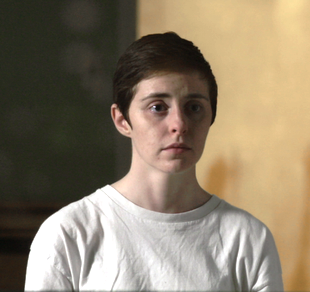
 
Another stylistic tactic that works for well for the film is that the narrative is not straightforward, but jumps around in its timeline; under Cunningham’s choices and sharp editing, however, the viewer is never lost on where the characters are at any time, even though it seems some wear the same clothes most of it time (gotta love low budgets!).
 
One might consider this a found footage film, but it is quite modified in its approach, which I believe the experience of viewing it benefits. What I mean by that is, yes, there is a lot of handheld cameras by the cast filming the action, which is key to one of the sub-stories, but the single camera is also focused on the trio when they are by themselves, as if someone is filming who is not acknowledged within the story and essentially making the viewer the camera-holder, being in the scene, as it were. This style is way more interesting than just the usual found footage fare. Yes, there is the obligatory walking through the woods with flashlights, but Cunningham avoids the cliché tropes merely by walking in a steady gaze rather than running all akimbo with the damn image bouncing all around. He also keeps it to a few select shots, not to tire us out. Totally appreciated, dude.


Tuesday, February 5, 2019

Review: Bloodsucking Nazi Zombies

Text © Richard Gary/Indie Horror Films, 2018
Images from the Internet


Bloodsucking Nazi Zombies
Written and directed by A.M. Frank (aka Jesus Franco)
Cheezy Flicks / MVD Video
82 minutes, 
1981/2011
www.Cheezflicks.com
www.MVDvisual.com

Sometimes one can tell how bad a film is just by how many names it goes by, especially if it came out in Europe during the 1980s. Now, the director is Jesus Franco under the pseudonym A.M. Frank (I’m guessing as in “I Am Franc[o]), so the expectation should be low in the first place. While it’s original incarnation was as L'abîme des morts vivants, its English releases alone include The Treasure of the Living Dead, The Oasis of the Living Dead, Oasis of the Zombies, The Walking Nazi Dead, Nazi Zombies,, and this release of BNZ.

Here is the basic premise of the plot: Nazis were trucking gold through Northern Africa (Morocco?) during Dubbya Dubbya Dos, when they were attacked by the Allies at an oasis in the desert, and now they have returned from the dead to protect said gold in the form of flesh-eatin’ zombs. The college-age son of one of the sole Allied survivor decides to find the treasure after his dad is killed by a greedy turncoat. Along with a couple of buds, they run into the traitor, some hot women who come along for the ride, and, of course, some of those pesky, slow-moving meat chompers.

While the whole shebang is a bit of fun (after all, it is a Franco film), it’s also a lot of fluff (after all, it is a Franco film). There are more questions than answers by the end, and on so many different levels. For example:

If it is Nazi zombies protecting the gold, how come we never see any Nazis? Yes, there is a swastika on an overturned jeep, but all the zombies have (relatively) long hair and no uniforms. I’m guessing these are supposed to be the victims who have turned into zombies themselves, but there is not a single Nazi in sight, nor any of the post-dead over the age of, say, mid-20s.

I’m just guessing here that the original, foreign-language dialog was written by Franco, but the English translation I am assuming was not? There is almost a Firesign Theater-type disconnect from the action actually happening on screen and what the characters are saying. As an example, the night after a zombie attack where part of the son’s troupe is killed, this lighthearted dubbed interchange takes place:
Male: Shit!
Female: You say “shit” like you’re from Brooklyn.
Male: Yeah, a real native.

What the hell?

Another is a scientist, commenting on the zombie attack, who makes that old grade school joke, “They came out of the sand which is there.”

And as for that attack, I wonder, would these kids really be making out, joking around, etc., that soon after a violent run-in with the post-dead? For me, I would be out of there soooo fast. A part of Eddie Murphy’s routine from Delirious when he’s discussing the film The Amityville Horror comes to mind.

The zombies seemly attack at night during the main part of the story (they fade into the air when the sun hits them), but how come they came out during the day to attack two women tourists during the prolog? And if the victims come back to be zombies themselves, how come all the zombies are male? And why only when women are attacked, do the zombies rip off their clothes before eating… well, I can guess the answer to that: it’s the 1980s!

Despite the cheesy writing, amateurish special effects (including puppets), grainy and sometimes unfocused film (actually, this may be a transfer to DVD taken directly from a VHS), inconsistent tone of the characters, an over the top hammy death scene (play the trailer below), and some of the serious questions I’ve listed below, only one piece of dialog really bothered me (even more than the Brooklyn comment): After the only survivors of the attack come out alive, a rescuing Bedouin asks one of them, “Did you find what you were looking for?” The response is, “I mainly found myself.” Well, bully for you! What about the rest of your friends and others of your party who are toast? So glad he found himself at the expense of so many others. Yes, I talked back to the screen, possibly even insulting the character’s mother.

Oh, and I realize this is looking back to the 1980s through a post-9/11 rearview mirror, but watching long leggy beautiful actresses walk around Muslims praying made me just a little, well, self-conscious of Western imperialism.

This film is typical of many Euro-trash horror genre of the ‘80s, with a weak story and made on a low budget (some exceptions are those by Fulci and Argento), but also characteristic is the factor of enjoyment in their ineptitude, perhaps even more so because of it, and this is no exception. I’ve been watching some indie films that have been released in the last few years, such as Bill Zebub’s Worst Horror Movie Ever Made, Creep Creepersin’s Frankenstein, and Matthew Kohnen's Ahhh! Zombies!!, and nearly all of them are usually equally entertaining (if not more so), have a stronger factor of creativity (well, Zebub’s work is usually borderline as much as I like some of it), and especially a robust sense of not taking themselves too seriously that most Euro releases from the period severely lack.

That being said, BNZ is the kind of film that is a lot more fun to watch with a crowd than in a lonely garret, so grab your food and beverage of choice (mine would be, of course, some White Castle and Manhattan Special Espresso Coffee Soda), and hunker down to groan in delight. And feel free to yell at the screen.

This review was originally published on FFanzeen.blogspot.com


Thursday, January 31, 2019

Reviews: Albert Pyun Twosome: Blast; Crazy Six

Text © Richard Gary / Indie Horror Films, 2019
Images from the Internet

 Albert Pyun, for those young’ns who don’t know, is a director who specializes in both action and sci-fi genres, and is still actively churning out films. That being said, his career had seen better days before the Millennium, with such classics as Cyborg (1989), the Wrecking Crew (2000) and Dollman (1991). Both of the films reviewed below came out the same year, in 1997.


Blast
Directed by Albert Pyun
Moonstone Entertainment / Imperial Entertainment /
Filmwerks / MVD Marquee Collection

105 minutes, 1997 / 2018
www.mvdvisual.com

There are three key elements to this film, tapped from other sources. The first is obvious: this is a direct tie-in of the classic Die Hard (1988), but rather than a tall building, as hinted by the Blu-ray’s cover, it’s an attack by terrorists on the Atlanta Olympic Games. More on that in a sec. Also, in this story the hero (vas Van Damme busy? Too expensive? Too egocentric?) Jack (Linden Ashby) is an ex­-Martial Arts Bronze Medal winner who is sidelined by an injury, while his ex-wife, Diane (Kimberly Warren), is the coach of the Women’s swimming team, and is in the occupied building being threatened. This should also sound familiar to Die Hard fans.


Linden Ashby
Second, as this is pre-9/11, the opening title cards let us know that there were FBI stings on possible terror action at the real Atlanta games, and one was found credible. Blast is explained as a what-if story of what might have happened had they not been caught, as at the Munich Games when Palestinian terrorists murdered Israeli athletes, which is the third part of bringing this story together.
The bare bones of the plot is that a group of terrorists of various nationalities are led by the Russian, Omodo (Andrew Divoff), essentially in the Hans Gruber role. They set bombs throughout the Aquatic Center where the American team of female athletes are practicing, but of course not before the young lasses have the chance to don their bathing suits (including Shannon Elizabeth in one of her early roles). HHHpwowpowHHardWhat is the goal of these terrorists? Well, odds are you’ll figure it out before Interpol.

Along the way we meet eccentric terrorist expert Mr. Leo (Rutger Hauer, seemingly to be channelling a The Island of Dr. Moreau-era Marlon Brando) who has been following our baddie for a while, and the police commissioner (Tim Thomerson, who is well-underused here in basically an extended cameo donning a Southern accent).


Andrew Divoff,  Kimberly Warren
While it’s obvious this is not the same budget level as Die Hard, Pyun does well to keep the story moving along with fisticuffs, gun fire, and some digitally layered explosions, the latter of which real look fake, but hey, 1997 technology, eh wot?
There are definitely some shortcomings, such as few of the actors here have the personality or appeal of the Die Hard characters (yes, the comparisons continue), and there’s no Yippie-ki-yay-type quotables, but on the other hand, the film moves along in a rapidly paced manner, keeping the attention going.

Speaking of which, it was nice to see a woman in one of the leading bad-guy roles, and while Warren is no Bonnie Bedelia, she eventually manages to hold her own. As for the swim team, they seem to just there for the swimsuits and to be hostages.

For a Blu-ray, there actually aren’t that many extras, being only chapters and a quartet of MVD Marquee Collection trailers, including the one for this film. I’m not complaining; all those extras take time.

Only thing that pissed me off, though, was that I was going to make a reference here about “the Burning of Atlanta,” and the film beat me to it. Snap. Anyhoo, this is pretty solid action flick that’s solid meat’n’taters.
 

Crazy Six
Directed by Albert Pyun
Moonstone Entertainment / Imperial Entertainment /
Filmwerks / MVD Marquee Collection

94 minutes, 1997 / 2018
www.mvdvisual.com

This is a crime drama, but honestly, the tone is solid Western, in the same way For a Fistful of Dollars (1964) was a Western that was a crime drama. But rather than the Old West or even Italy, this film takes place in the ruins of the USSR, 10 years after little Ronnie took credit for “tearing down this wall.”

Beyond the Fall of the Bloc, according to the storyline (and no too far from the truth), crime and corruption quickly replaced the totalitarian regime before it. Of course, many players on the international field have shown up to take a slice of the pie. As we all know that a slice is never enough.


Rob Lowe
It’s quite the cast in this film, such as Burt Reynolds (d. 2018) as a Texan – Stetson included – who is a police detective over there (say what?), Ice-T as the head of a drug dealing crew, and Mario van Peebles (I’m a fan of his dad, but I digress…) who runs a prostitution ring out of his club; and yet, the lead actor and titular character (aka Billy) is junkie and thief Rob Lowe, who was riding a bit higher on the star status at the time. While still acting regularly, he’s cropping up more in B-films. But now back to this review.
Where the Blast was pretty straight forward in story and technique, Pyun shows his artistic side with this release. Between shadows, editing, and especially the primary colors of lighting, he takes us on a grander tale of a robbery gone badly, and the result of that: never rob a drug dealing gang, please. Within the story they always say it’s an easy mark, but it always turns out bad.

Lots of shoot-em-ups, knives and fisticuffs abound (some things stay consistent between films), but add the element of drugs (crack, in this case), and watch the camera lilt about. On one hand, this shows that Pyun has an artistic edge that does not get expressed very often in his action releases, but honestly, on the other hand, in this case it feels heavy handed and convoluted. The story suffers a bit as we wait through the miasma of style to get to the next beating or firing of lots of hand guns by many people usually in a tight space (such as a single room). It’s hard to tell who is killing whom, sometimes.


Ivana Milicevic
This is not a bad film, but honestly it doesn’t feel very successful in what it was trying to achieve, because it was being pulled in too many directions. I mean the opening shot feels like it’s right out of Pulp Fiction (1994), mixed with Italian giallo (lighting) and like I said, the crime/Western genre mix. While I respect what Pyun was trying to do, the characters don’t really achieve much as far as personalities go, and it’s Ice-T that comes across as most solid. Reynolds looks like he’s making his grocery list as he recites his lines, Van Peebles has this cliché dandy French accent, and Lowe’s junkie is so toned down I was hoping his character would switch to Meth so he wouldn’t stumble around so much. The two women in the film, the constant smoking Ivana Milicevic and Blanka Kleinova fare better as characters, and are both stunningly beautiful, so there’s always that.
Again, for a Blu-ray, there are just chapters and a quintet of MVD Marquee Collection trailers, including the one for this film.


Friday, January 25, 2019

Review: VooDoo

Text © Richard Gary / Indie Horror Films, 2019
Images from the Internet

VooDoo (Unrated Version)
Written and directed by Tom Costabile
HyperCube Films / Agenda Avenue Productions /
Wild Eye Releasing / MVD Entertainment

84 minutes, 2017 / 2018
http://voodoothemovie.com/
www.wildeyereleasing.com
www.mvdvisual.com

So how long does it take to overstay your welcome at someone else’s home? For this this film, we meet Dani (Samantha Stewart), and the answer is a single night. After the break-up of a relationship (he’s married; more on that later), she heads from New Orleans to visit her “cuz” Stacy (Ruth Reynolds) in LA. Stacy is staying at a house with the rest of her band, who are trying to “make it” (though we never hear their music). Interestingly, the house share is filmed in Billy Idol’s actual home, so there are lots of instruments and sound recording devices around. This was a nice touch.


Ruth Reynolds and Samantha Stewart
Dani is a bit of a ditz, and not exactly likeable, though not a horrendous human. For example, she ended the relationship with the married guy when confronted by his wife, a (wait for it) voodoo priestess who curses her (shades of Drag Me to Hell). However, on the being an ass side, she steps all over her cousin boundaries without a second thought, and films everything (oh, did I mention this is a found footage flick?). Thanks to her conscious actions, she also involves Stacy into her own curse. Of course I won’t go into detail about that, but it was a real shitty move to do to someone who is opening their place for you. Now mind you, Stacy isn’t exactly a shining light as a person either. But they do get to have a cameo with Ron Jeremy, so it can’t all be bad, right?
 
My next question is, what is it about found footage films where the first 20 minutes are just following the characters around and not really giving too much info about them? I mean, we do learn a bit about their personalities, and the set-up of why the curse is happening, but that could have been done in much less time. However, this is consistent with so many films these days, where the first 20 minutes are padded on to make it into feature length, or to fit in the cameos. I’m not pointing a finger at this film specifically, as it is almost endemic in both indies and mainstream releases (of course with blockbusters, the rule is reversed and the over-indulge to the point of drowning the audience with too much).

Now, interspersed between the 20-minute mark and the 20-minute-plus finale, there are some really fine moments of spookiness that come unexpectedly, and is quite the relief from the annoyance that is Dani’s personality. Again, I’m not saying she is a bad person, just grating. But does she deserve what she gets in the end? I’m not saying.

Where Drag Me to Hell ends with the main character being – err – dragged to Hell, but here we get the scenic route. Needless to say, the film truly picks up at the moment Dani gets there, delving into a cavalcade of blood, gore, demons, and certainly makes up for the drips and drabs of the first 40 minutes.

What confuses me (lots of questions, you see), is it continues with the found footage style even in Hell. Who is going to see it? Well, other than us, of course.

I really don’t want to give away the different levels of Hell, because each one makes a point in Christian dogma, and also the result of Christian (in this case Roman Catholic) “salvation” by priests. For the genre fan who likes “blood and gore and veins in mah teeth,” as Arlo Guthrie once postulated, this vision of the underworld will be mild after the likes of Salo, or the 120 Days of Sodom (1975) or any of the Japanese or American Guinea Pig series. For the average film goer, used to mainstream cinema, this can be seen as quite extreme. Personally, I think many crime dramas they show on cable are more horrific, but that’s me.

The cast is quite attractive, and also accomplished, if one looks at some of the credits for the actors. While Ron Jeremy may be the most famous of the bunch (which makes me happy in an odd and twisted way), there is a lot of talent in this group. I guess I should say the two main leads of Stewart and Reynolds anyway, as they are the draw of both the focus of the camera and story. Everyone else is kind of peripheral, even the architect of evil here, the priestess Serafine L’Amour (Constance Strickland), who’s ironic name translates as “Angel of Love.”

It may sound like I’ve been a bit hard on this film, but note that it is the director’s first feature, and found footage (hopefully a dying breed at this point) is somewhat easier to work on the learning curve as technical precision can be fudged over a lot easier on a moving and somewhat spontaneous camera (even with storyboards and pre-blocking). I hope Christensen has learned from the experience and will continue to grow, as I see potential in here.

One recommendation I have to the viewer is check out the Trivia section for this film in IMBD. It is chock full of interesting goodies that may have you go back and revisit certain scenes, if’n yer so inclined. This is especially true as the only extras on the DVD are a cavalcade of Wild Eye Releasing trailers, including for this film.


Sunday, January 20, 2019

Web-series Review: Under the Flowers: Season 1 and Season 2

Text © Richard Gary / Indie Horror Films, 2019
Images from the Internet

Under the Flowers: Season 1
Written and directed by Richard T. Wilson   
Mad Shelley Films / RTW Productions
17 minutes, 2016
www.madshelleyfilms.com
www.undertheflowers.com

Starting out as a ghost-themed short film called “The Halloween Girl,” it has been expanded into a Web series.

Jackie (Katie Stahl), who is about to drop out of college, is searching for a boy who seems to be in trouble. She’s been having visions and sees dead people, and it seems like everyone she meets knows more about this strange boy than her, including, Nick (Scott A. Evans) a guy by a campfire who appears when she passes out, or Poe (Lauren LaVera), who looks like she fell into a vat of goth.


Katie Stahl, Gabrielle Huggins
Helping her as she can is Jackie’s bestie, Ella (Gabrielle Huggins), who has a whiff on the situation, and seems to know more than she’s letting on. Meanwhile, Jackie keeps passing out and having these odd and scary visions.
 Broken up into four chapters (averaging 4+ minutes each), we enter Jackie’s world in Southern New Jersey (near Philly), and see things from her perspective, learning at the same time she does. This is an unusual take on a ghost story whose ending I didn’t see coming.

There is little blood and minimal onscreen violence, but rather it focuses more on the characters and the story, and thereby drawing the viewer in. With its short span, it manages to cover quite a lot of ground. There’s a bit of an artistic flair, with some quick editing, but none of that gets in the way of the most important part, which is the tale itself.

The cast is attractive, and happily for this rare moment seems age appropriate (i.e., they look college age, rather than about to go into their Middle Age).

There is one question I have about the ending, which I won’t posit here and give anything away, but I am assuming it will be resolved in Season 2. I’m looking forward to that. 


 Under the Flowers: Season 2: Circle of Hell
18 minutes, 2018

The second season focuses more on Poe (Lauren LaVera), who transforms into Rose (Amanda Kay Livezey), thanks to her Virgil-like guide, Nerissa (Kirsten Lee Hess), who is taking her through her paces as they are fleeing from evil forces trying to get Rose/Poe’s soul.  


Lauren LaVera
Along the way, they meet other travelers, some innocent, others not as much. With additional digital effects that are actually quite effective and striking, we flip locales, between the forest and elsewhere. In the latter, we once again meet Charlotte (Catherine Kustra), the character from the original “The Halloween Girl,” who had more of a cameo in Season 1.
The first season won some awards, and thanks in part to that, the second is a bit more grand in style and form, having a more solid looking foundation with better editing, effects as I mentioned, and is even more engaging than the first (and both kept my interest throughout its run, albeit short).

This second season kind of answers the question I had from the previous one, though of course there are questions raised about the ending here, which I’m sure will come to light in Season 3, which is now in development.


Thursday, January 17, 2019

Review: Babes in Psycho Land

Text © Richard Gary / Indie Horror Films, 2019
Images from the Internet

Babes in Psycho Land
Directed by David Silvio
Baywood Films / Kiss of Death Productions / z-Diet-3 Productions
82 minutes, 2019
www.facebook.com/babesinpsycholand/

The last film directed by David Silvio was a ditty called Fetish Dolls Die Laughing, from 2012 (reviewed HERE). So you can see, he has a way with titles; before calling out the Sexist Squad or PC Wagon, perhaps it should be noted that the film was written by David's spouse, Diana Silvio.

One thing is clear, and that is while fetishism is not the focus of this release, it is certainly present in many forms, including S&M, bondage, lesbianism, chloroform (yes, that’s a real thing), and sexual asphyxiation. It’s almost like it’s one of the characters, rather than the plot itself.


Danielle Brickman, Ryan Bergman
The story kicks off with the nabbing of a young runaway/petty thief named Cheryl (Jill Mesaros) by the cops, including the Sheriff (David Ogrodowski) and hot-pants wearing Officer Piper Paisley (Danielle Brickman). After fleeing the coppers, Cheryl finds herself at Aunt Mary’s (Melissa Rae Bender), an abuser and dominatrix who is trying to get reaccredited to run a group foster care home for boys. Apparently the last time didn’t work out so well, but the money was good, so...
 
Also living on the property is PTSD-laden Andy, his insane killer twin (or is he?) Alex (both played by Ryan Bergman, the centerpiece for this release), and Sam (David Dietz), a perverted growling grounds keeper who reminds me of Arte Johnson's Tyrone Horneigh character from "Laugh In." See, the problem is that Alex is fixated on his childhood friend, Jenny (Mary Houle), who… well, I’m not going to give it away, but it’s not good and it traumatized him.

Into this mix comes our short-shorts officer who is looking for Cheryl, and has a few sexual leanings of her own, as we come to find out. She sneaks around the house trying to get some information on Cheryl and learns a bit more than she’s bargained for, but is she equipped to handle it?

Well, that’s as far as I’m willing to say about the story proper, so no spoiler alerts. I should also confess that I am a happy wuss who has none of the fetishes presented here (mine is punk rock and horror films… duh), so some of the attraction goes over my head, but I can sympathize if not empathize. Desire is desire, and one can look at it that way; or, do what I did, which is see it as a slasher film with lots of (often weird, pinkish colored) blood. Most of the violence, and there is plenty, happens just beyond the frame of the camera, much like Hitchcock did with Psycho (1960), but the splatter is everywhere – and as far as I can tell, it’s all practical SFX; I didn’t really see any digital enhancements, which is cool.


Mary Houle, Melissa Rae Bender
This is the kind of film that you just need to turn your brain off, and enjoy the ride. There are plot holes, the occasional over- or under-acting, and behaviors of characters that would make no sense in the real world. But this is not the real world, this is micro-budget indie filmmaking, and in that context, it is successful. The characters are interesting, especially the question of who is real and who isn’t, and there is also a very subtle dark-dark-dark humor that runs throughout.
 
Because of the need for suspension of disbelief,
which can also be a really good thing, events happen that are unexpected. This is easier to do when the filmmaker is a bit lax on following the mainstream rules without the studio pressure for bottom line profit margin at any means necessary (e.g., the over-the-top-ness of Comic Book related mega-releases these days). That’s part of why I love indie films so much: the formula sometimes gets chucked out the door for Why Not?!

There are a few jump scares that aren’t that scary, but the thriller part of the story holds up decently, all things considered, as people are chased down, captured, escape, get captured, killed, etc. What’s also nice, in my opinion, is that despite the film’s title, it isn’t just women that fall victim to violence here and not just men that commit it, and it actually comes out quite equitable. Again, indie cinema = breaking rules.

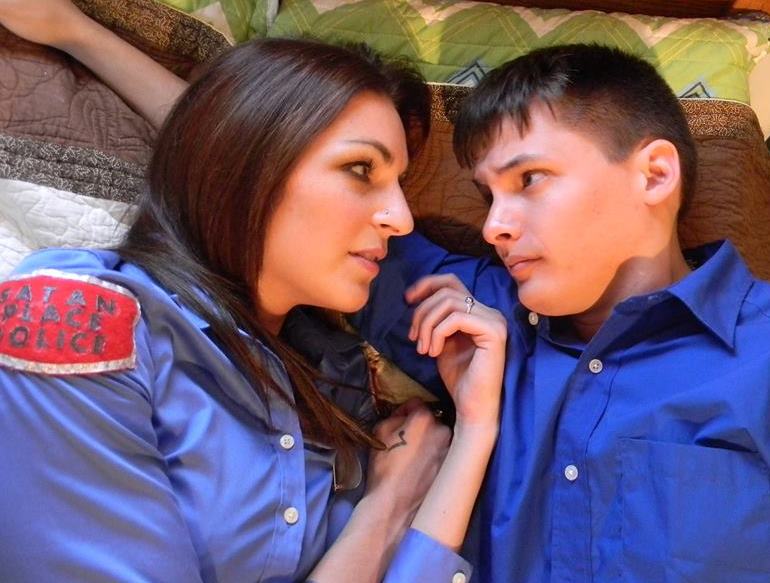
Be sure to stay after the credits because there is a lead in to Silvio’s possible next film, Cannibal Sluts of Satan Place (oy, such a title…).


Tuesday, January 15, 2019

Review: House of Purgatory

Text © Richard Gary / Indie Horror Films, 2019
Images from the Internet

House of Purgatory
Written and directed Tyler Christensen
Watching Eye Productions / Terror Films / MVD Entertainment
75 minutes, 2016 / 2018
www.mvdvisual.com 

As I’ve oft said, tangle up enough well-worn tropes and you may find yourself with something unusual. This one has a blast of ‘em, from structures that appear out of nowhere and are (of course) evil, to malevolent forces that know your secrets and fears, all based around a couple of couples of overaged actors playing high school teens on a road trip. This I get from the trailer, alone.

Halloween “haunted house” attractions are becoming increasingly popular. A truly haunted one is almost too good an opportunity to miss. Location? Unknown. That’s where the road trip comes in, of course. It sounds like a supernatural Talon Falls, but we shall see.

After a nice jump start, we are introduced to a group of high school (have to stop here to giggle) students who are partying on Halloween. Four of them decide to find the urban legend Halloween house that pays you back if you make it all the way through.


Brad Fry, Laura Coover, Anne Leighton, Aaron Galvin
The first couple is Amber (Laura Coover) and Ryan (Brad Fry). He’s the instigator and a bit of a macho dick who pressures everyone to keep on a-goin’. Amber comes from a religious family and we actually don’t learn too much about her, but more on that later.

The second couple is “nice guy” Nate (Aaron Galvin) and the unofficial star of this short feature, Anne Leighton. I guess she could be considered the level-headed one, but she’s in the same sitch as the rest of the kids [giggle].

When they do find the House of Purgatory, whether it’s the place of the urban legend or not is unclear, which is a wise choice on the part of the filmmakers, we learn that it is being run by a guy with a skull loosely painted on his face (Brian Krause, who in an extended cameo, is the biggest name in the cast, having been a “Whitelighter” on the television show “Charmed” for years) a la Captain Spaulding of Night of a 1000 Corpses (2003).


Brian Krause
The House also knows your deepest, darkest secrets; says that right on the entrance. However, we know little about this band of fodder for evil purposes, so while we learn their secrets eventually, fortunately we are given a miniscule portion of what their life is/was like, and what brought them to that moment at that point. What bothered me, though, is that in two cases, their “secret” is/was not a choice, but something that is/was put on them. No spoilers promise.
Which makes me wonder about the backers of this film. One could actually see it as a “Christian” fear theme sub-genre, with punishments that go beyond the deeds. In some cases, it seems like the parents are the ones who should be there, rather than these teens [giggle].

I’m also a bit annoyed at the throwing around of words like “gay (as in “that’s so gay”) and “retarded.” In the right context I don’t have a problem with the use of the words or not, but in this case it took me out of the moment, which is what you don’t want to do when watching a film, especially a genre one. For example, wondering if a particular character is gay because he’s nice is, well, whatever. But the “that’s so gay” is tiresome and passé.

Okay, so I’ve whined a bit upfront, but that’s not to say there aren’t some really fine touches throughout. For example, when our foursome finally do get into the Shed of Purgatory (you’ll see what I mean when you watch the film), there are different floors leading downward. Wisely, it starts slow and then continues to build tension as different floors are reached, escalating to a couple of perfectly pitched lulls in the bam! excitement level, letting the tension build again. No constant clobbering over the head, this is more like riding the waves. And yet, the angst remains in both the confusion of the characters and for us as everyone tries to figure out the characters’ next step (both figuratively and literally).
 
Note that there is practically no blood, but the sets look great and the cast is attractive.

A fun game when watching films like this is to “guess the references” to other genre films whose tropes are present. For example, there is one key element here from I Know What You Did Last Summer (1997), and a bit from the Sarah Hyland horror (read that as you wish), Satanic (2016).

The film is short at 75 minutes, and it could have been beefed up just a little with some expository info about the background of the characters, rather than just at the point of the secret revelation. That being said, there are also other parts that could have been cut down a bit, such as much of the pumpkin carving scene.

The extras are sound choices, chapters, captions (for which I am always grateful), and three trailers (one non-genre, and one for this film).

This is what I call a serviceable story. What I mean by that is that it’s not rocket science, but it does its job of being entertaining. Sometimes that just what a viewer needs when dealing with characters that are teens [giggle].